new

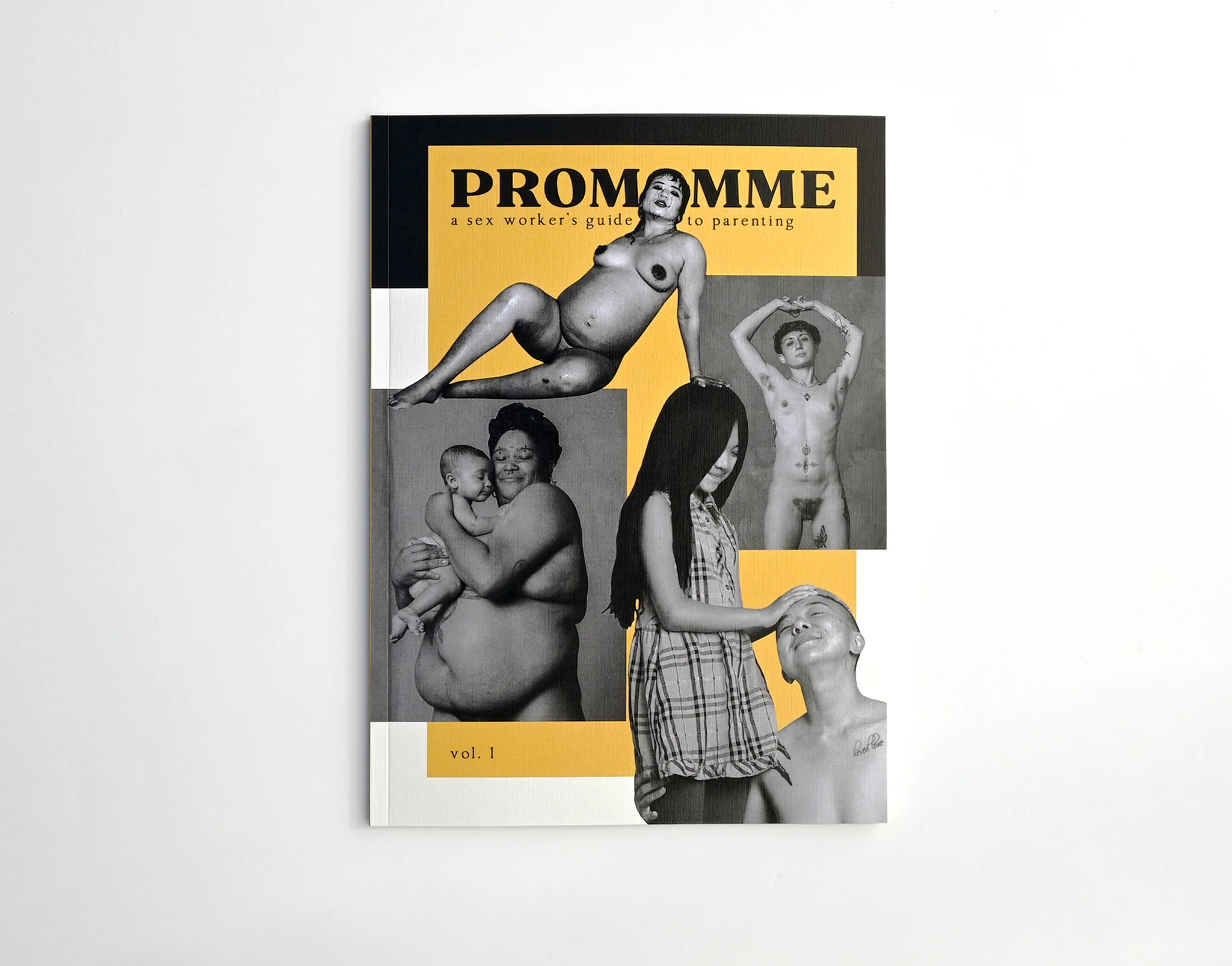
ProMomme: a sex worker’s guide to parenting
 

Edition of 300
August 2024, English, 8 x 11 in, 72 pages, color, softcover
ORDER FROM (and Co-published by) Sming SmingCash Machine

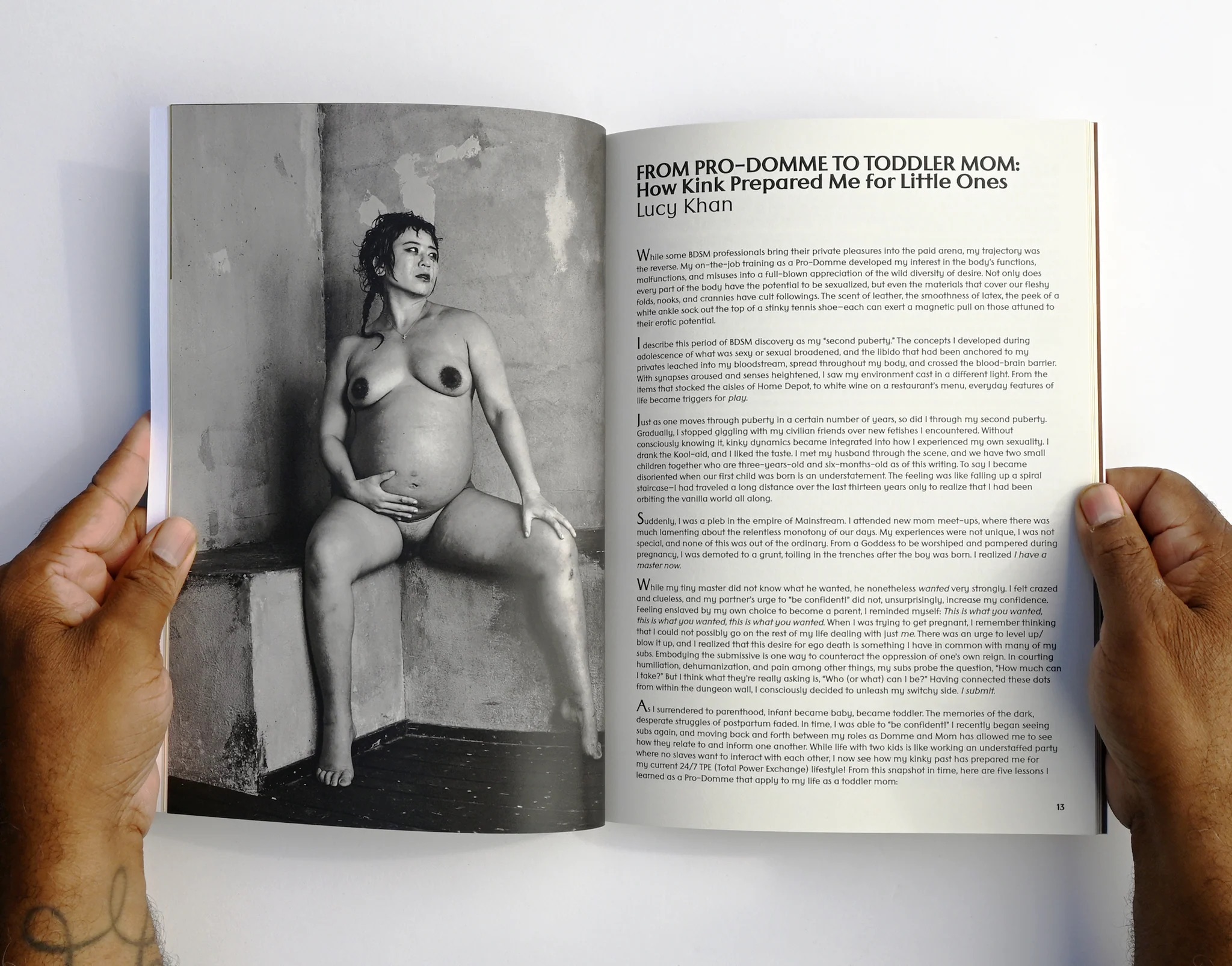
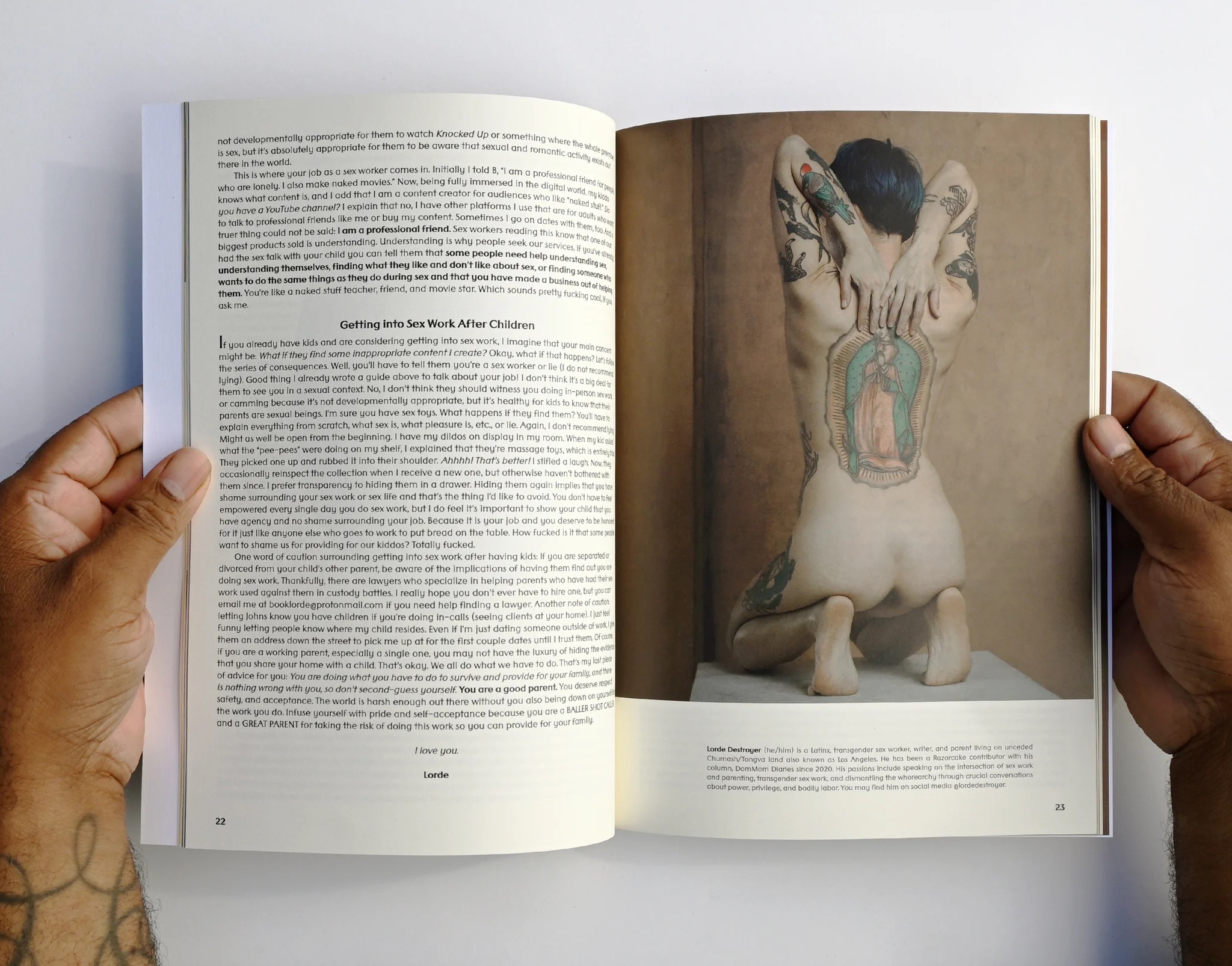
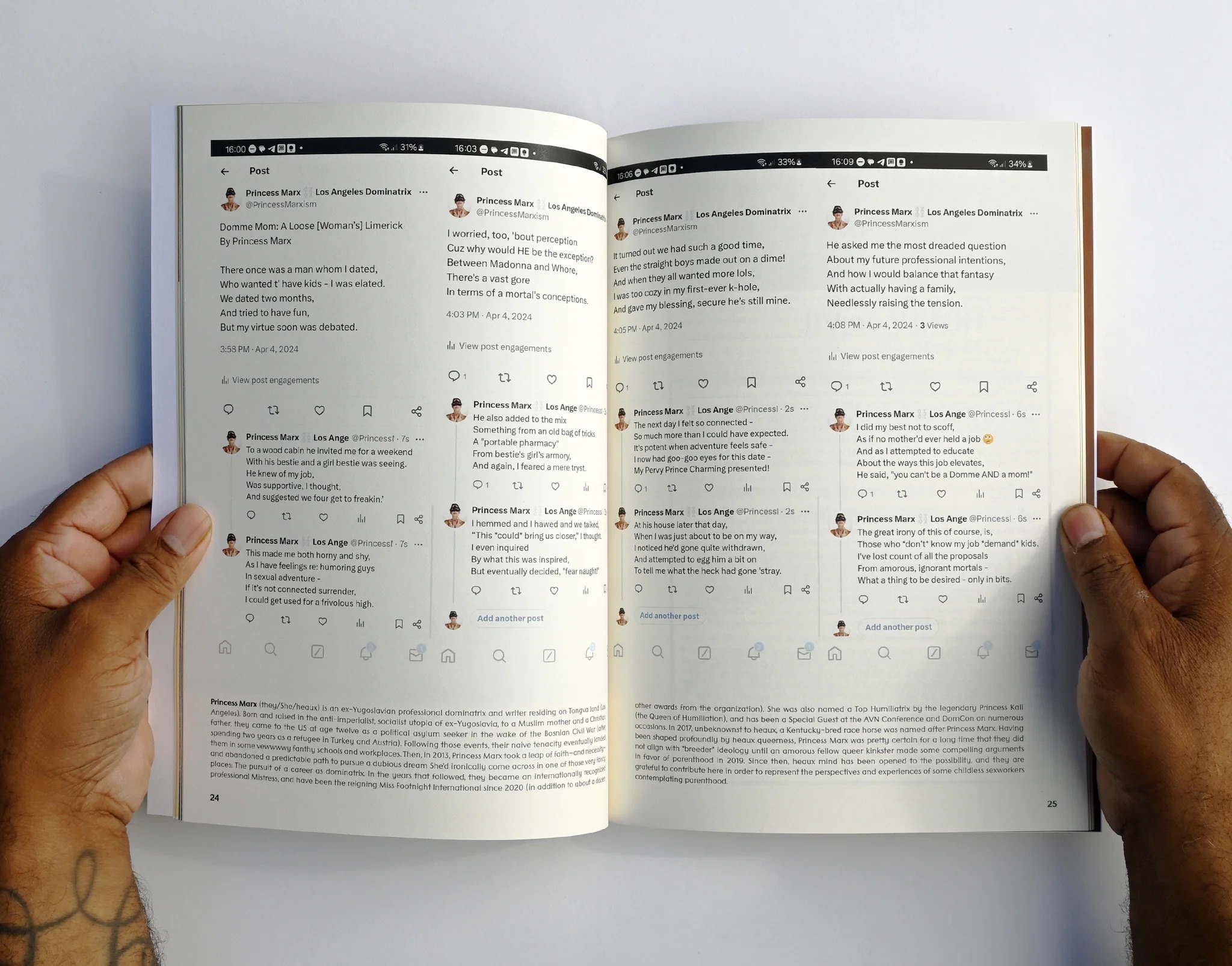
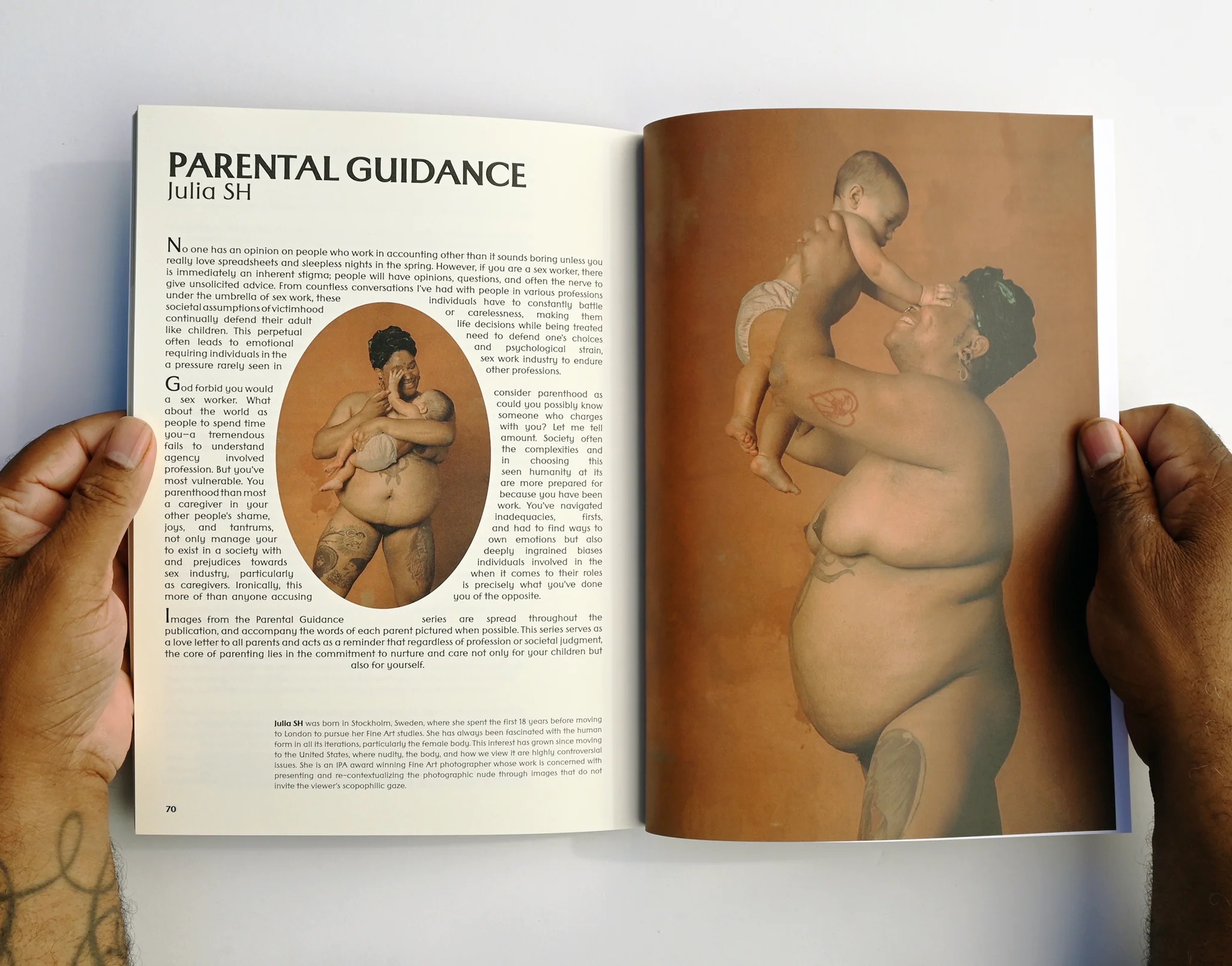
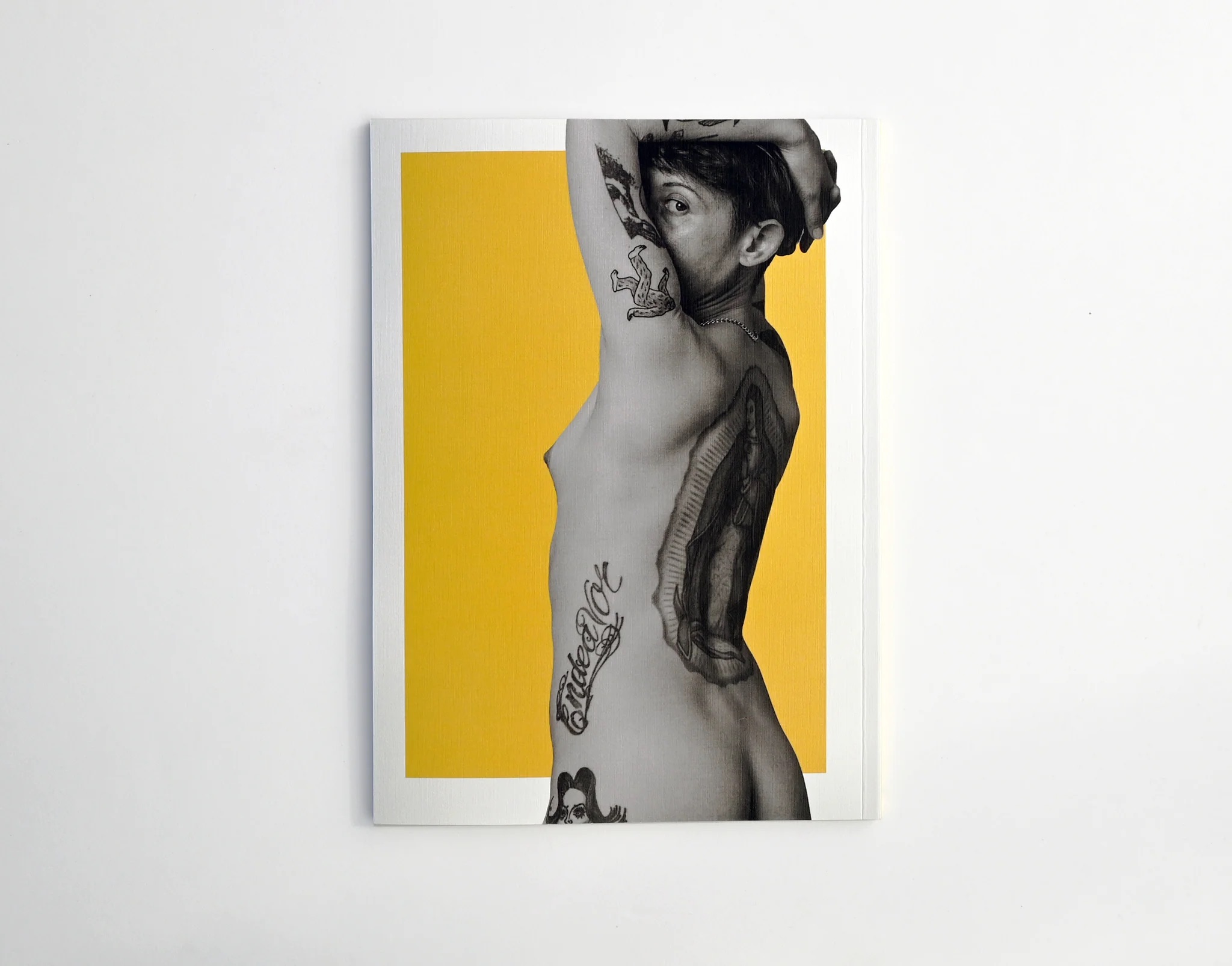
What do erotic labor and child rearing have in common? How do these (normally unpaid) private practices inform one another? ProMomme: A Sex Worker’s Guide to Parenting is a poetic, honest, and practical look into the experiences of parents who work in the adult industry, challenging societal impulses to separate Madonna from Whore. Through essays, poems, interviews, and art, sixteen parents and sex workers share their wisdom, creativity, humor, and grit to reveal how their dual roles as “providers” overlap in complex ways, and how each role helps inform, strengthen, and poses challenges for the other. Inspired by the aesthetic of vintage parenting magazines, ProMomme offers guidance and companionship to SWers and civilians alike, touching on topics ranging from talking to one’s children about sex and sex work, to navigating postpartum bodily changes working in an industry of commodified desirability. ProMomme uplifts these personal experiences to destigmatize doing sex work as a parent to celebrate intimate labor in all its forms.

Design: Sophia Coleman

Contributors: Carmen of Angeles, Emme Witt-Eden, Frenchie Stoner, Gaby G., Honey de Vil, Julia SH, Lorde Destroyer, Lucy Khan, Piggy Lu, Princess Marx, Mari V, Maxine Holloway, and Yin Q

ProMomme was created in collaboration with Sex Workers Outreach Project Los Angeles (SWOPLA) as part of Kim Ye’s CA Creative Corps fellowship generously supported by the California Arts Council and administered by Community Partners.

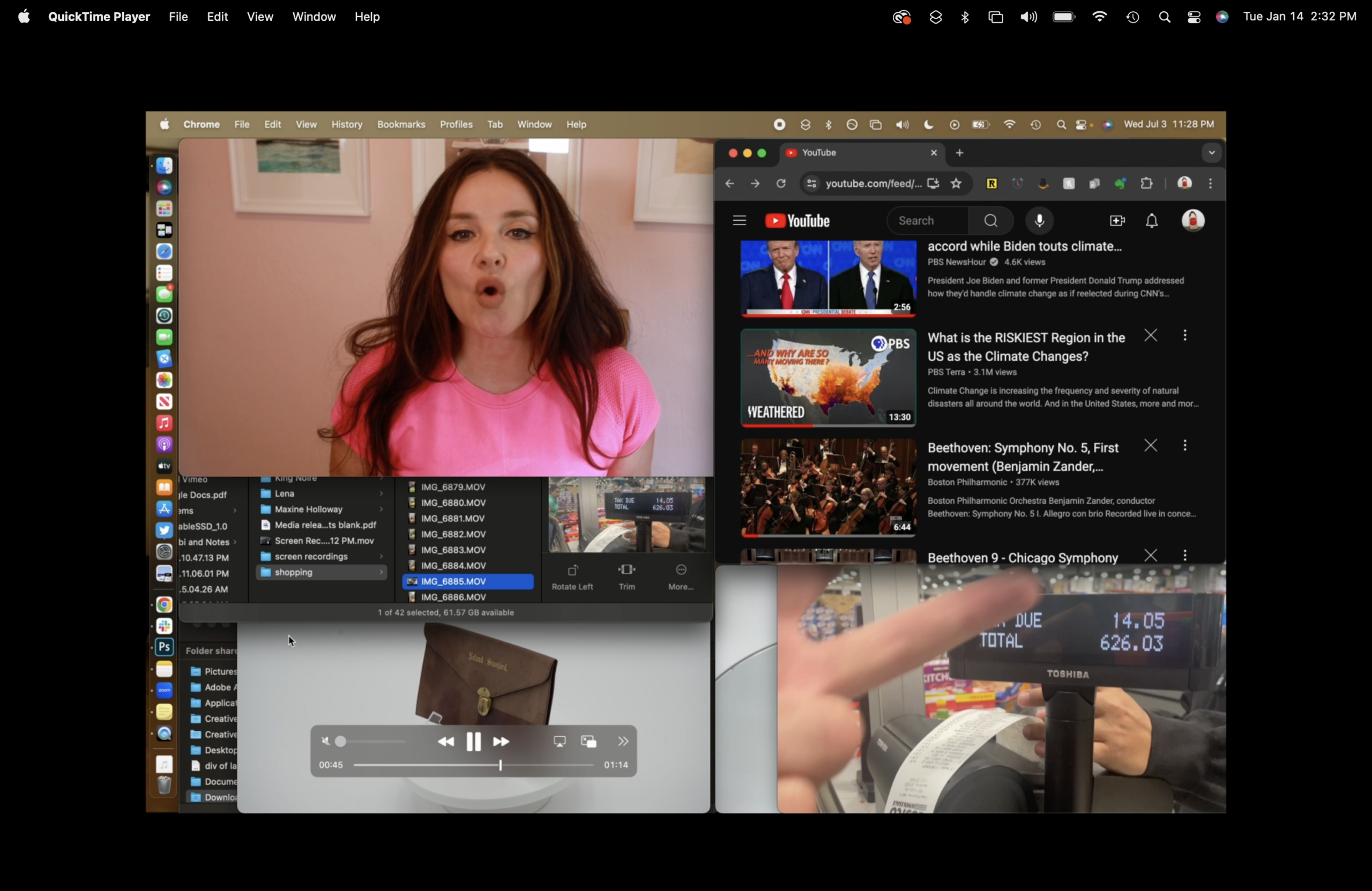
A Costco Shopper Analysis

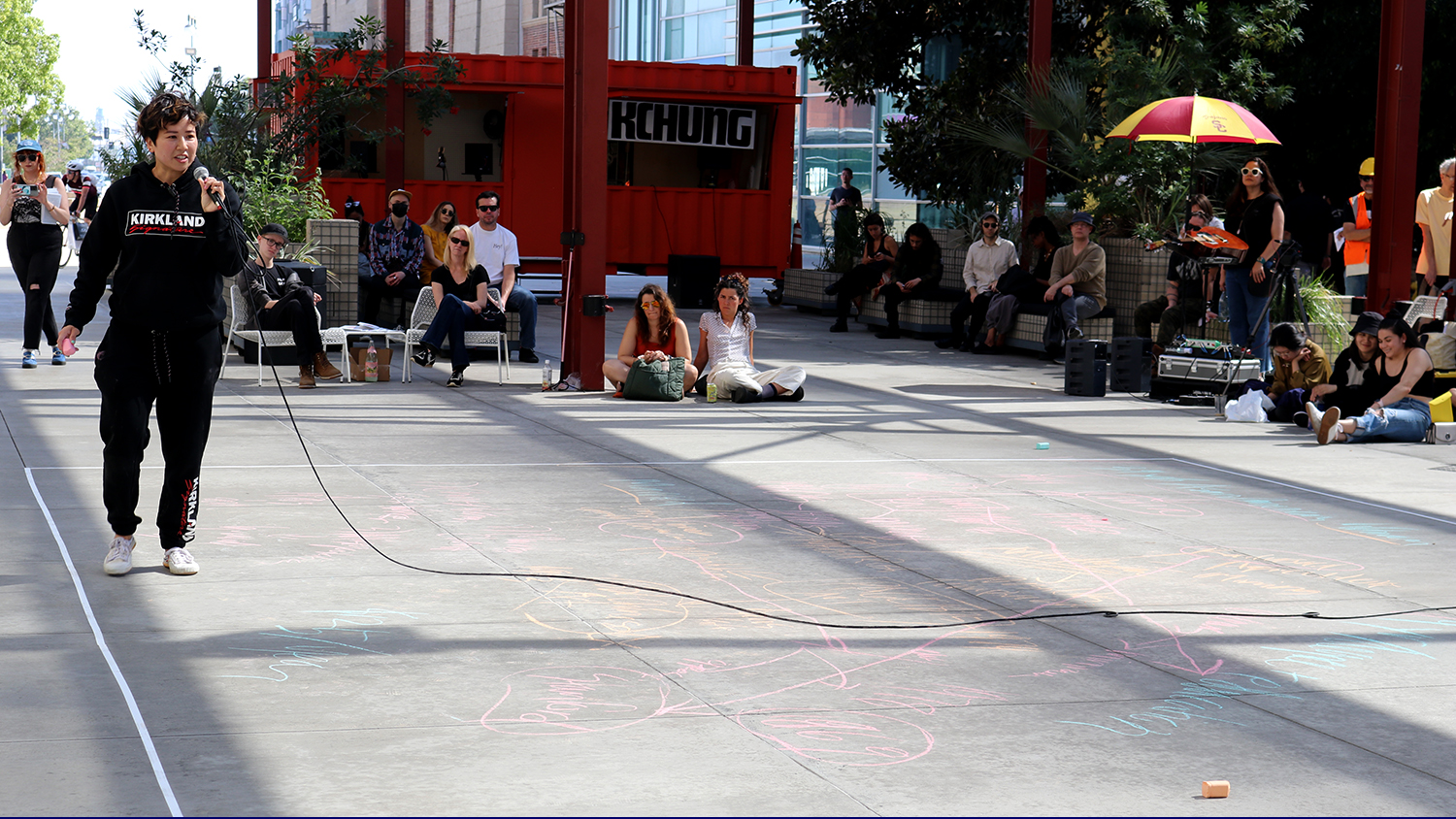
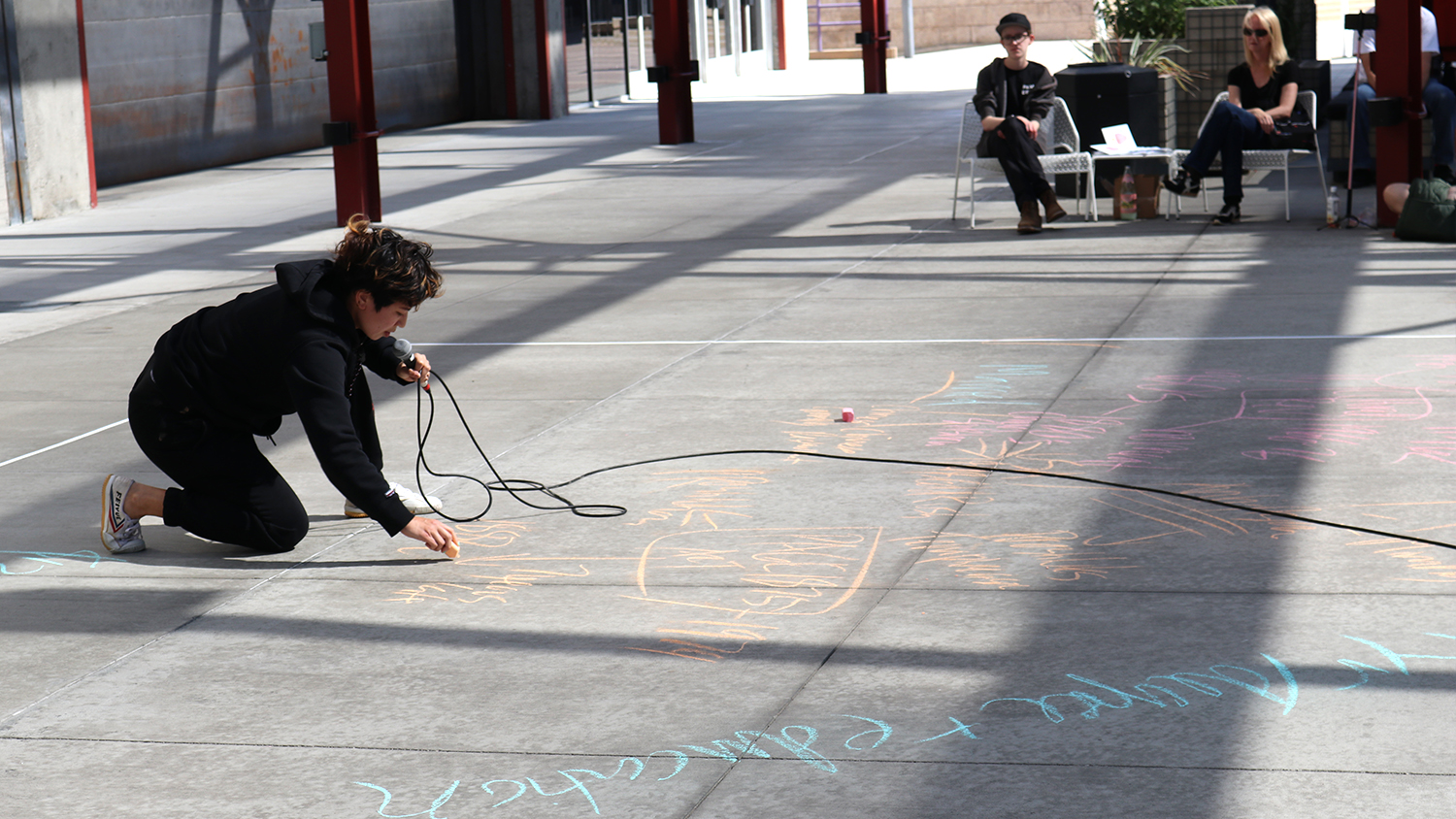
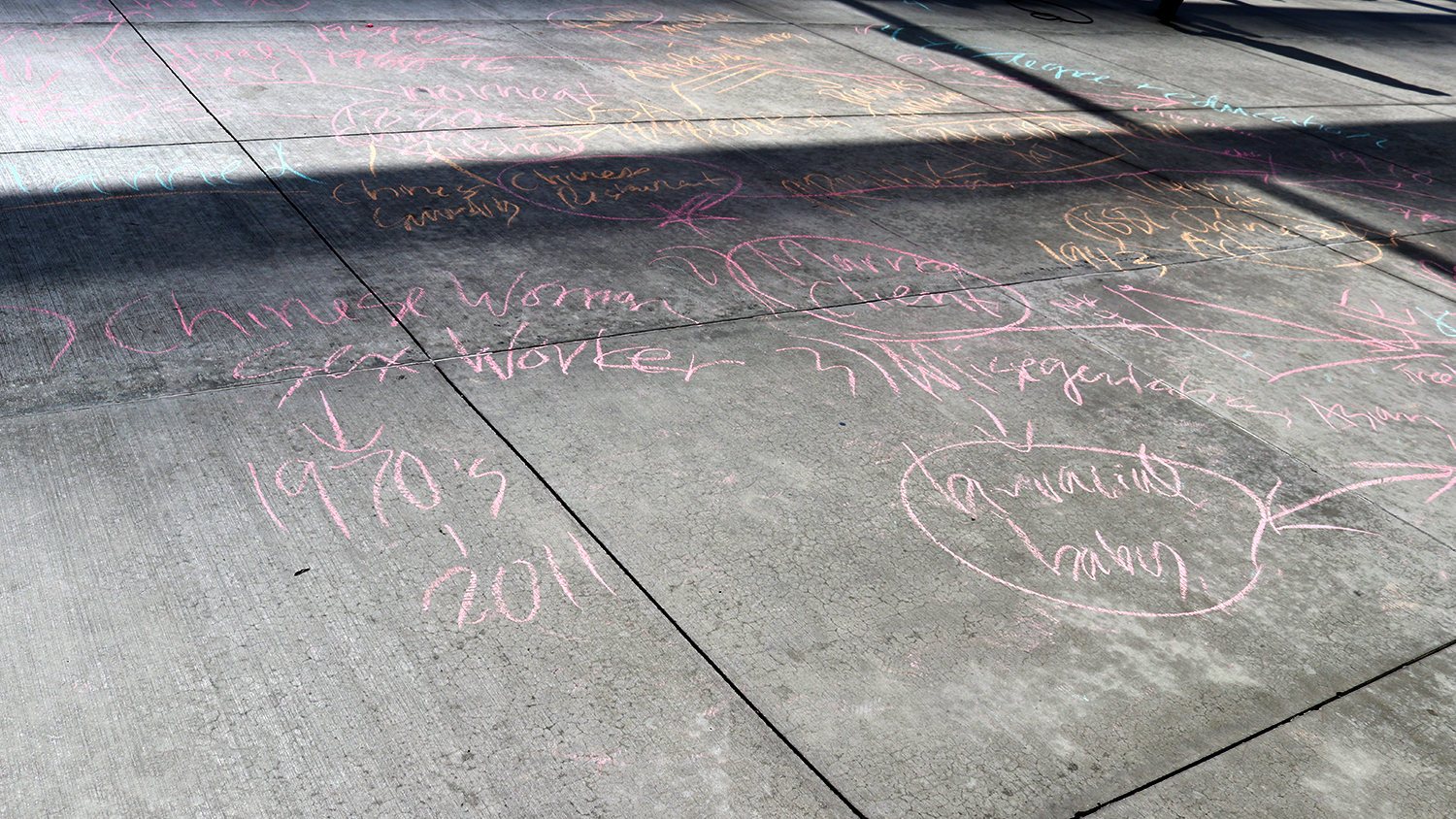
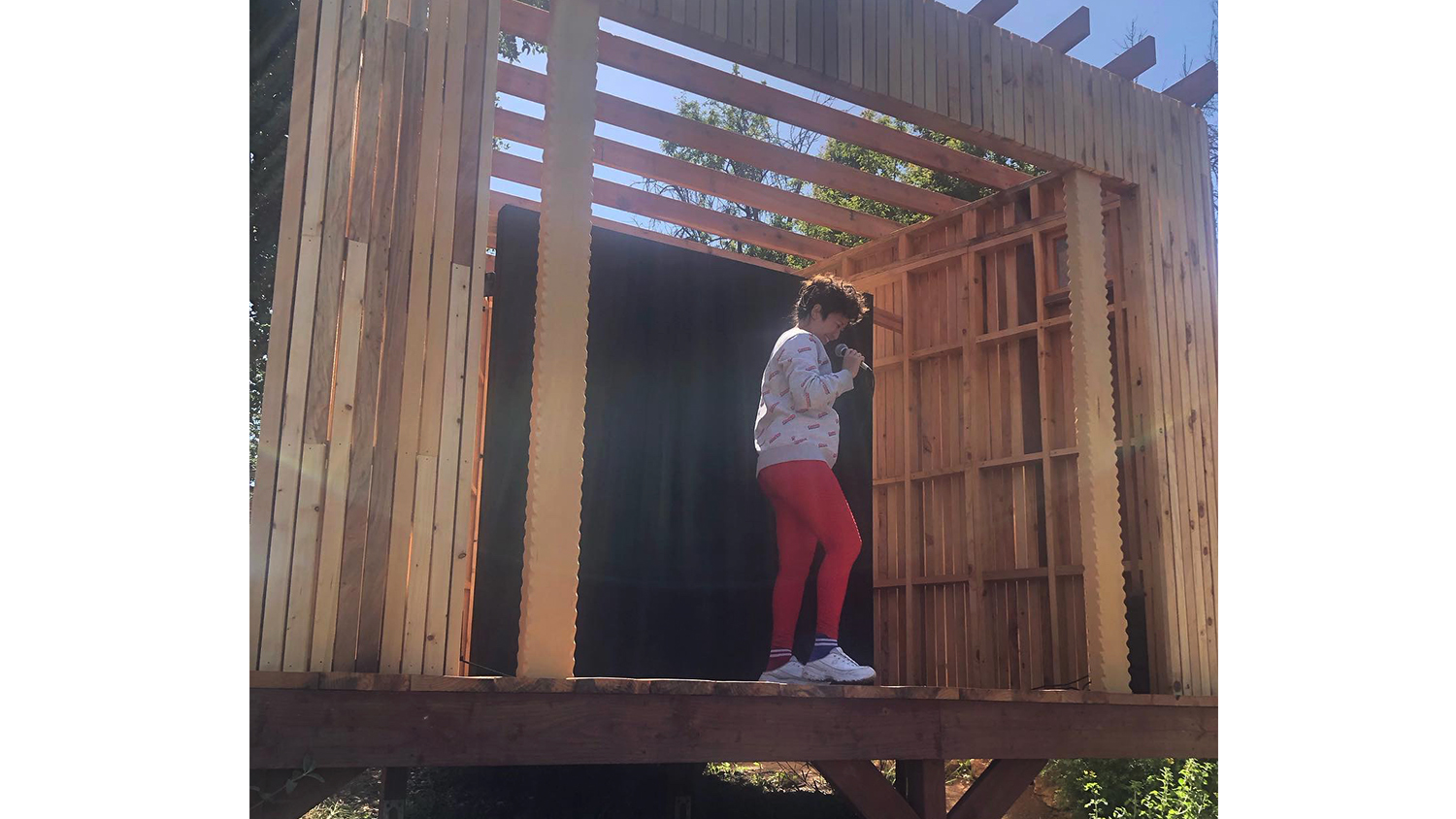
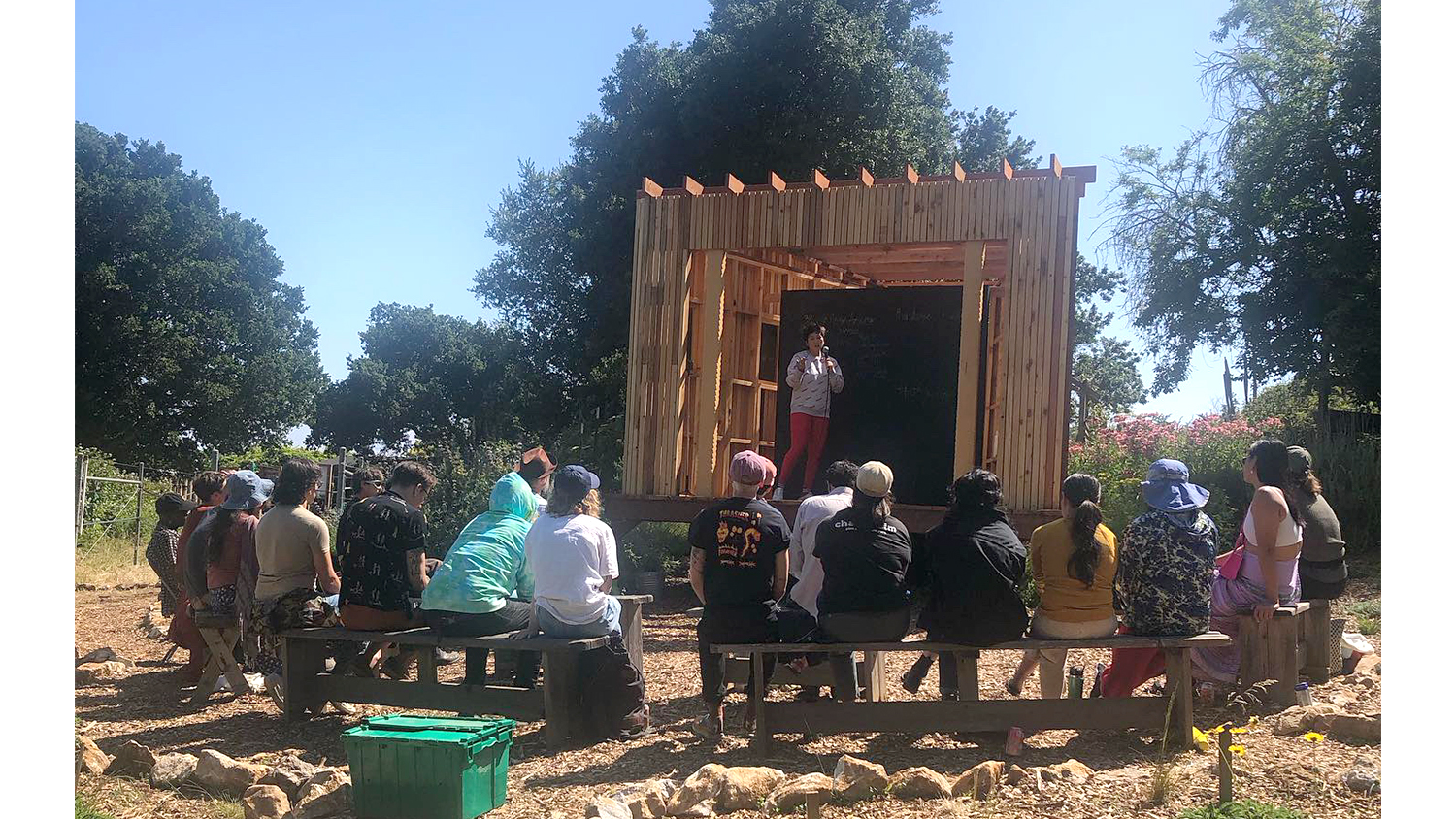
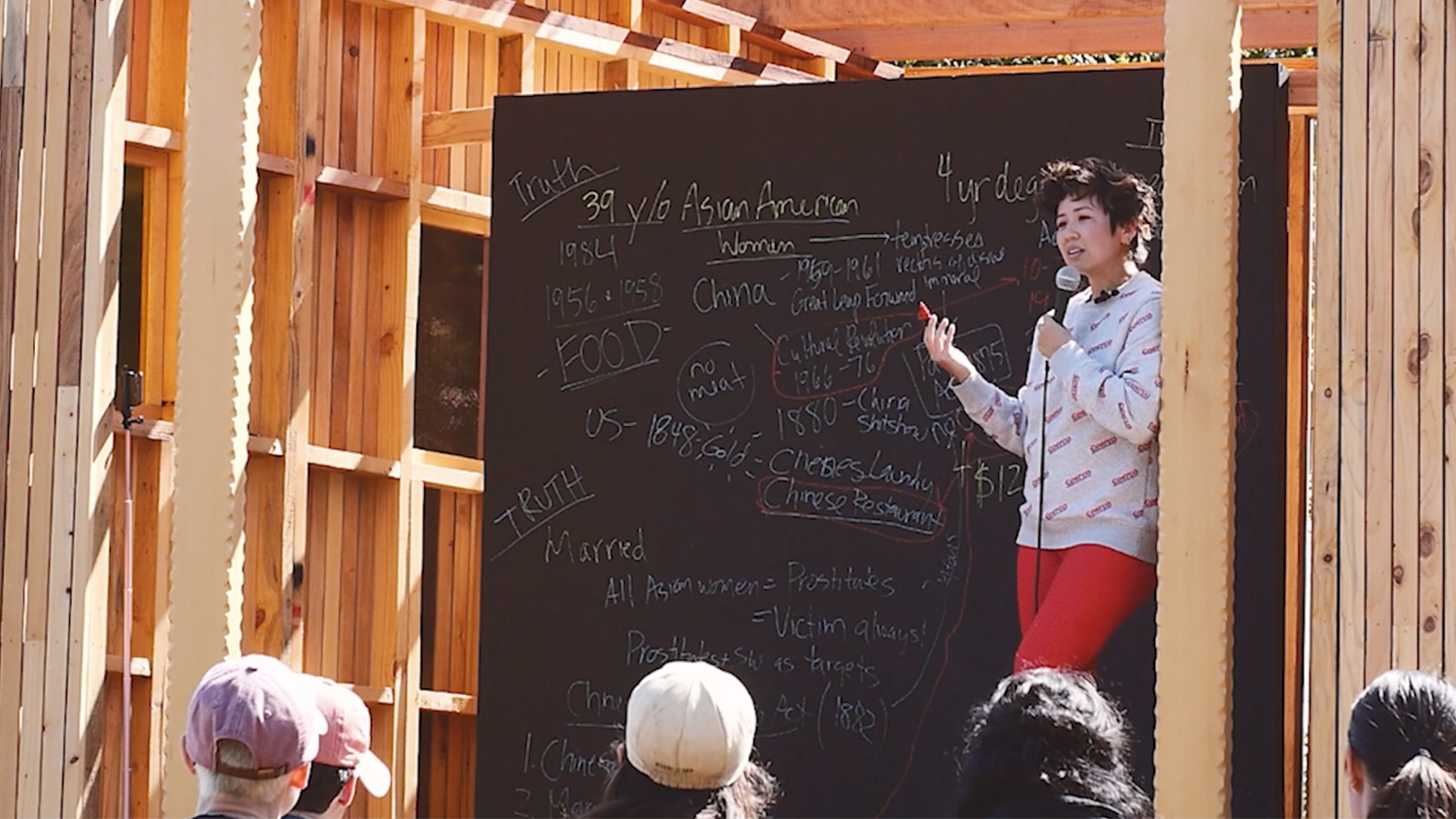
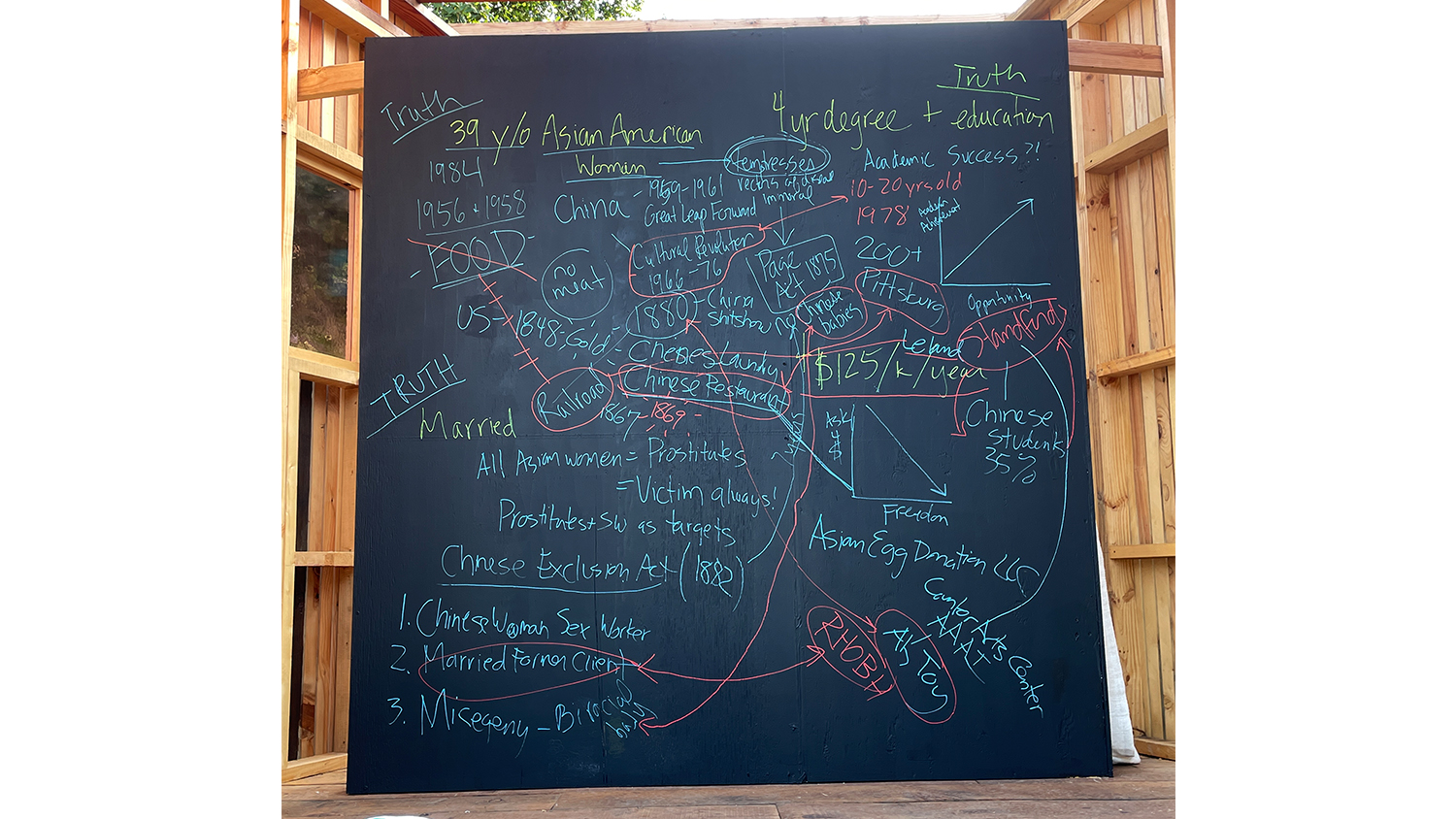
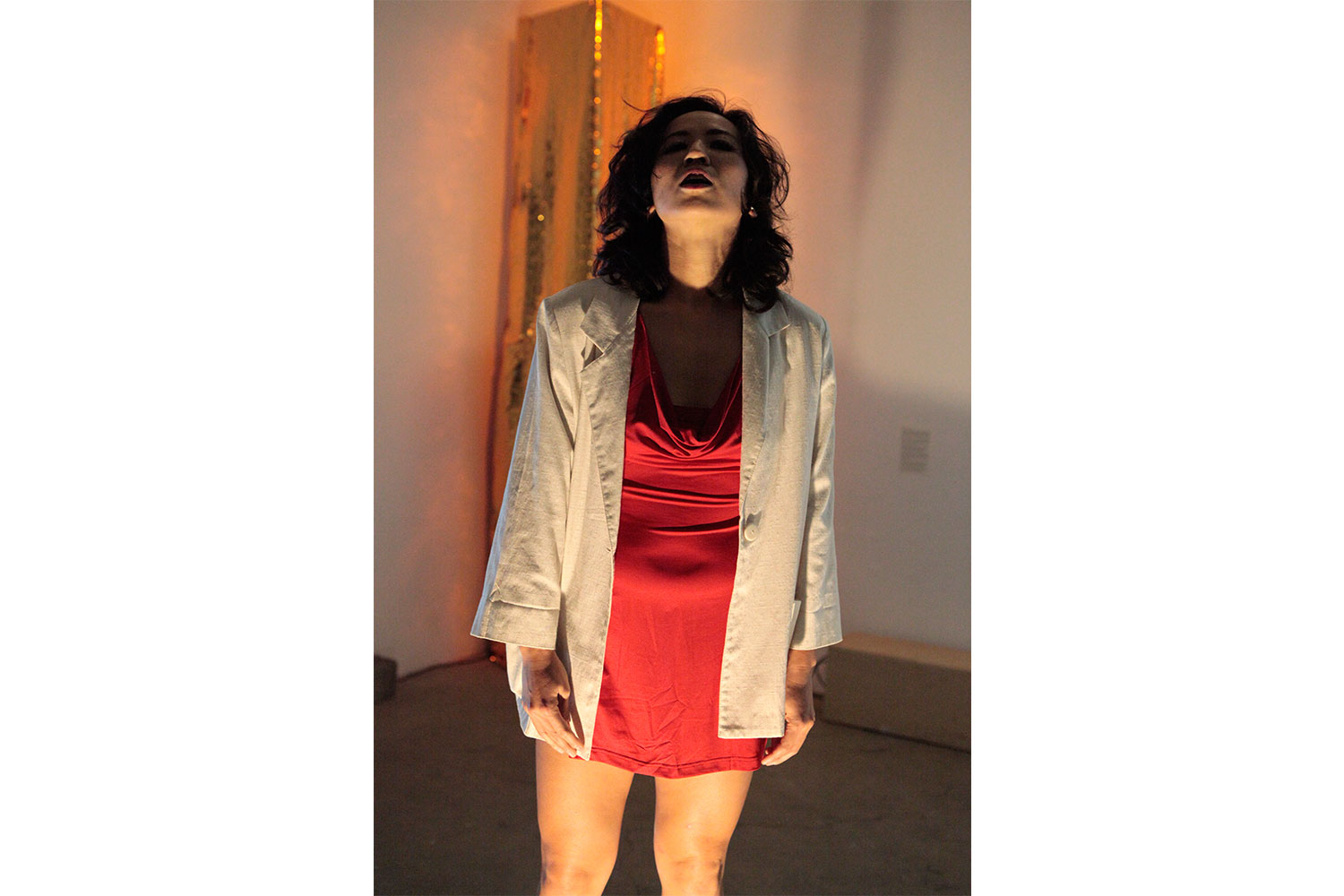
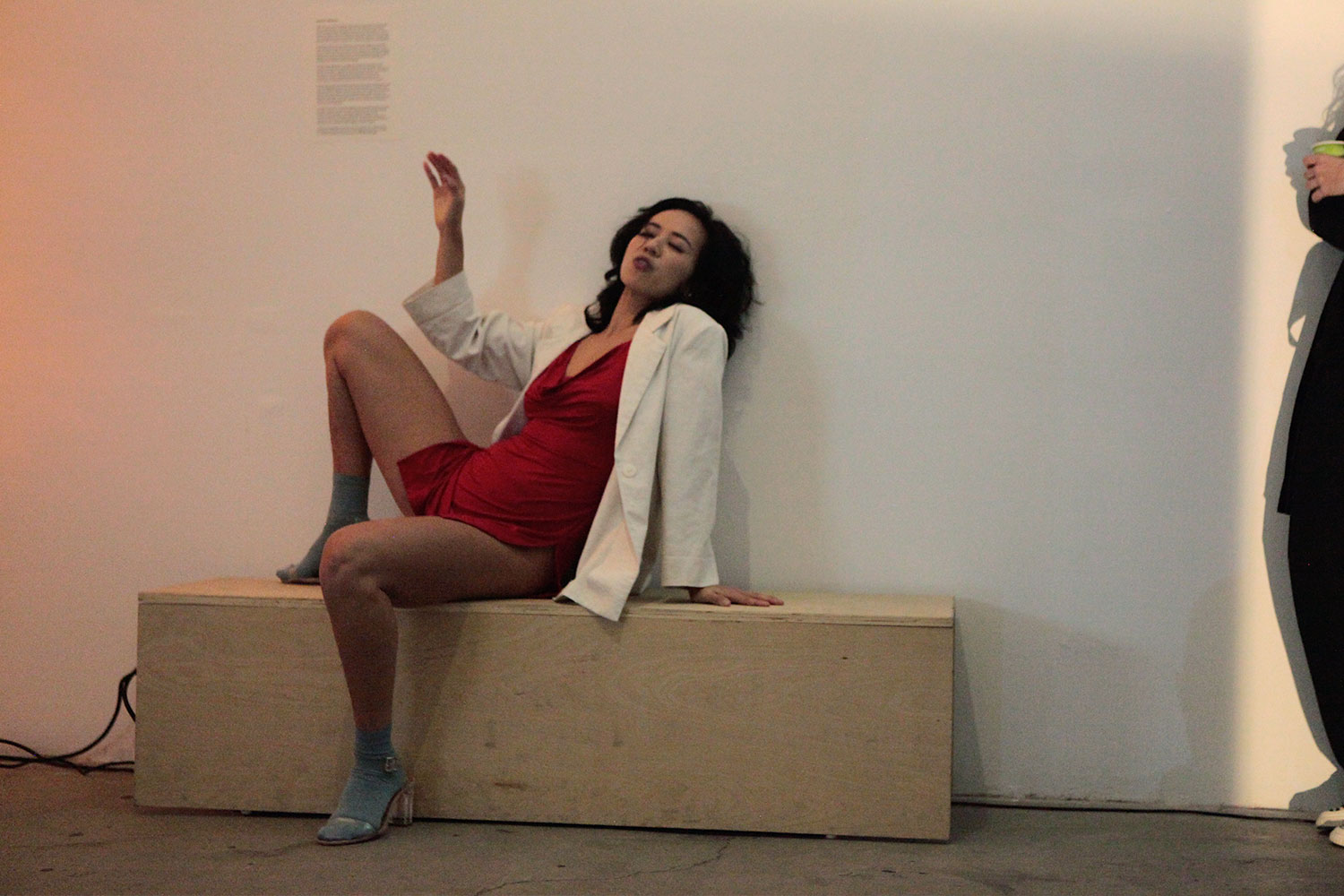
Inspired by the genres of stand-up comedy and the academic lecture, A Costco Shopper Analysis is a 50-minute performance in which the artist traverses the topics of food, fertility, and border control.  According to Business Insider, the typical Costco shopper is a 39 y/o Asian American married woman who has a 4-year degree or higher level of education, and makes over $125k/year. Donning a Kirkland wardrobe, Ye embodies this demographic and performs a personal analysis that connects Costco to family mythology, Chinese American history, US immigration policy, and Stanford University. Through this process, the artist uncovers one lineage behind the typical Costco shopper, and what it can tell us about the consumption of, and consumption by, Asian bodies in the United States. Watch the 4-minute cut of the performance documentation below or the longer 18-minute cut here.

This piece has been performed at the MOCA Geffen in Los Angeles and the Greenhouse Project at the University of California, Santa Cruz.

Matrilineal Ambivalences

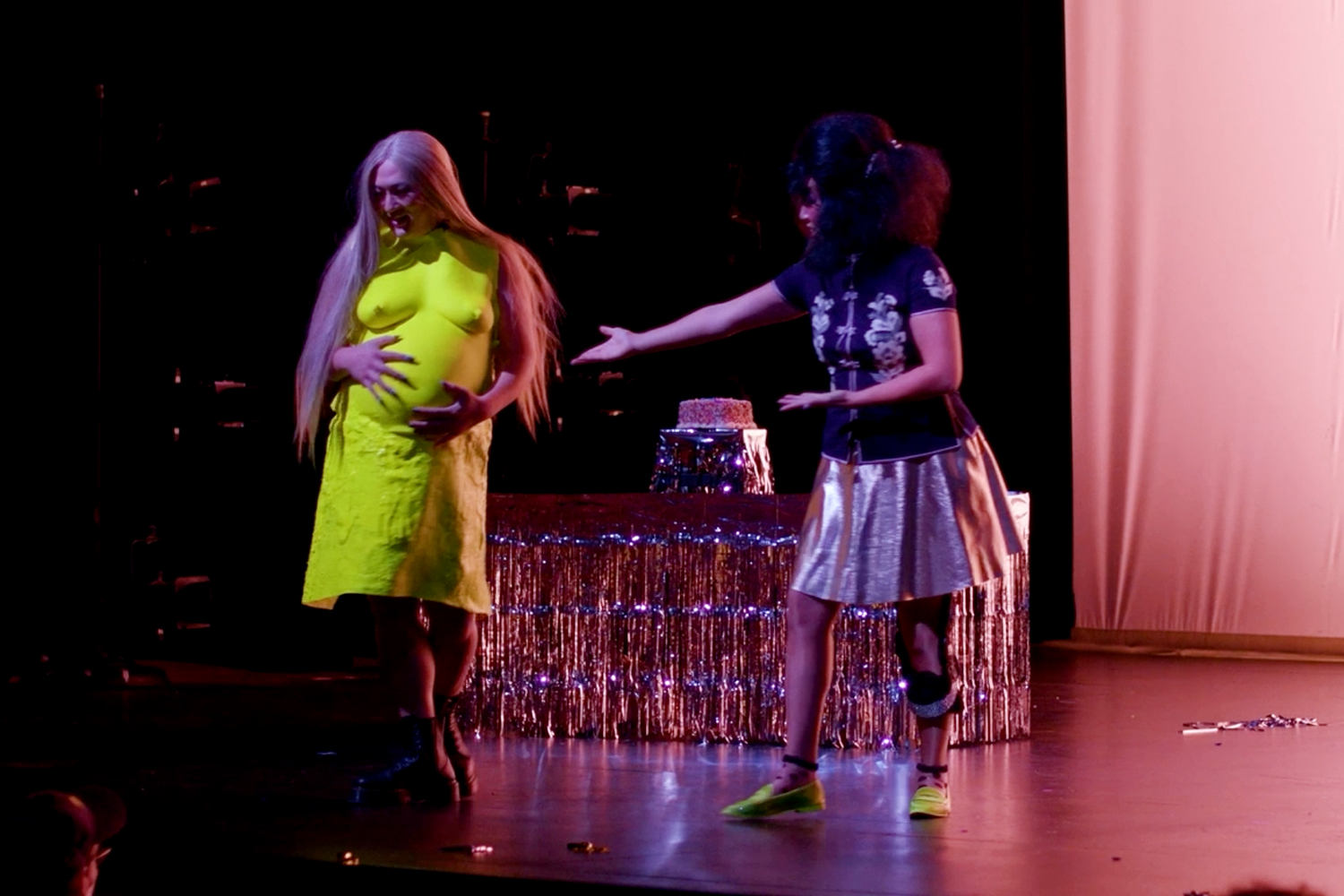
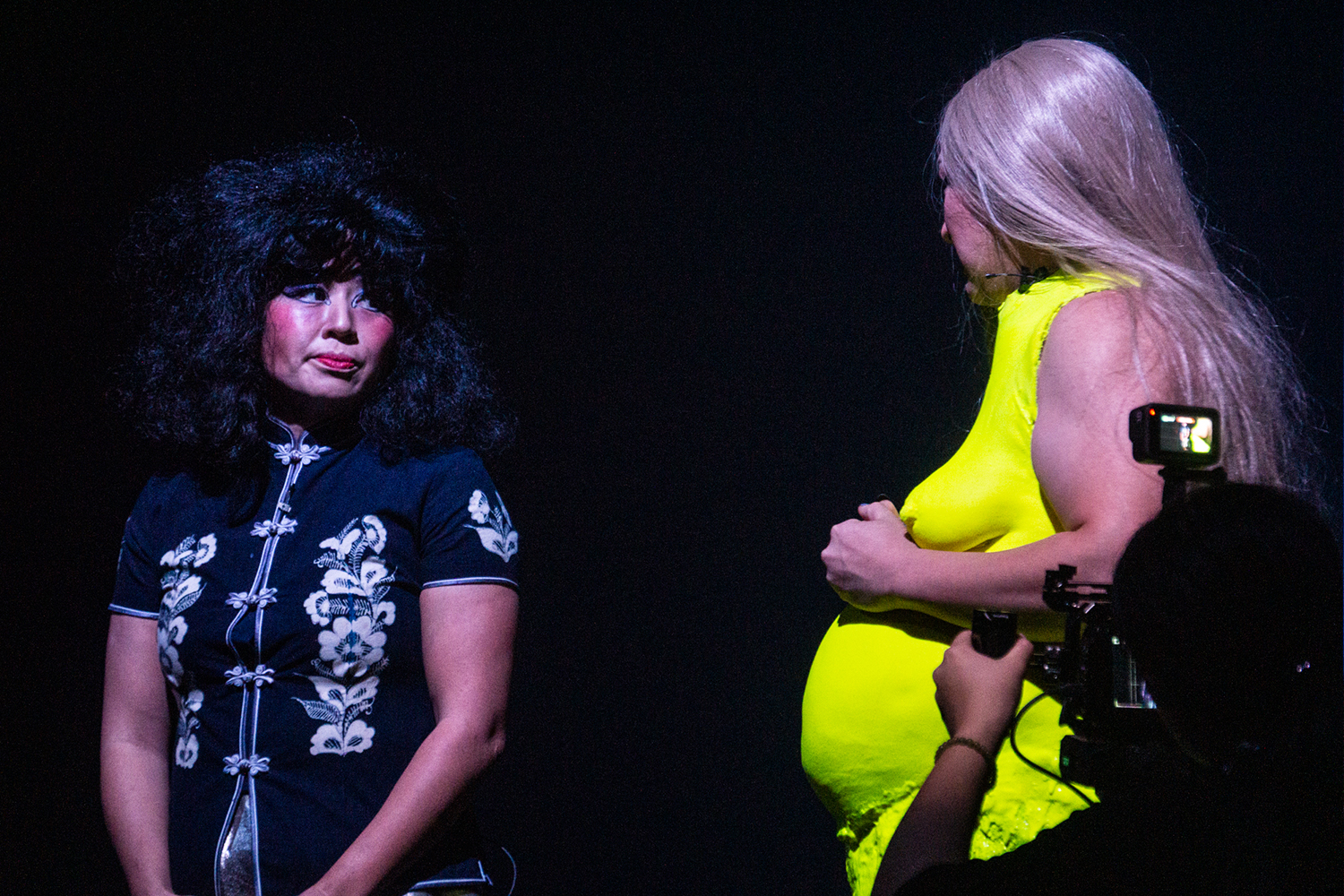
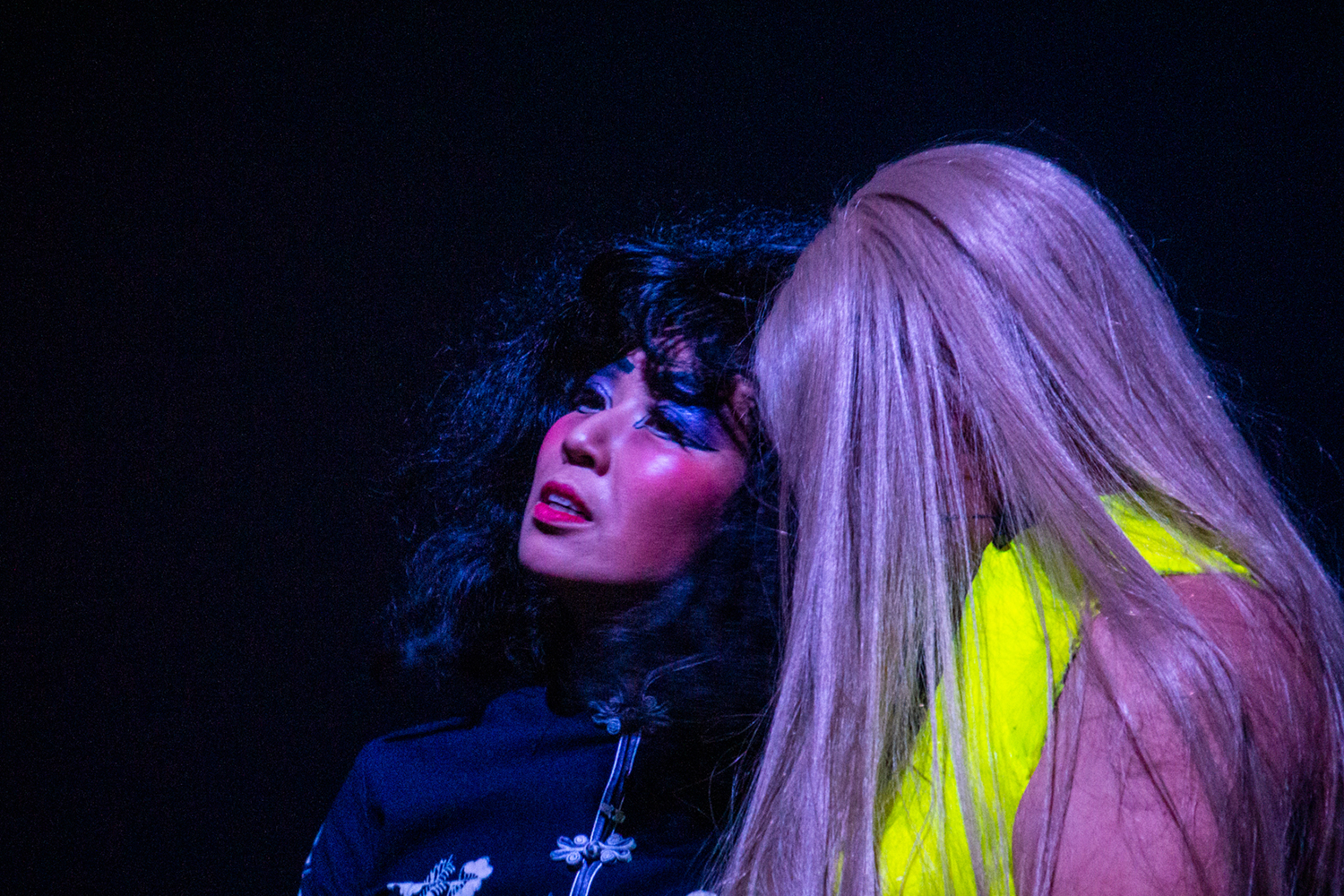
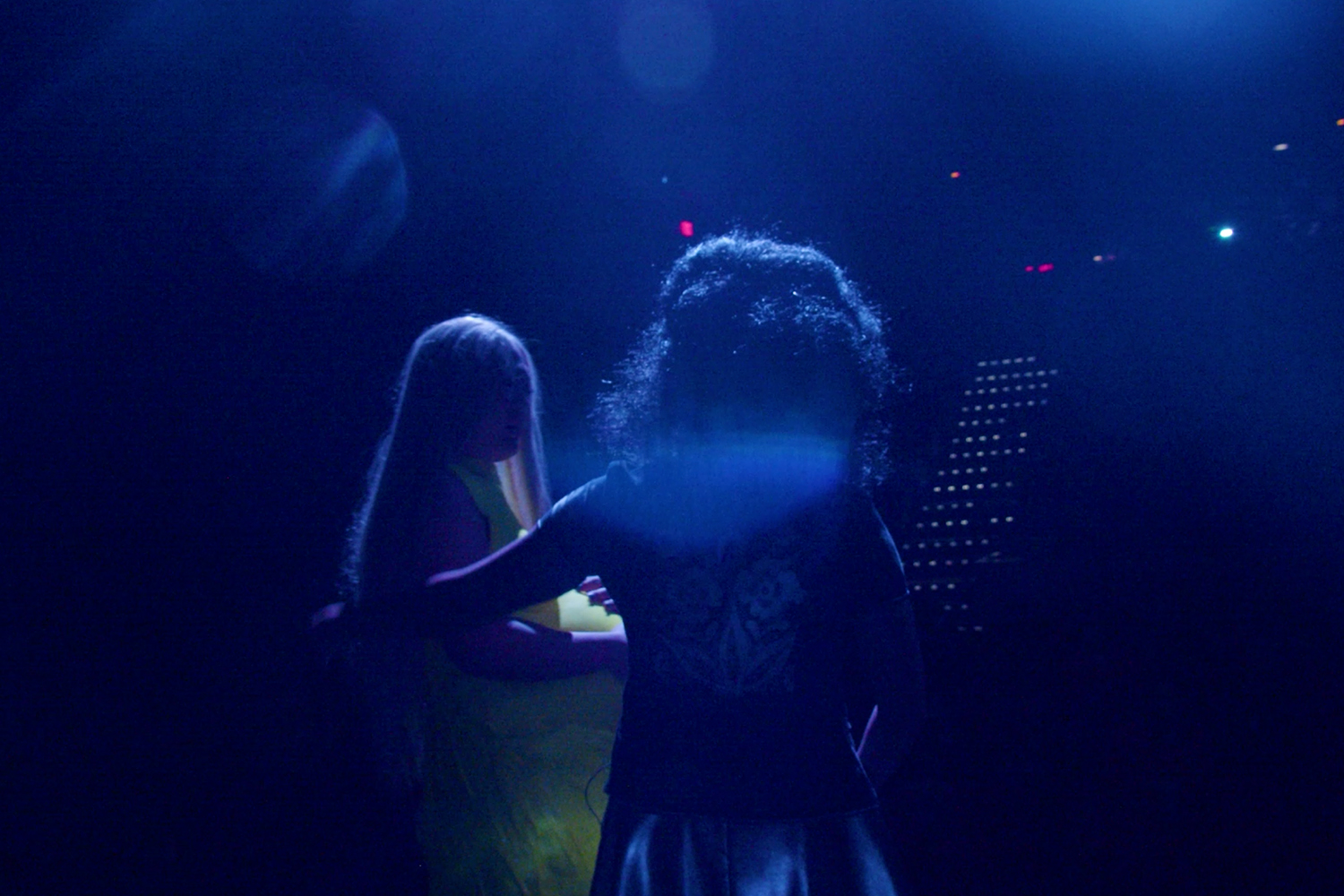
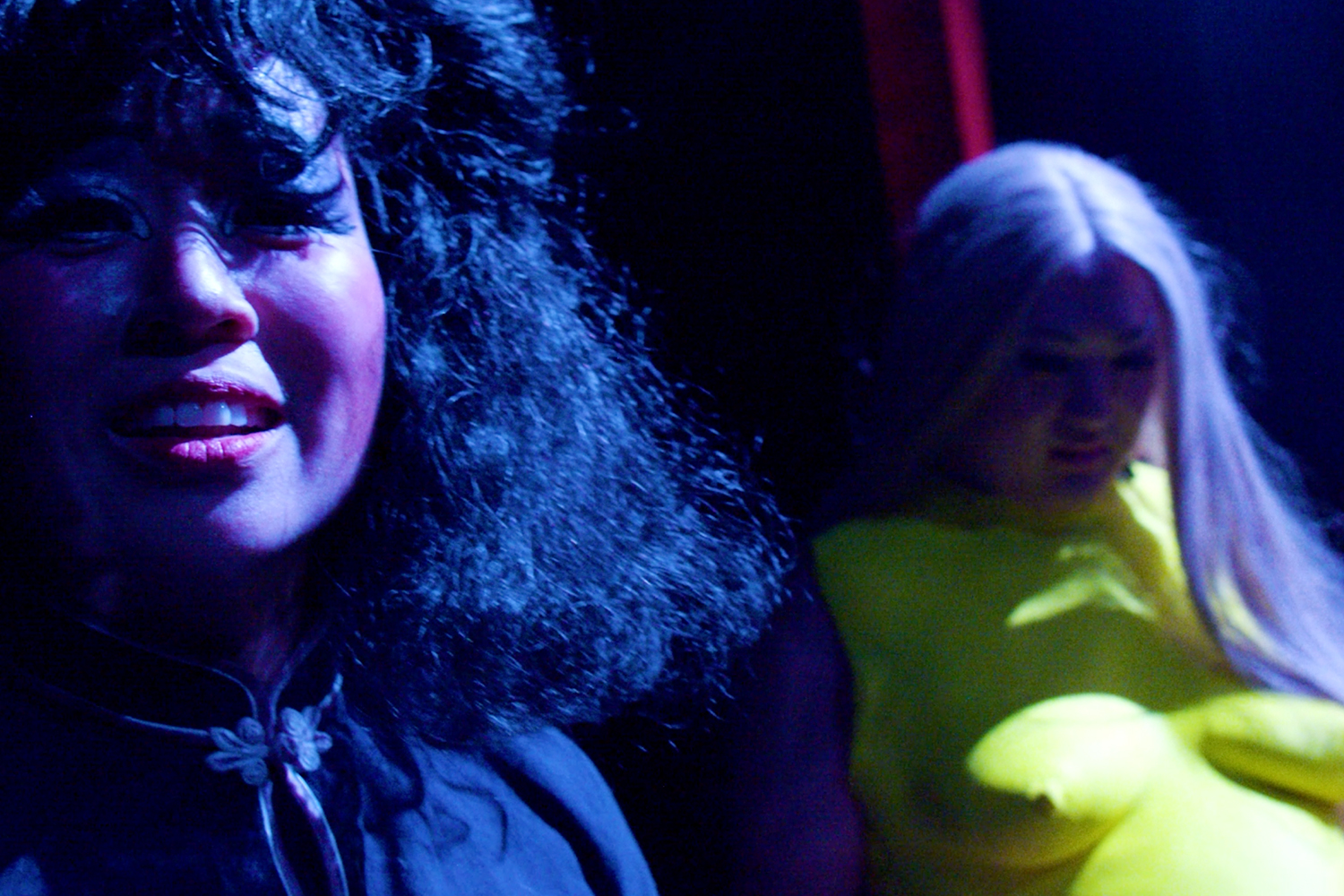
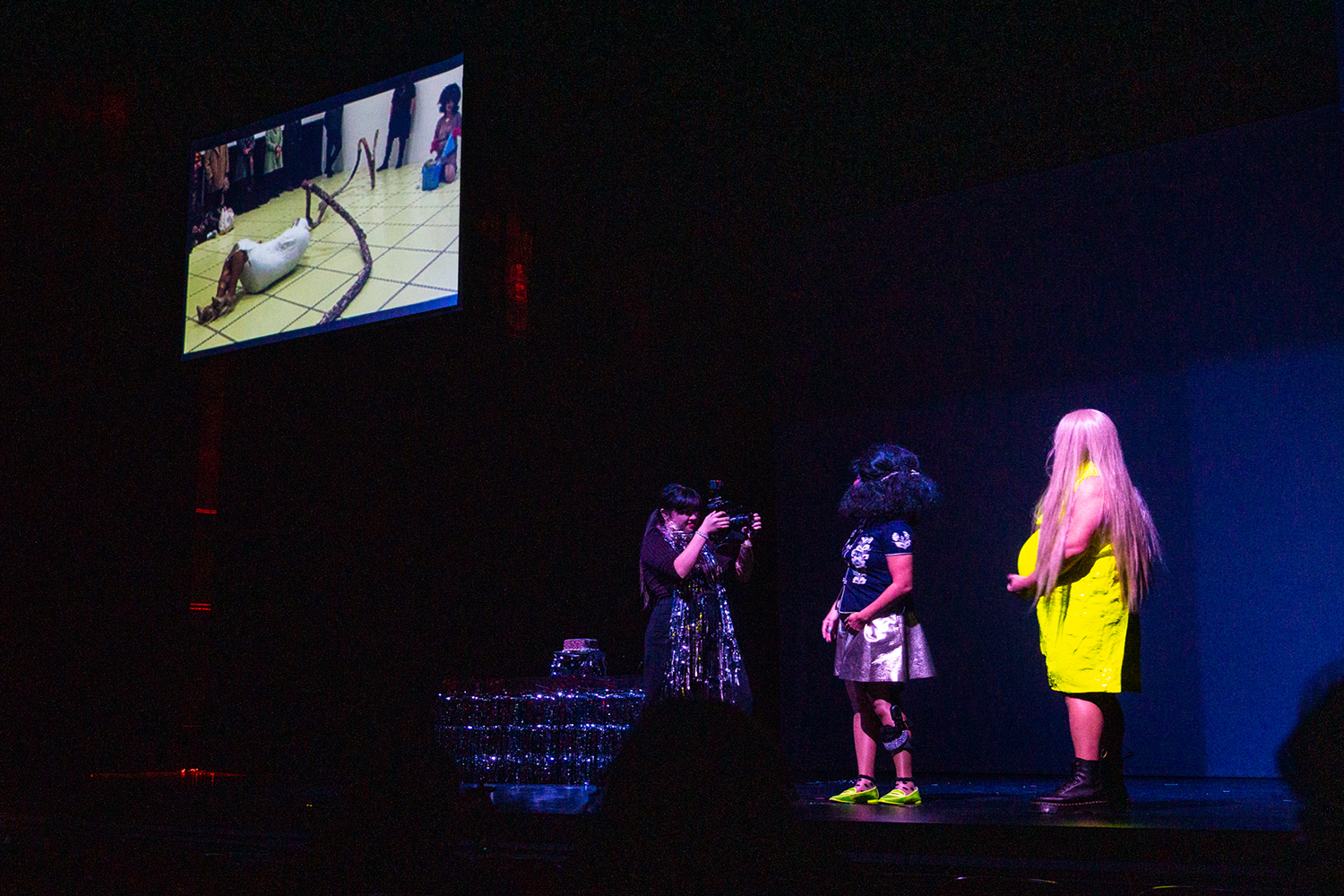
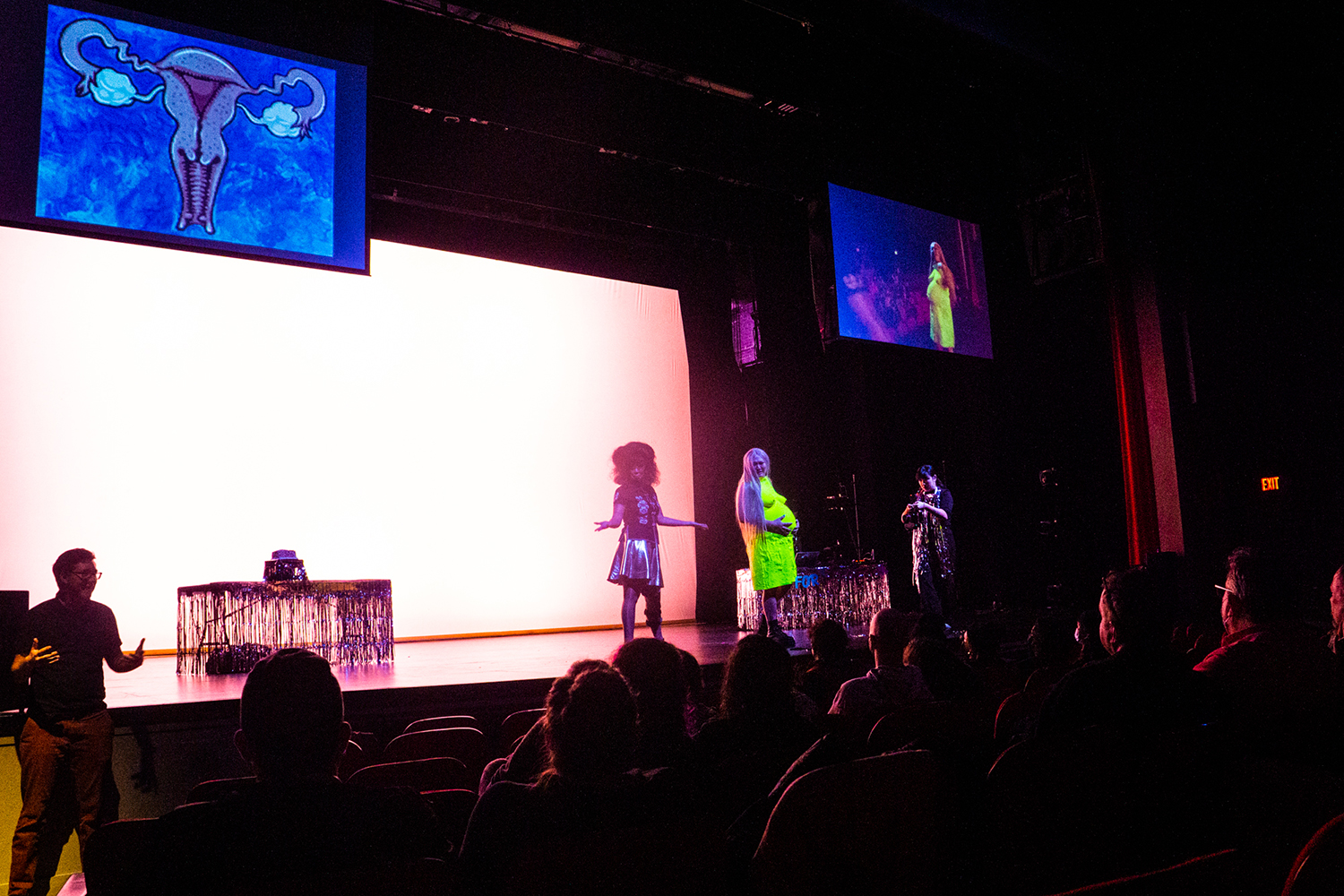
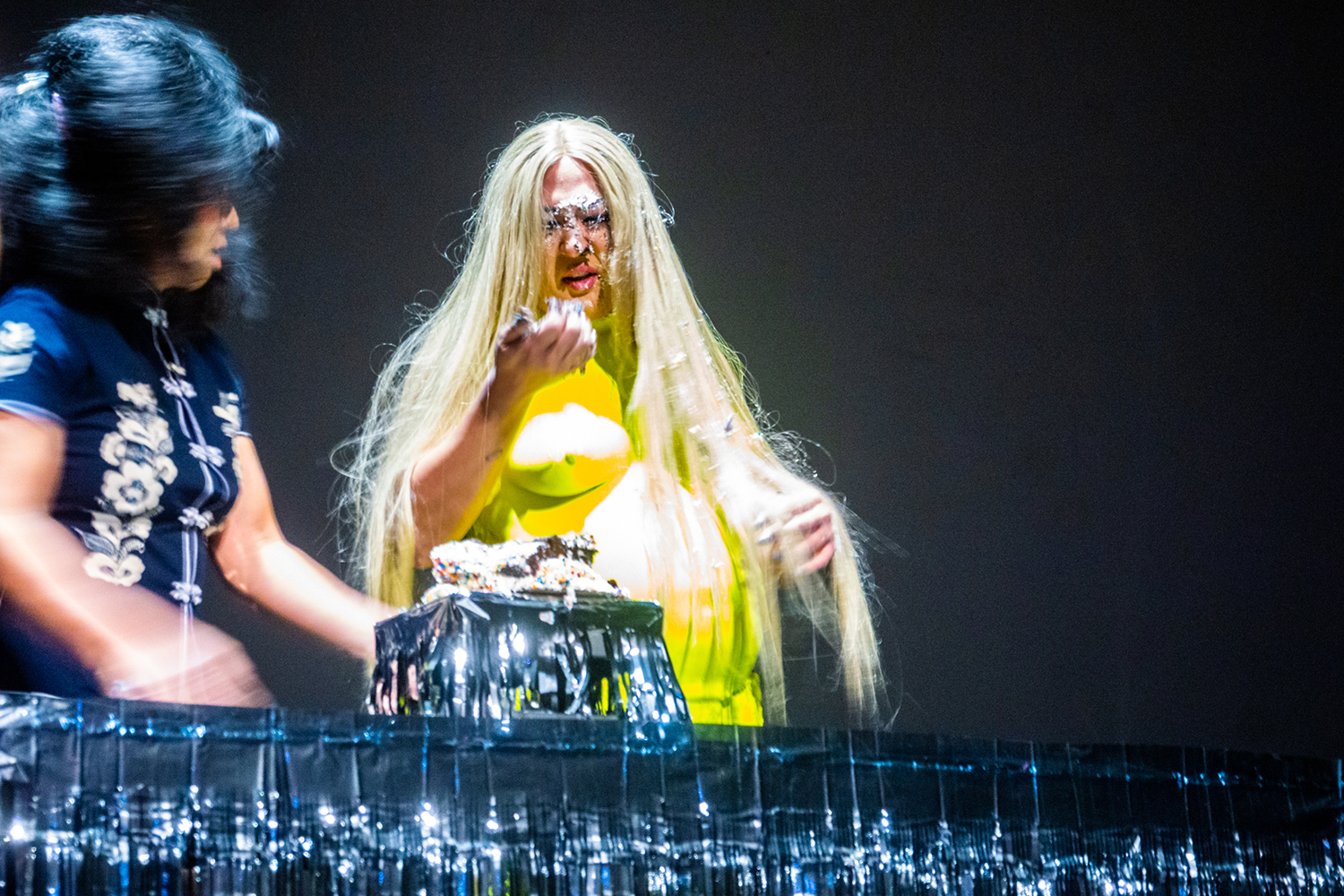
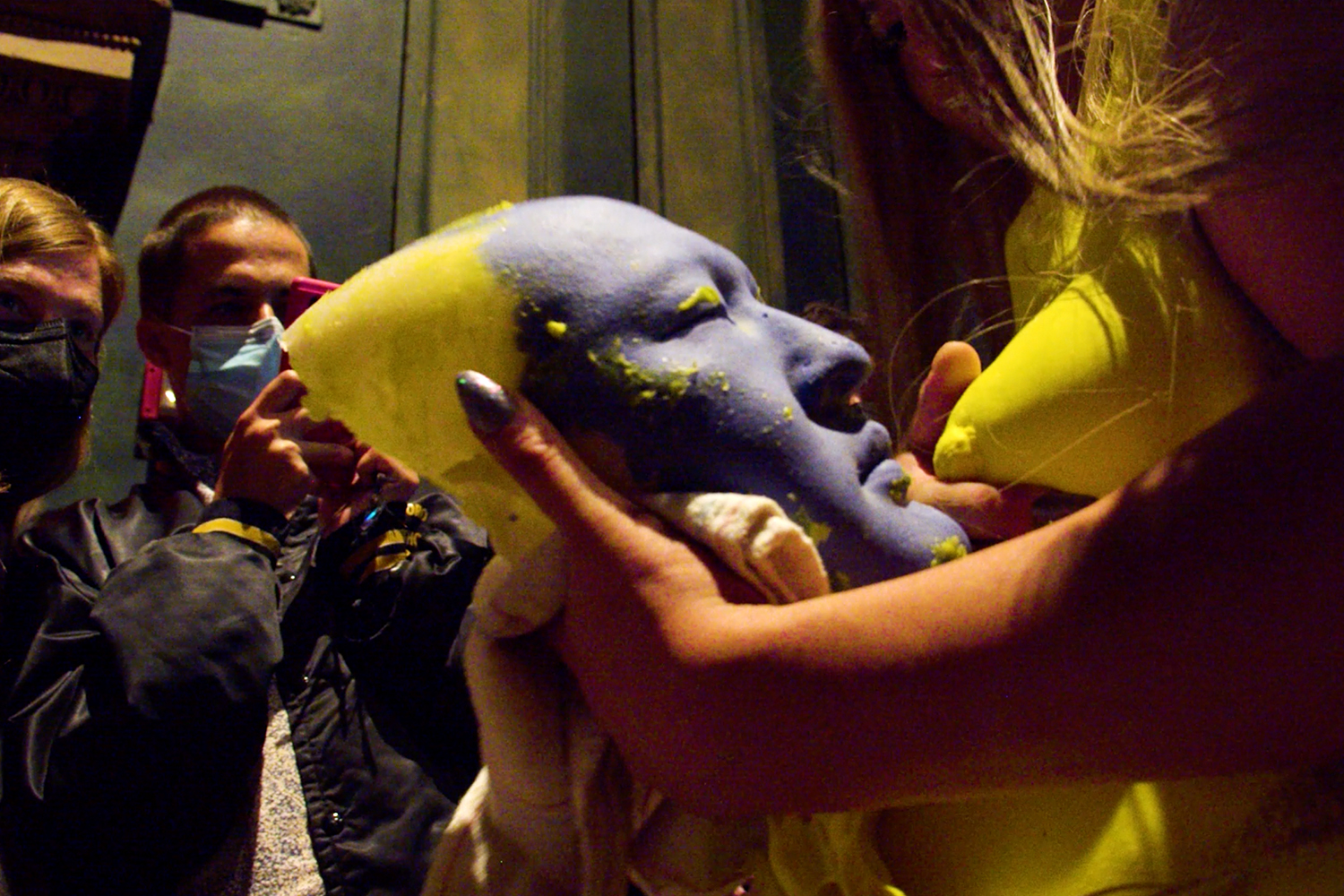
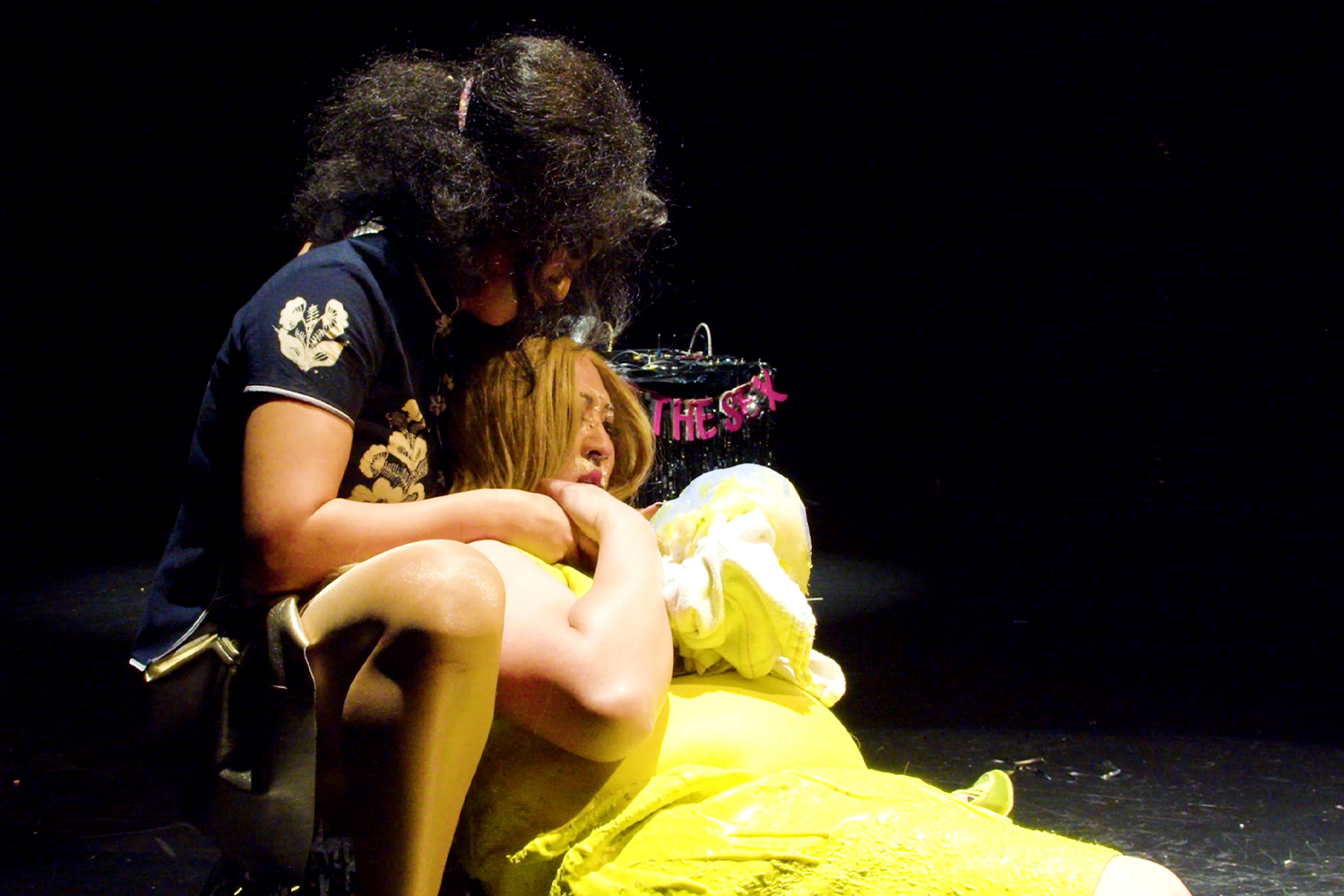
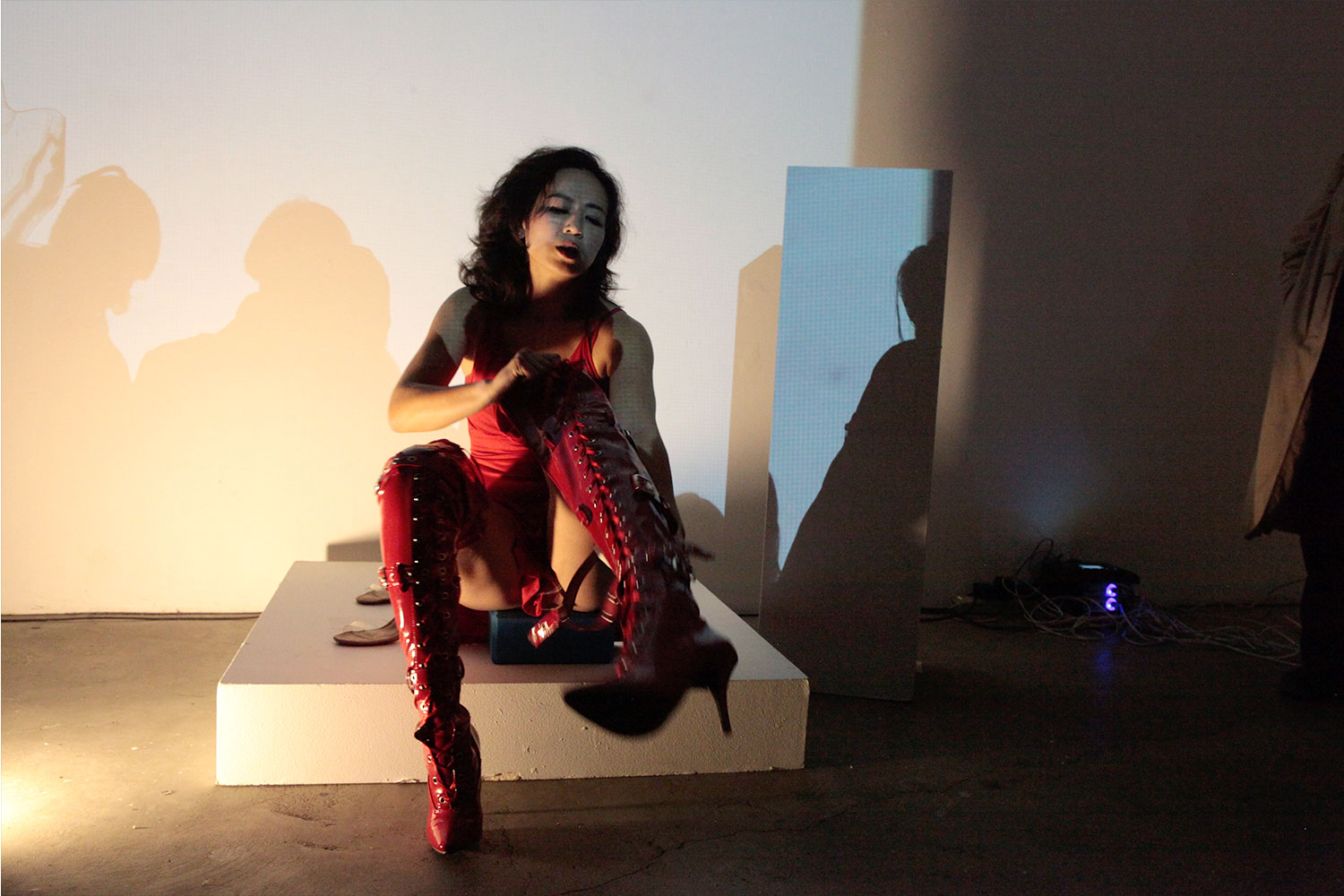
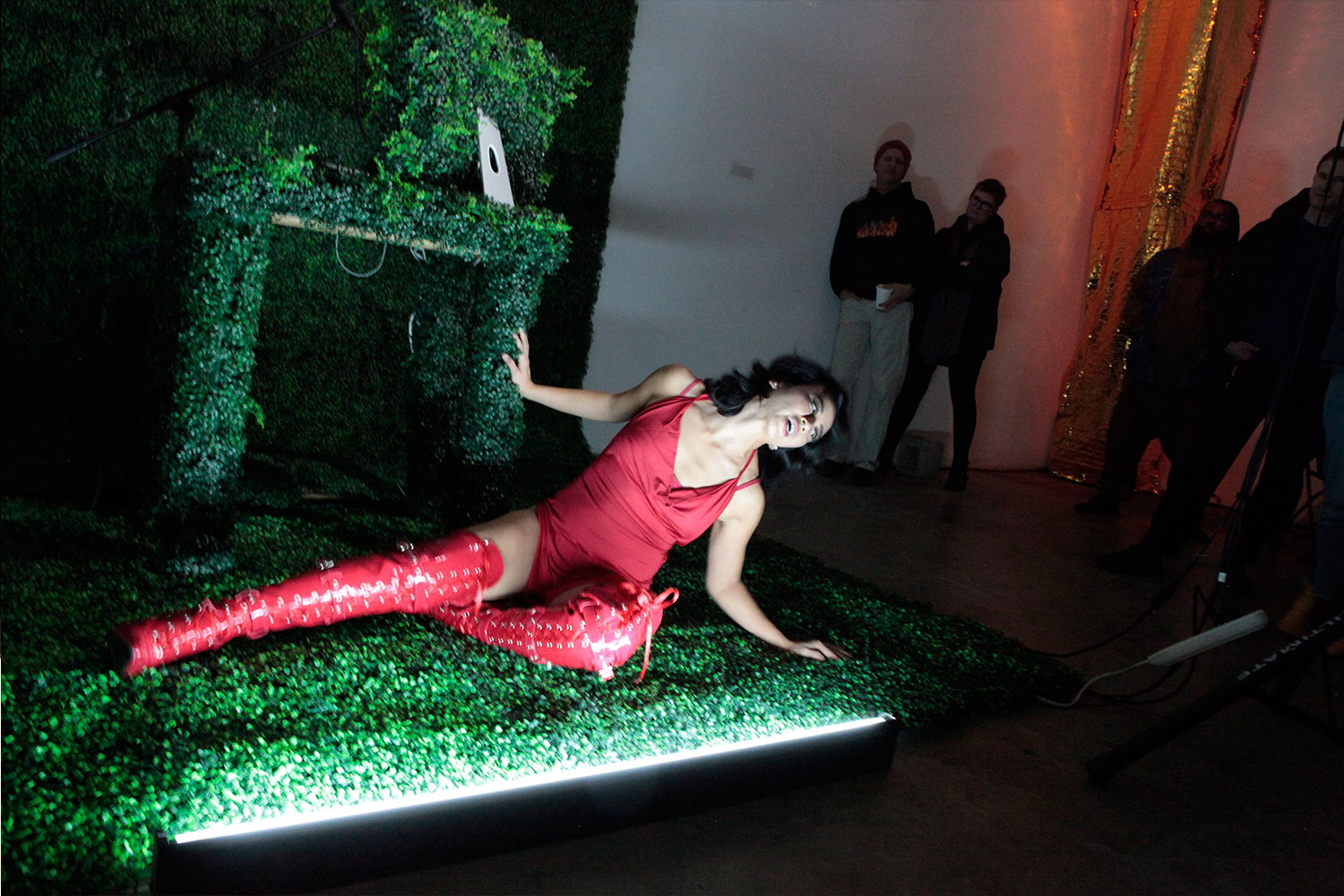
Matrilineal Ambivalences is a new performance by Multi-disciplinary artists and performers Young Joon Kwak and Kim Ye that continues their series of collaborative performances Rites of Matrilineal Dissent (2015 – ongoing). Kwak and Ye reprise their roles as “Baby Girl” and “Mommy,” enacting their dissent to harmful notions of womanhood and femininity, and emergence from the ruptures of motherhood, gender transition, migration, and the desire and pain that divide them from their lineage and the invalidations of their existence their own families.

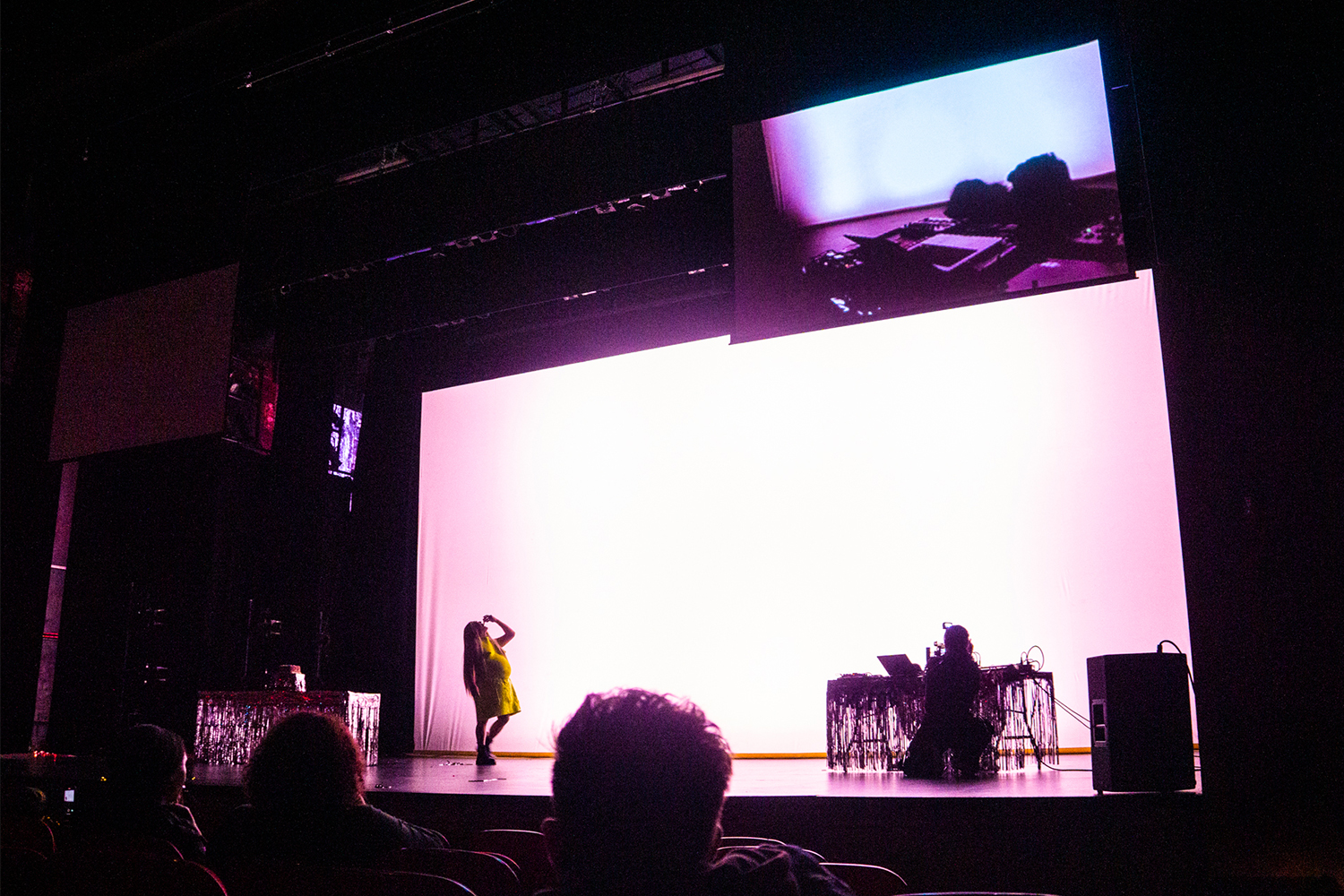
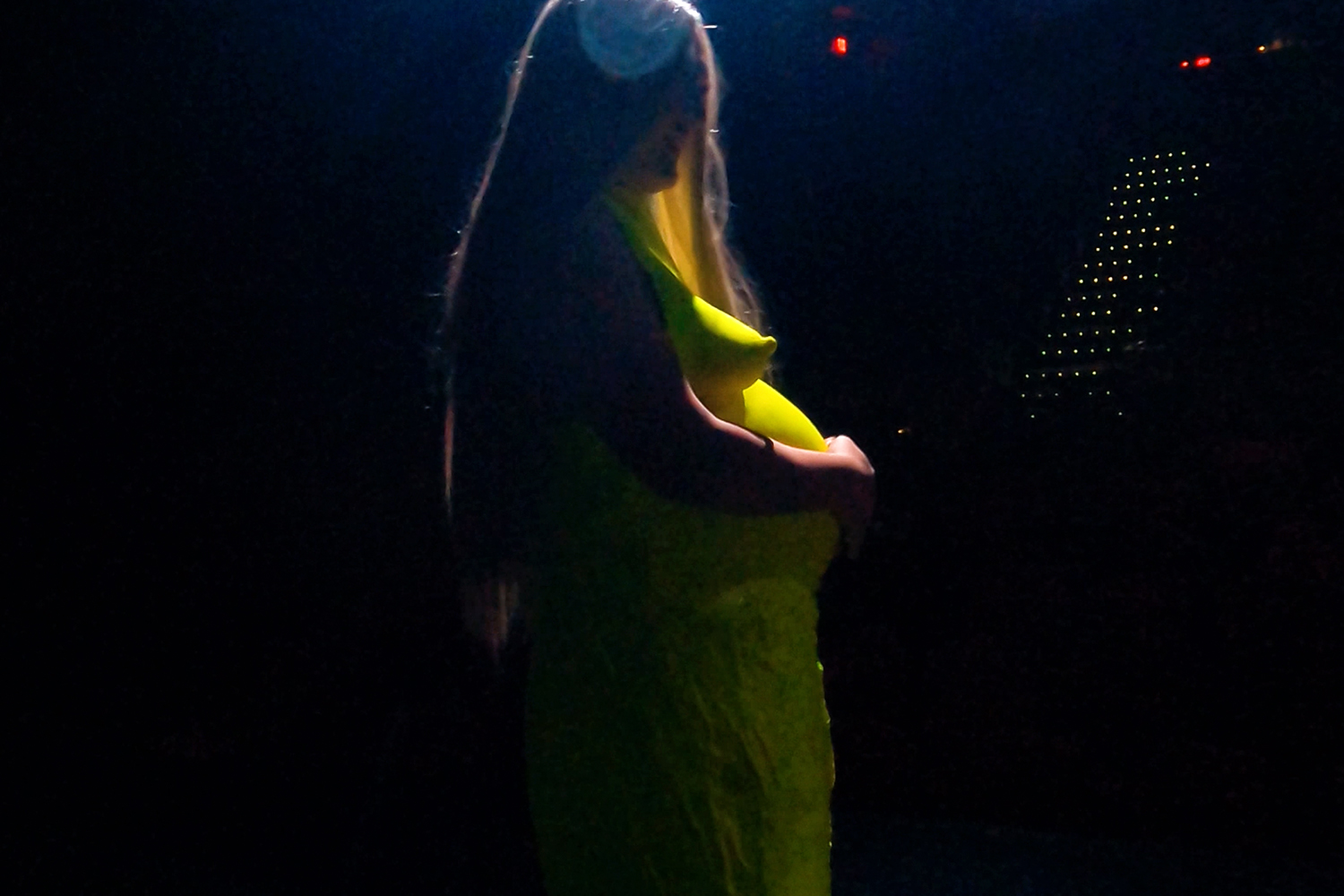
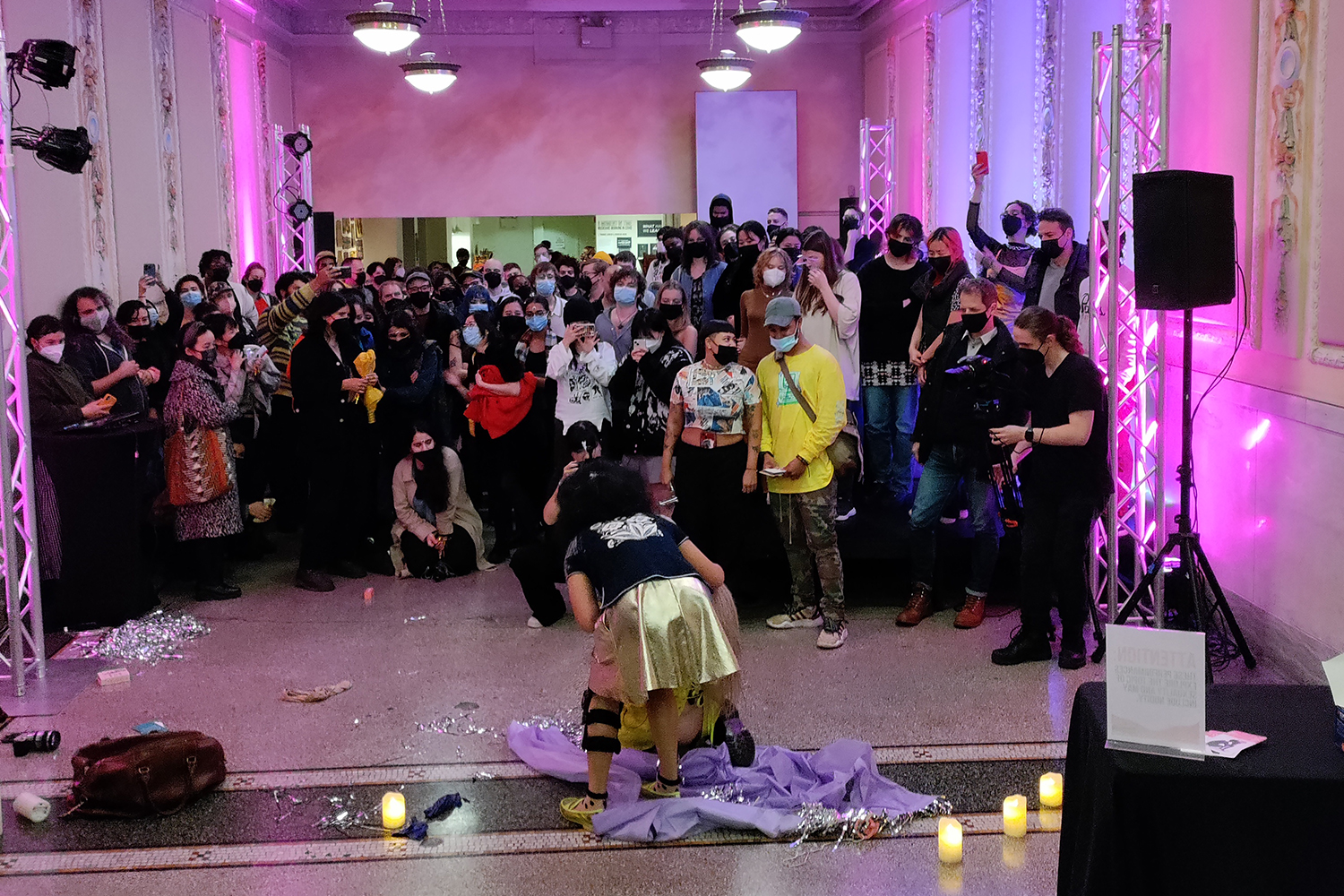
The digitally mediated performance takes audiences through a journey of failure and discovery, of new selves and new bodies, and new forms of love and kinship as they use a cast of Ye’s pregnant torso worn by Kwak to further explore the materiality of queer, trans, and femme bodies as they give birth, live, die, decay, and question what the future holds. The performance takes on a participatory turn as Kwak and Ye cross the proscenium and into the space of the audience, activating the transition of passive viewers into active participants in the performance as it weaves through the different spaces of the theater. Watch the 4-minute cut of the 30-minute performance below.

This event was co-organized between Fail-Safe and the Kelly Strayhorn Theater, with financial support from the National Endowment for the Arts, Frank-Ratchye STUDIO for Creative Inquiry, and the Carnegie Mellon University College of Fine Arts.

Thank You for Your Service

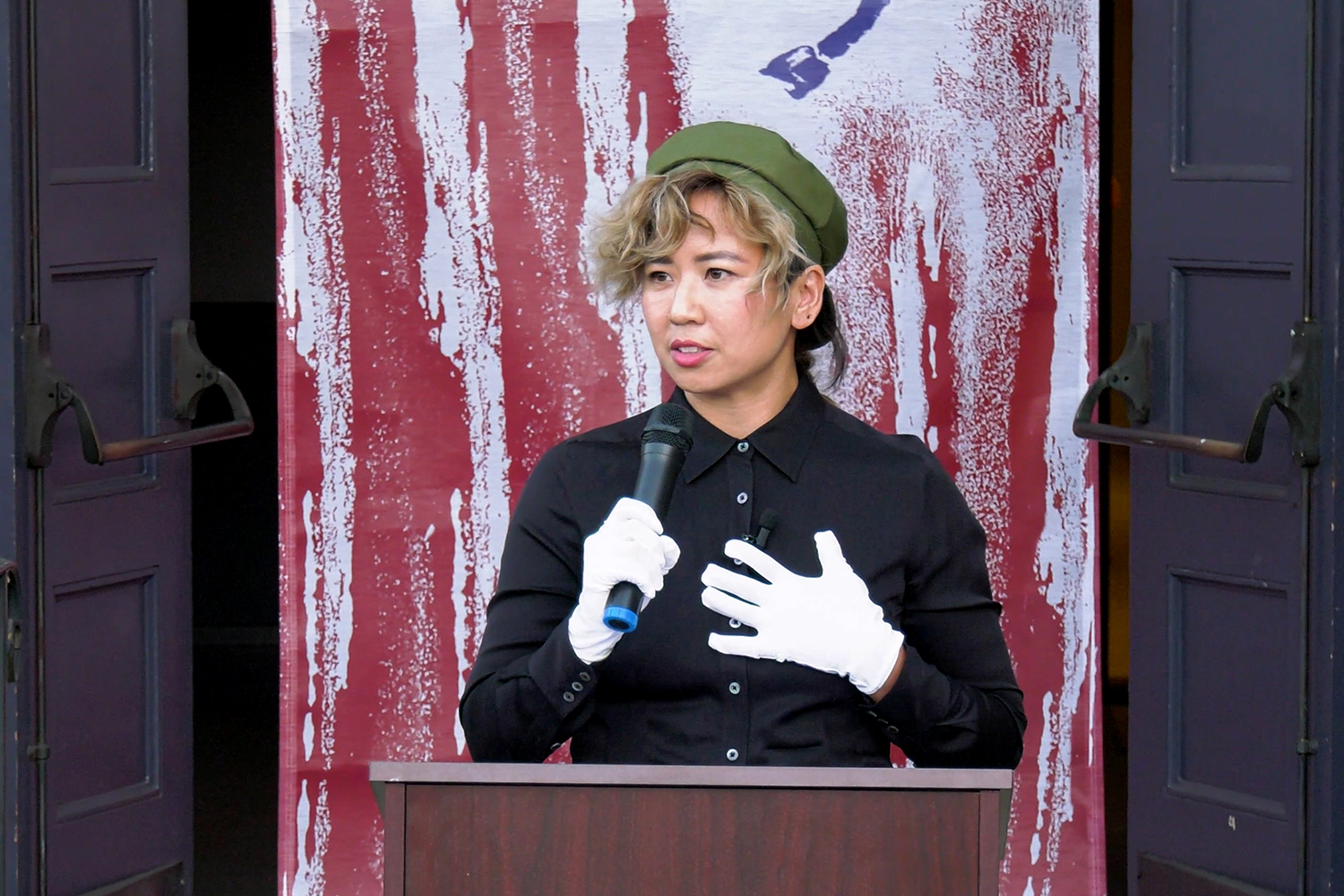
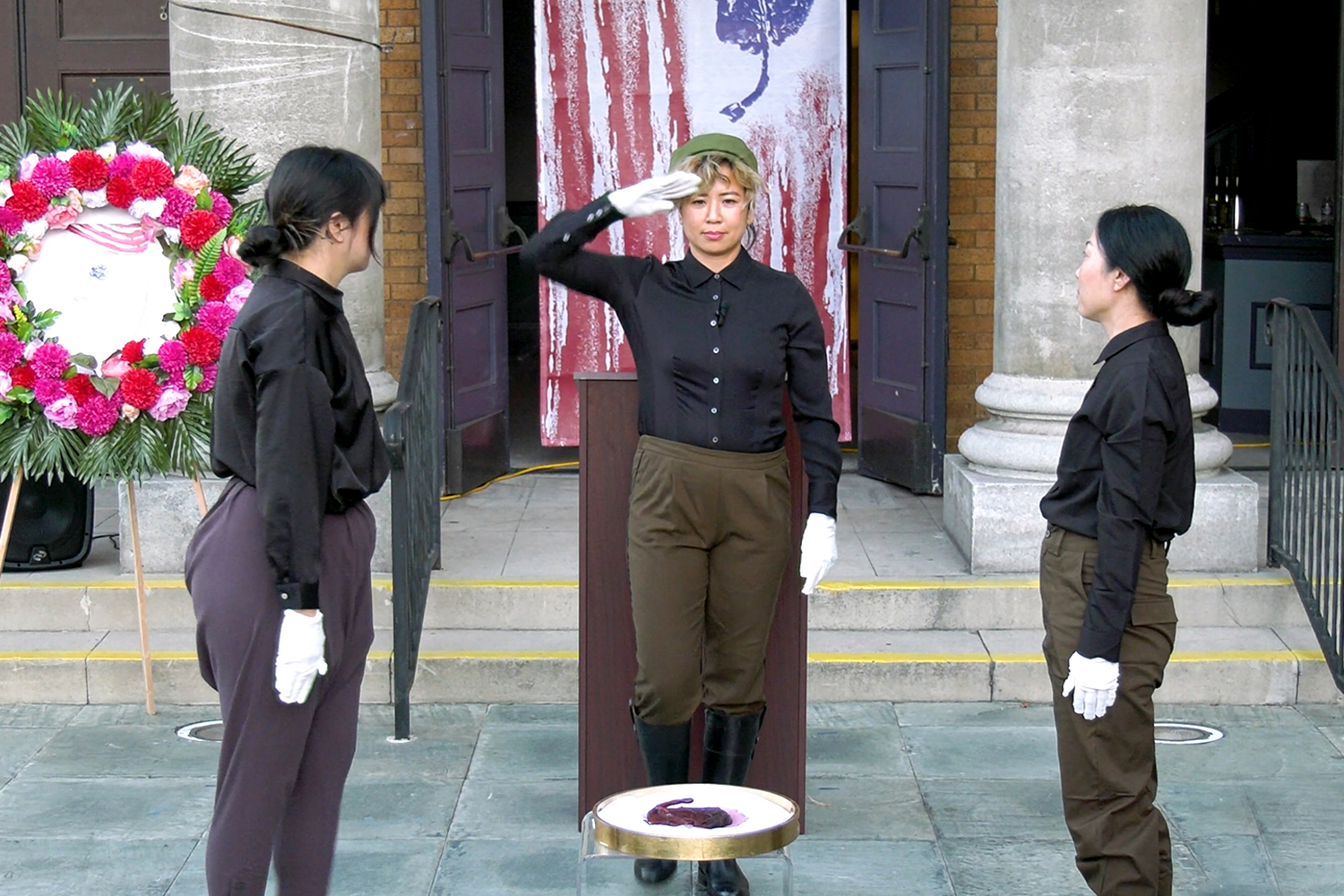
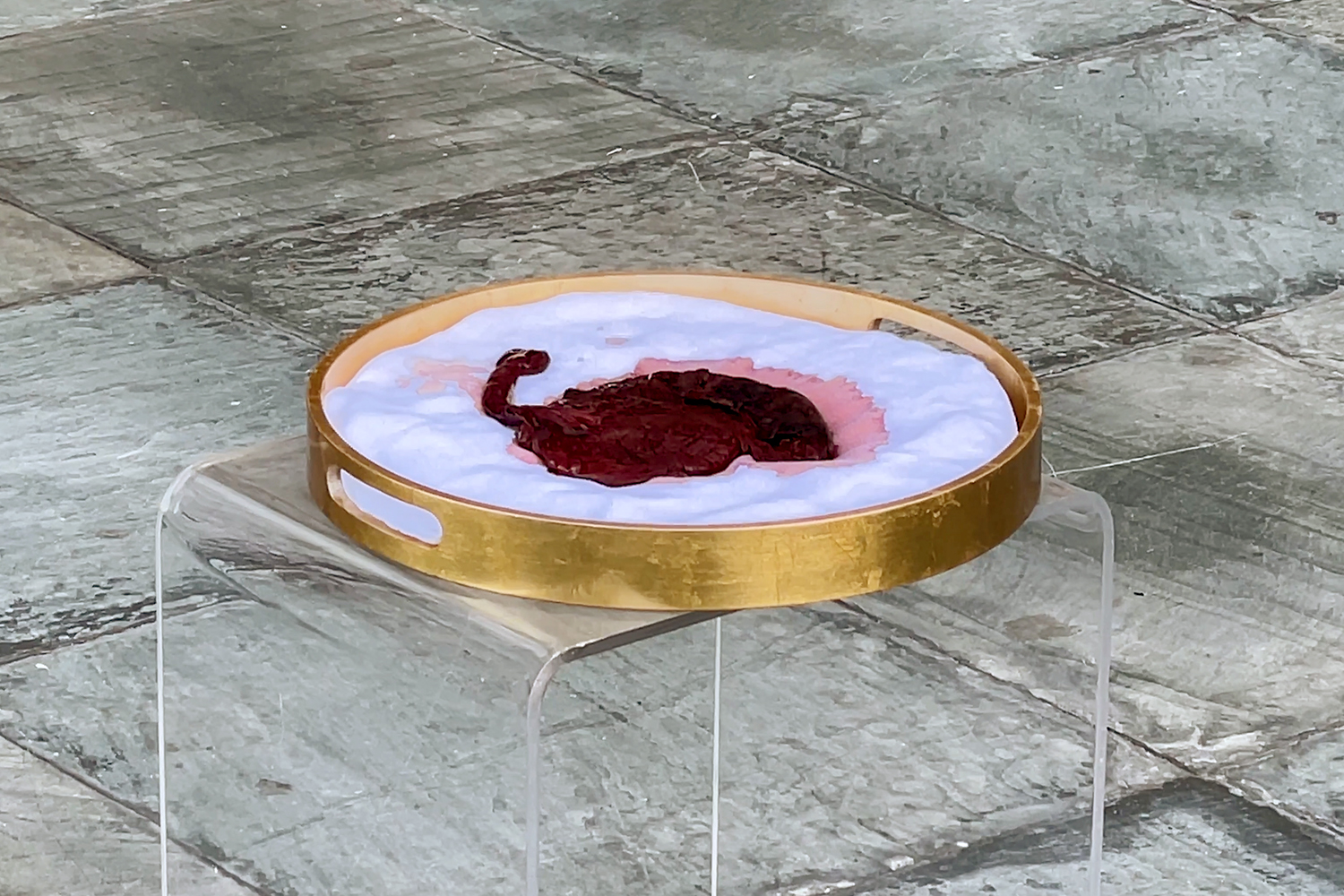
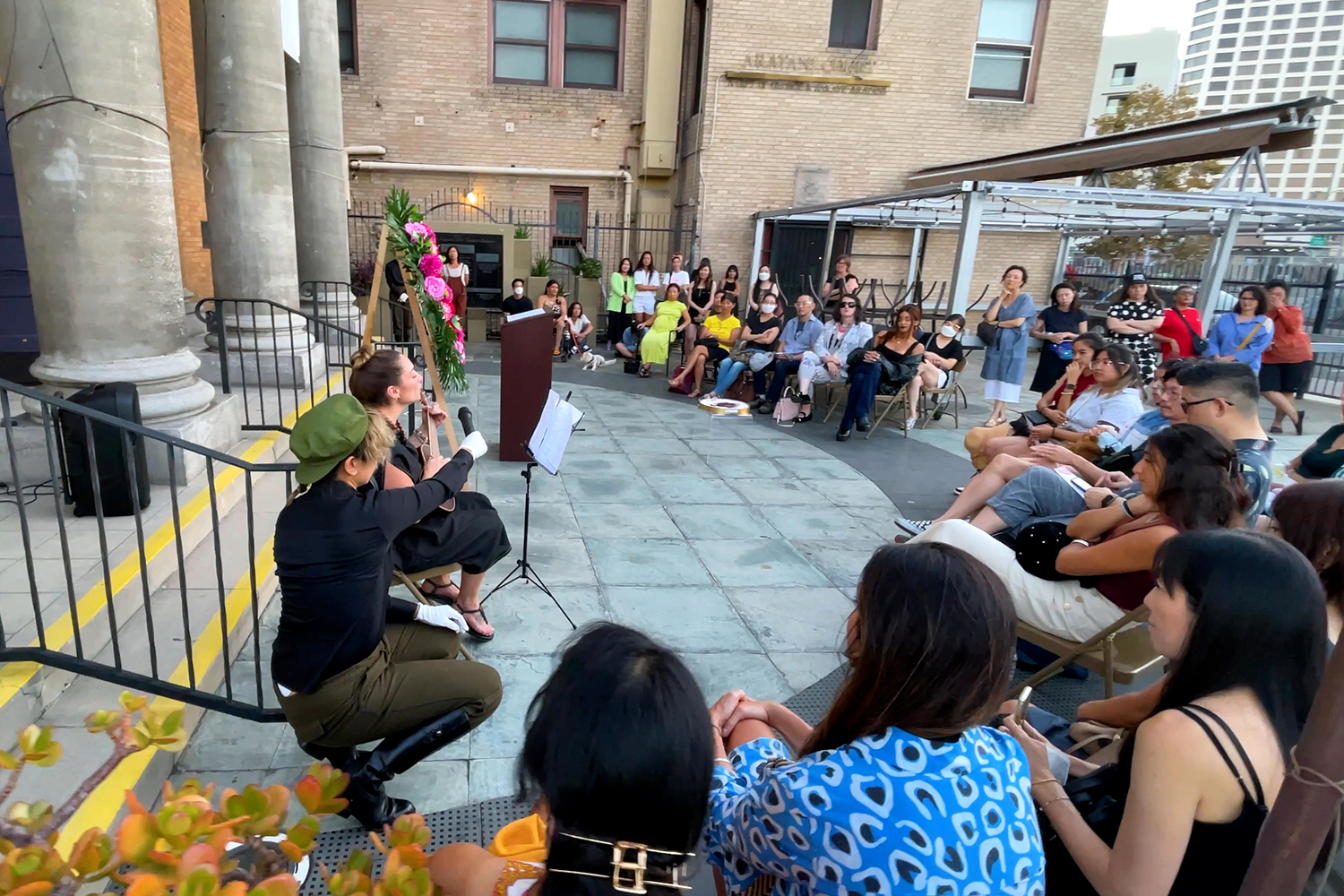
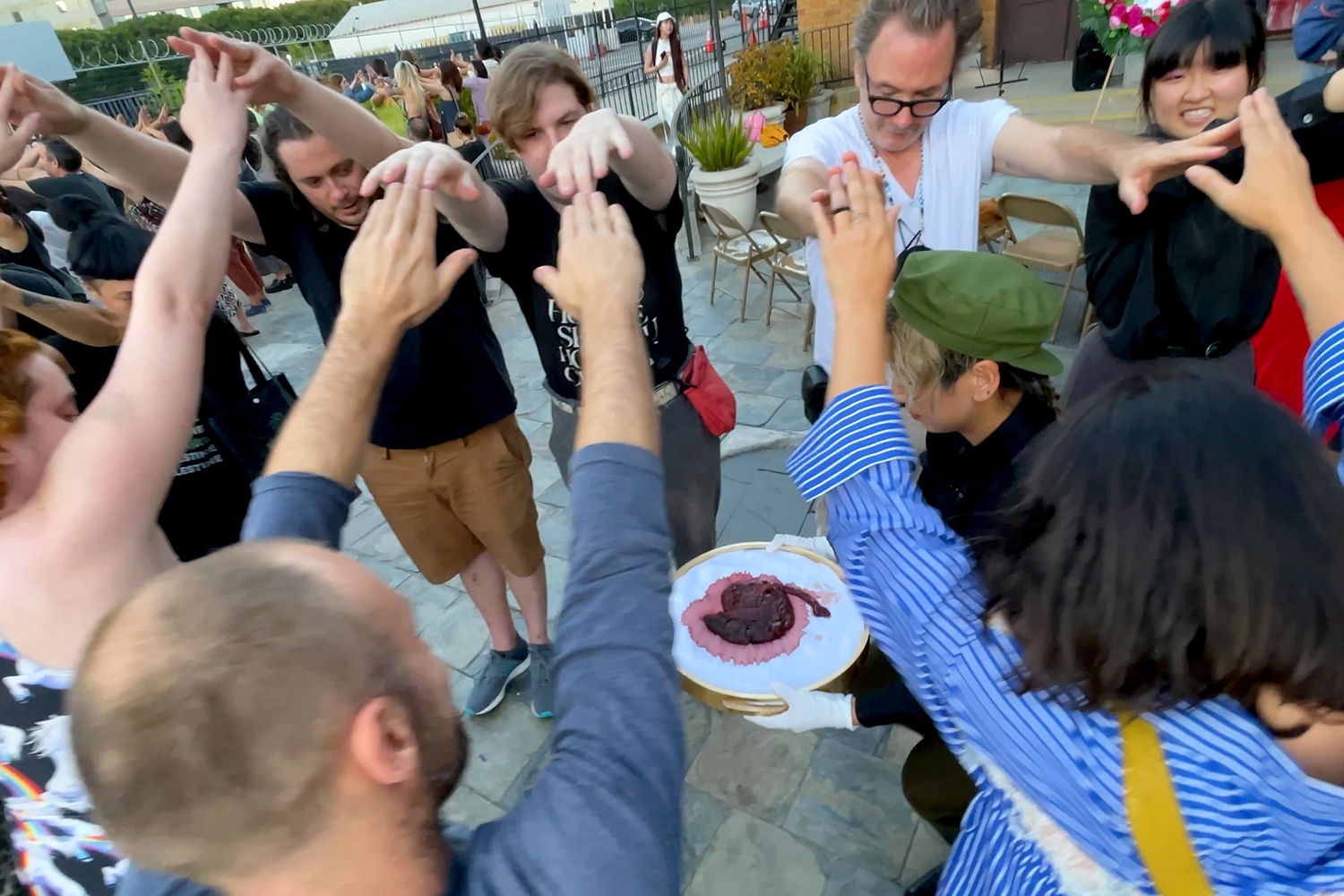
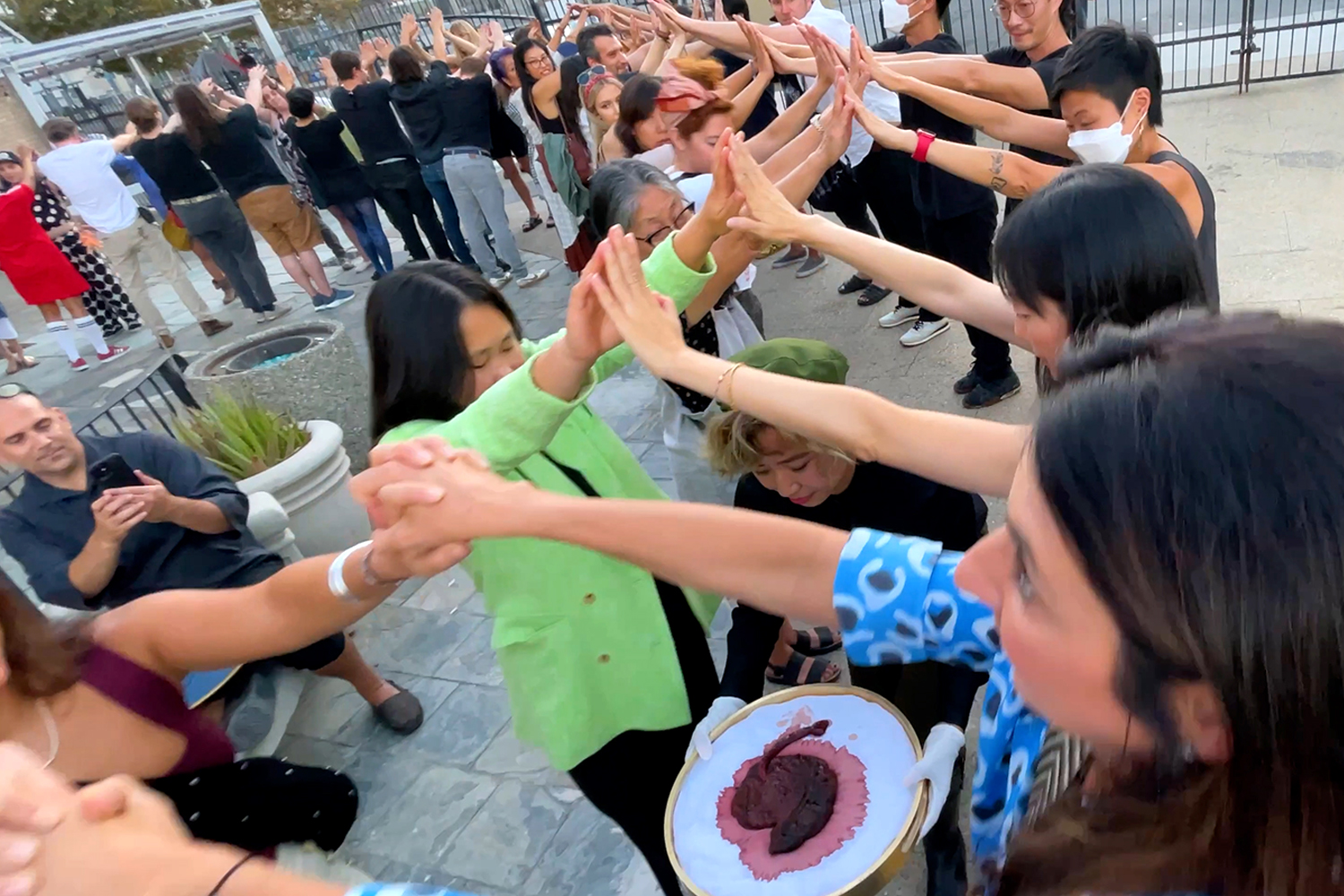
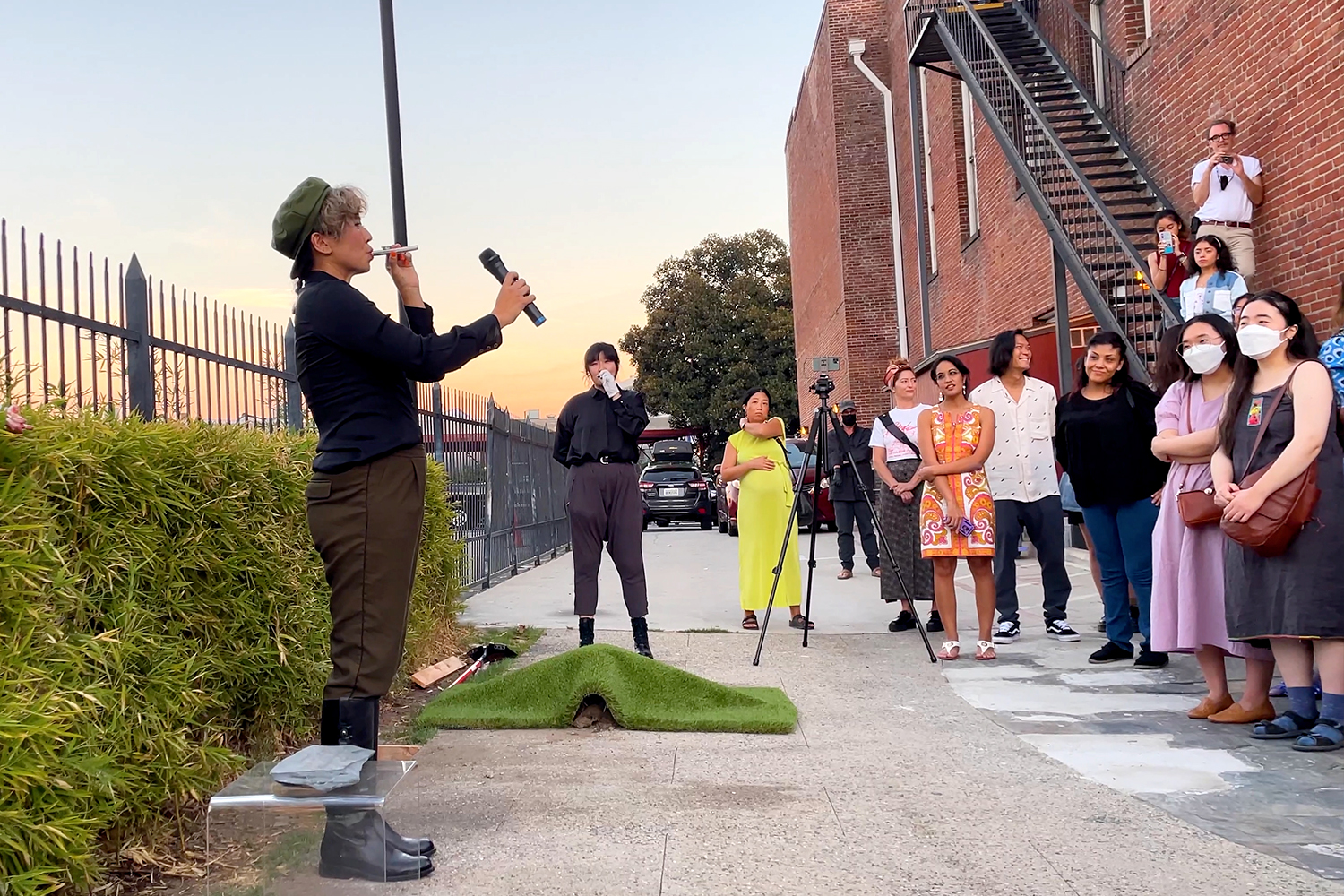
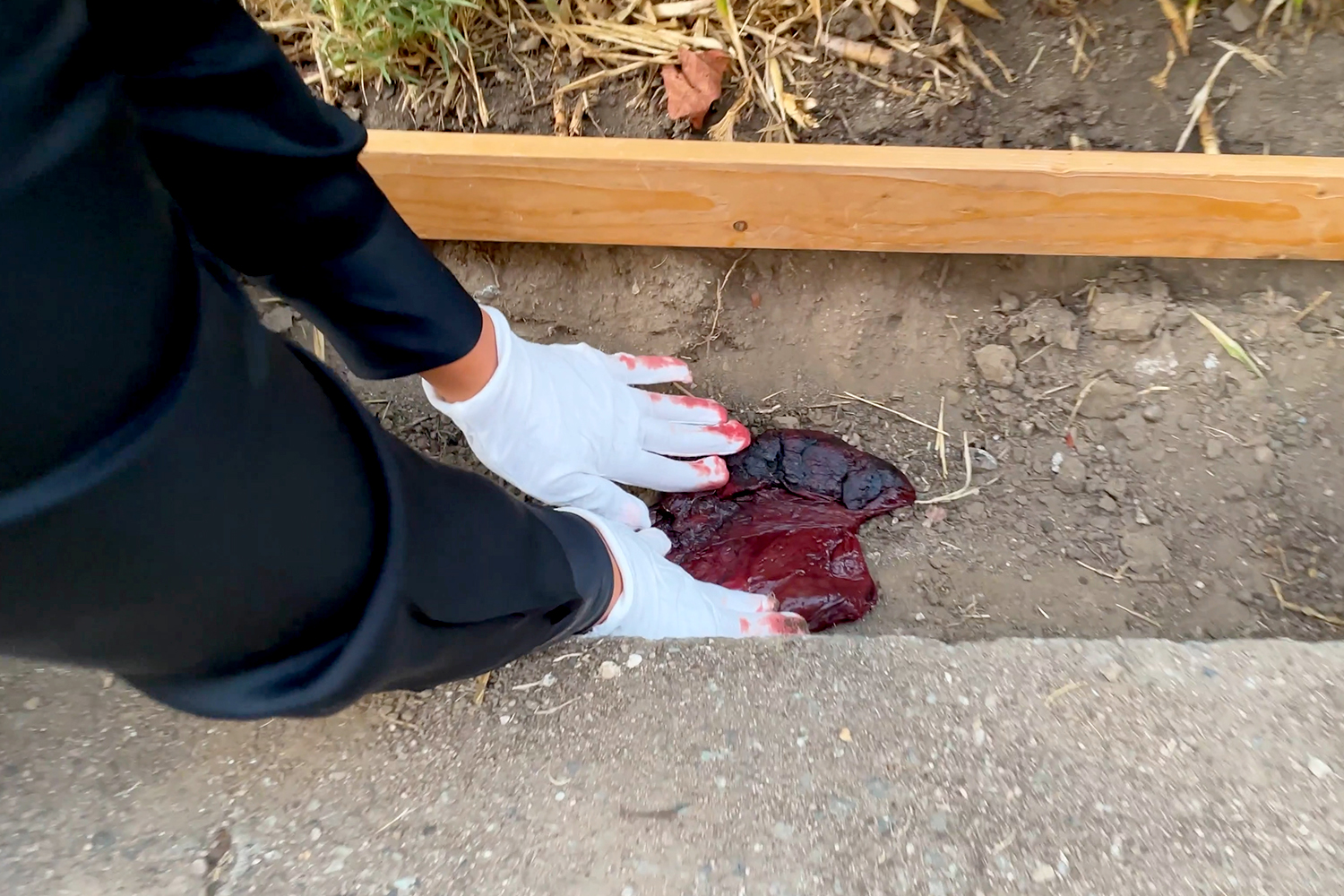
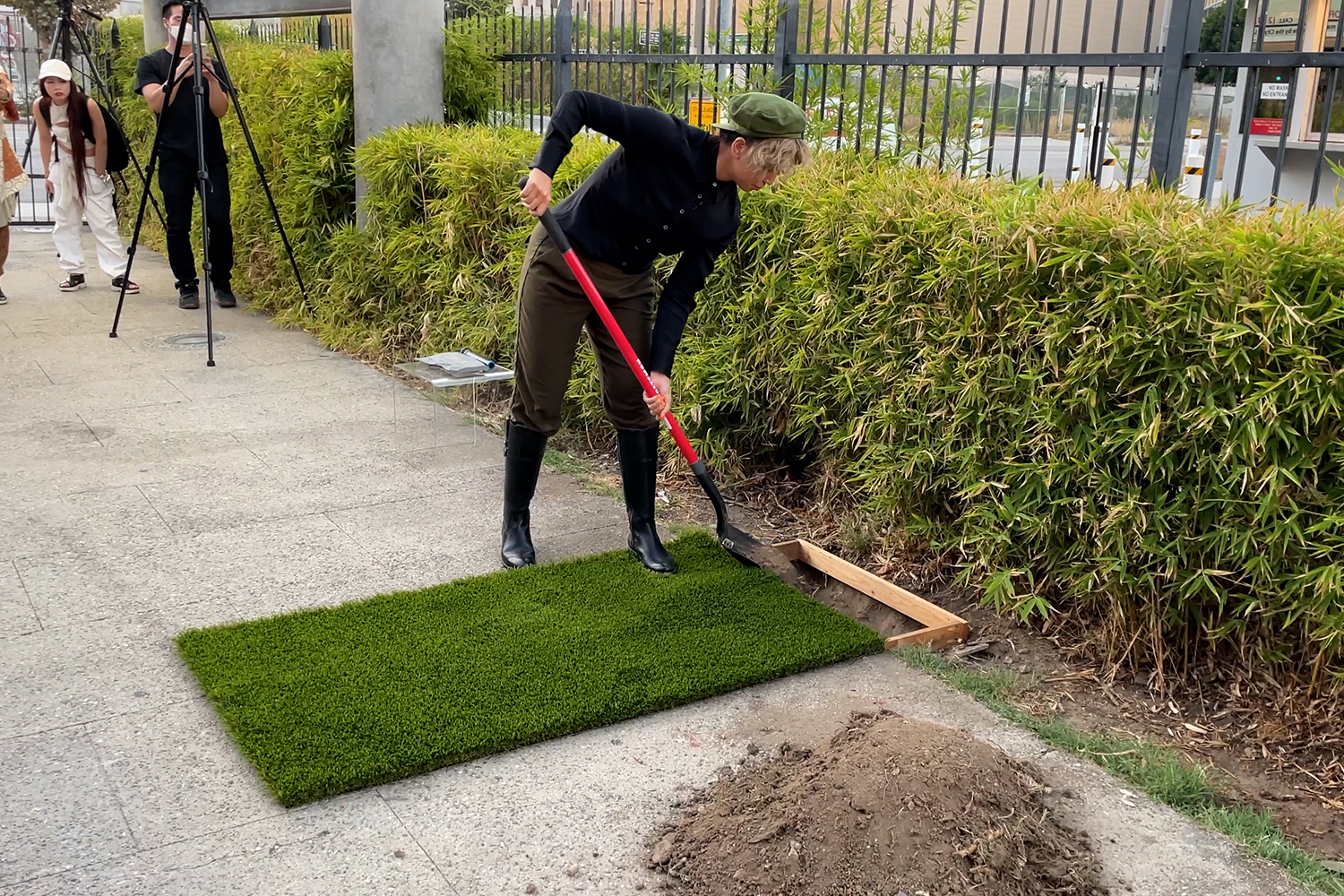
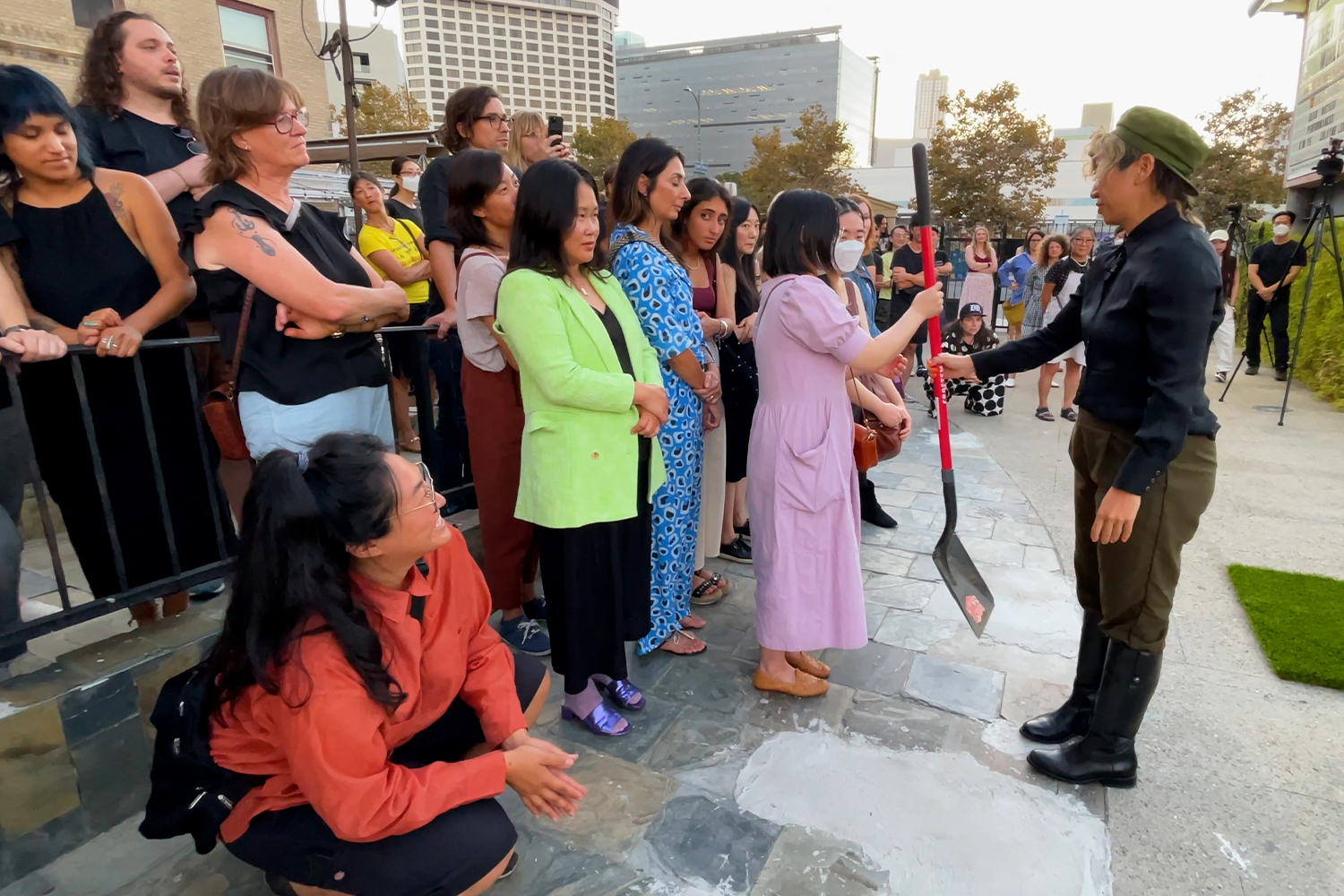
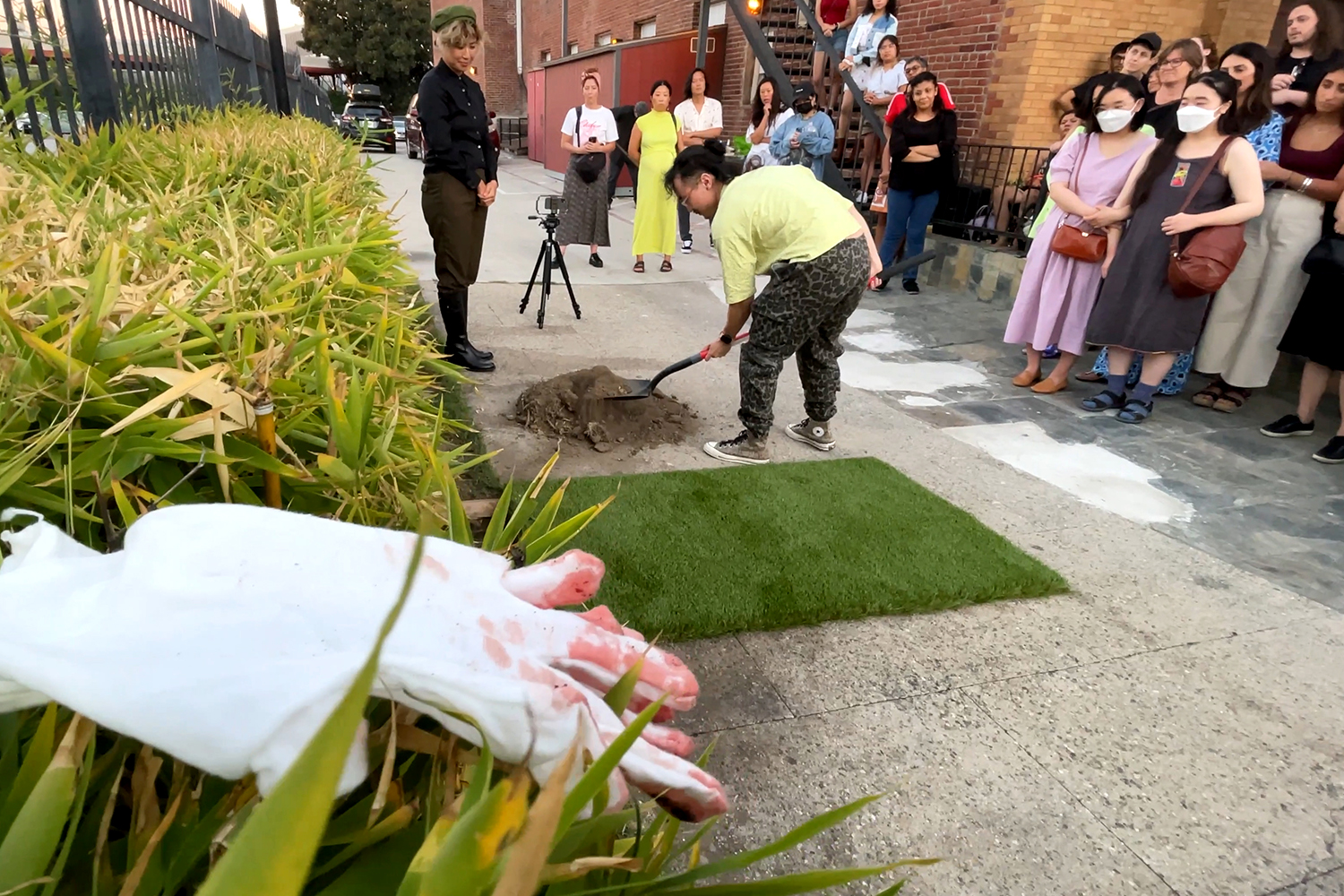
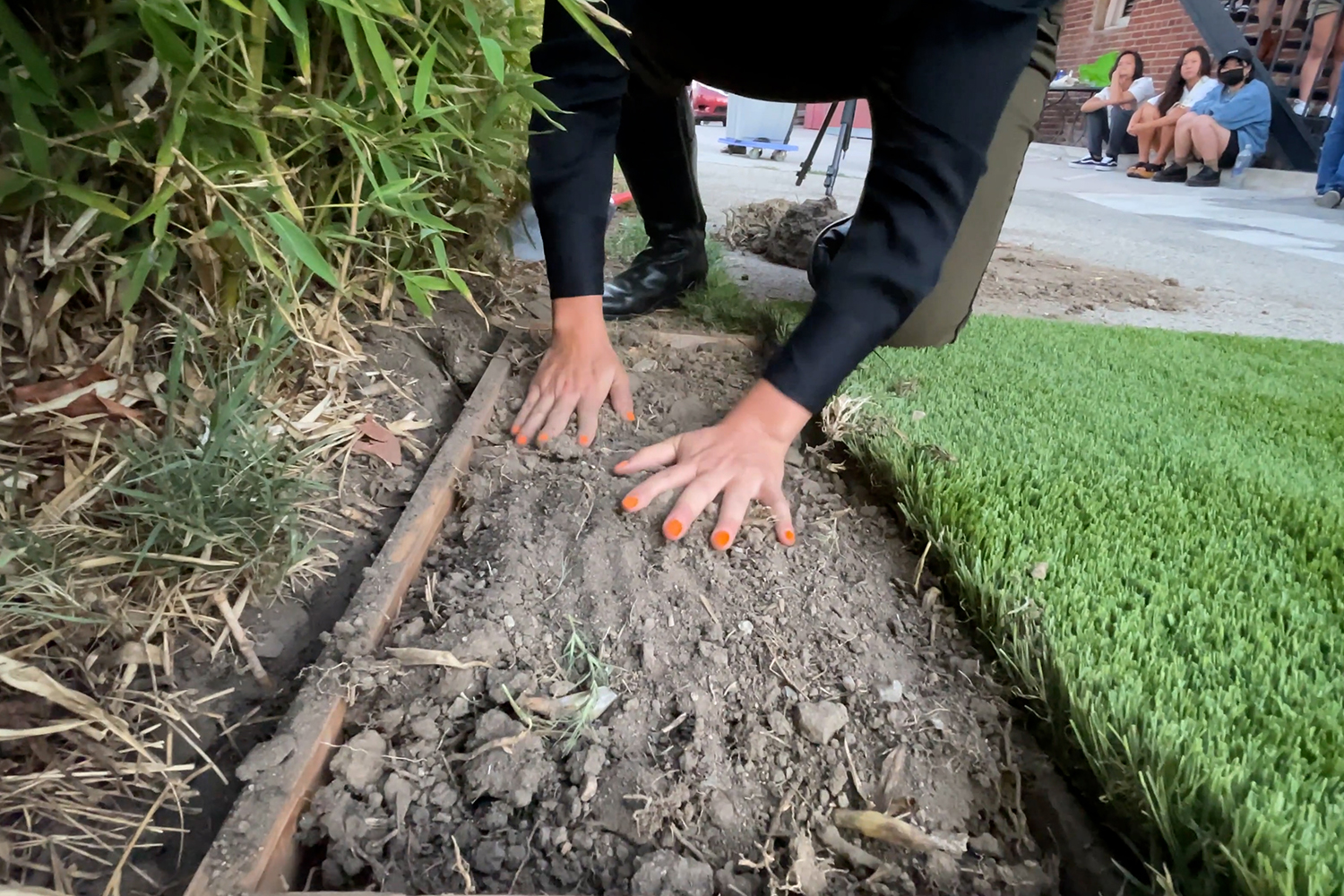
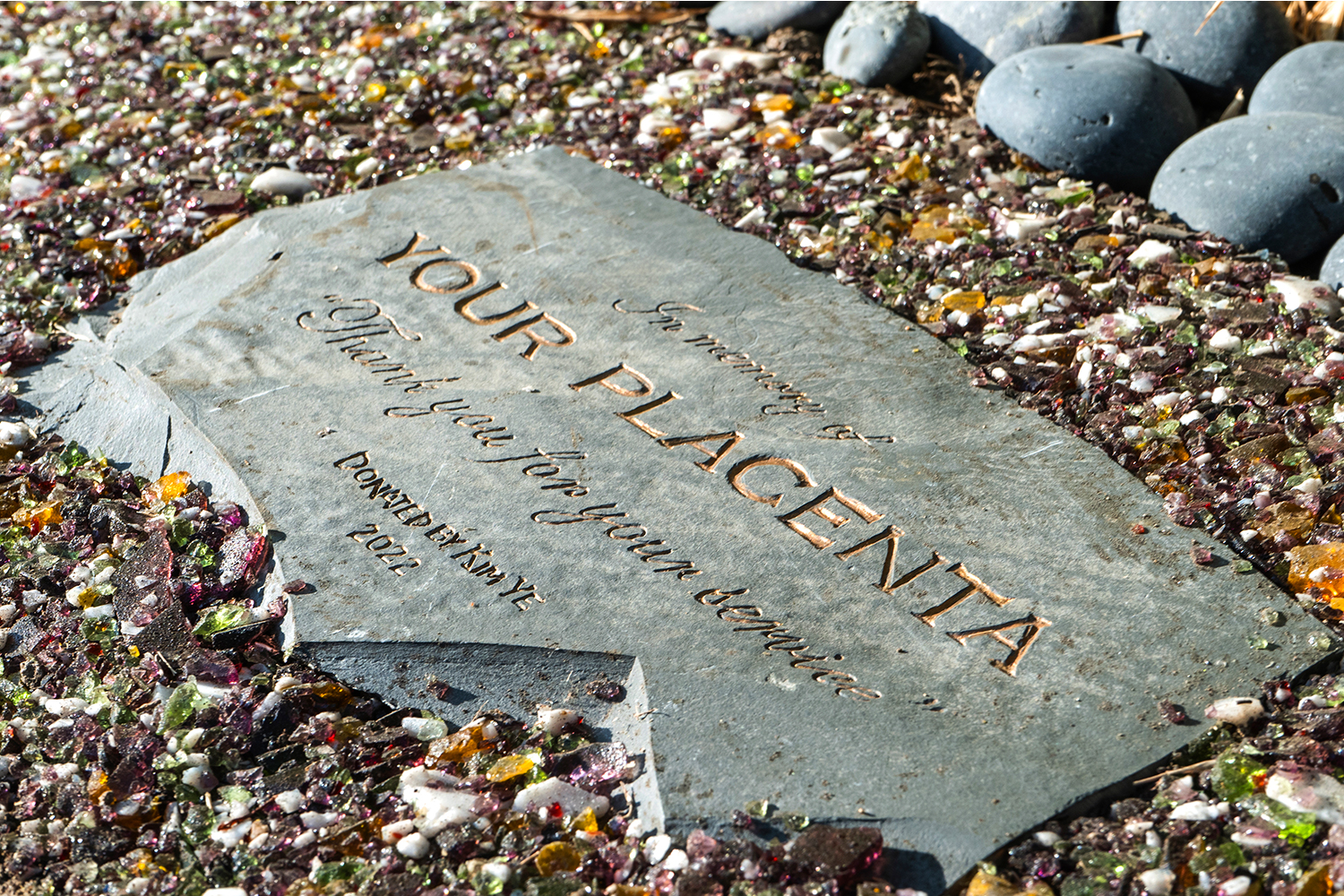
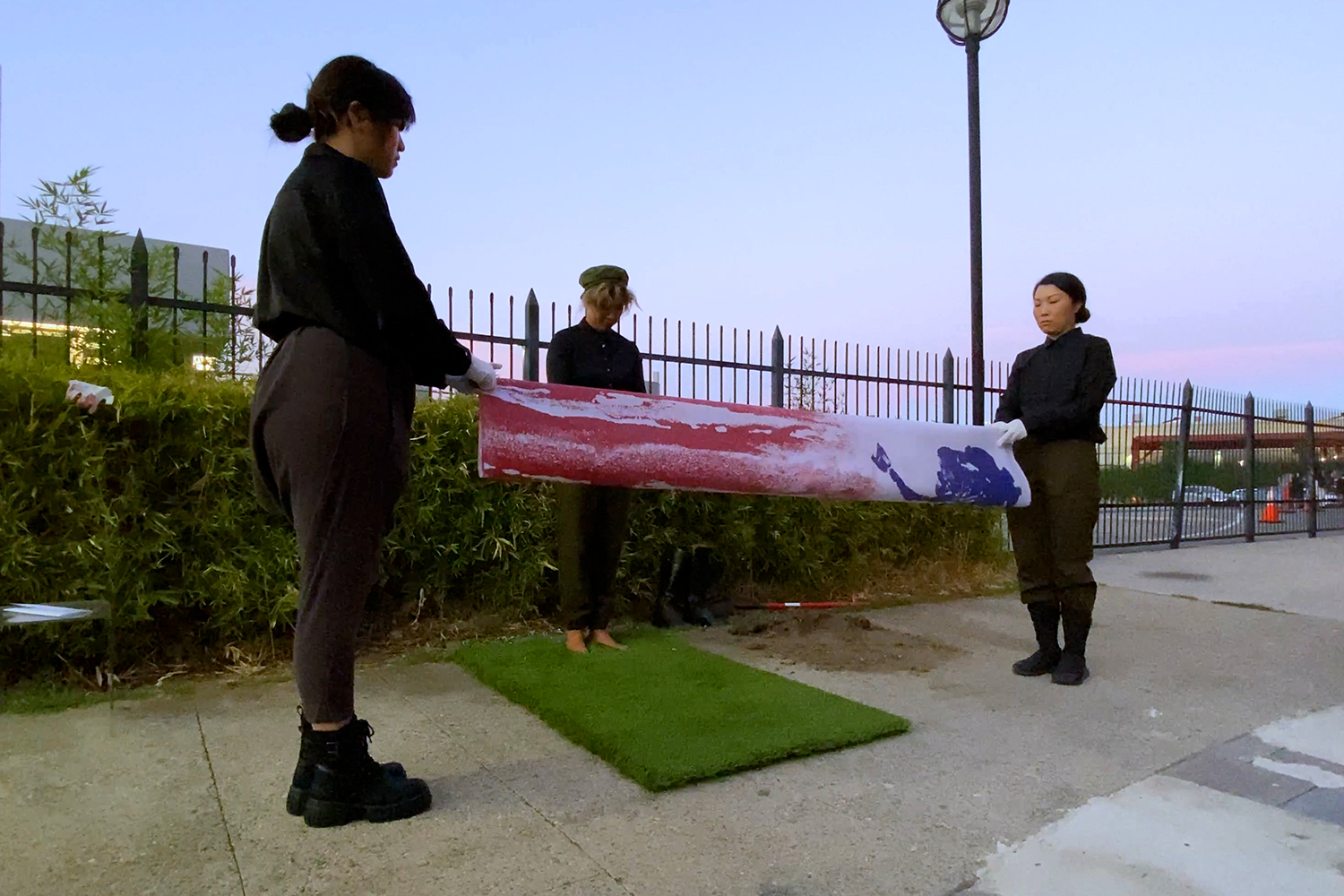
Thank You for Your Service utilizes the form of a military funeral to bury the placenta from the artist’s pregnancy. The script for the eulogy appropriates medical journalists’ descriptions of placental growth as “military invasion”. Through speech, song, and movement, attendees are guided through the enactment of burial rites usually reserved for members of the US Armed Forces. Culminating in the installation of a permanent outdoor memorial at LA Artcore (Los Angeles), the performance can be understood in four parts: 1) Eulogy [00:21], 2) Hymn [3:16], 3) Procession [4:14], and 4) Burial [5:25].

Responding to the Supreme Court’s 2022 Dobbs decision that reversed Roe v. Wade (1973), this performance proposes an argument for reproductive rights by conjuring the Third Amendment, which prohibits the government from quartering soldiers “in any house without consent of the Owner”. Drawing analogies between trophoblasts and military operatives, between wombs and motherlands, this performance aims to collapse the gendered spaces between law, land, and labor.

Abridged video documentation (8 min) can be seen below, full documentation (21 min) can be seen here.

Good Verbal

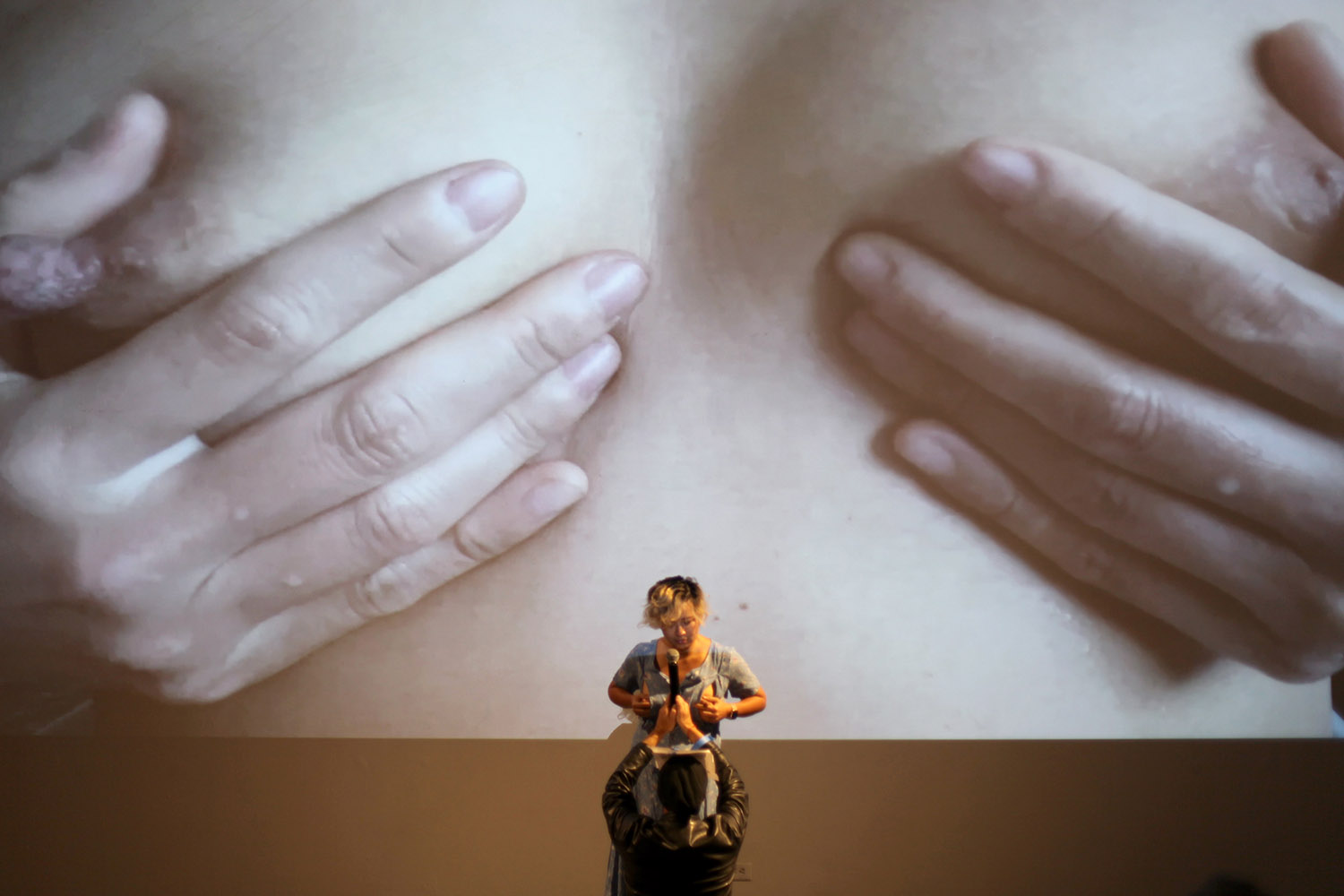
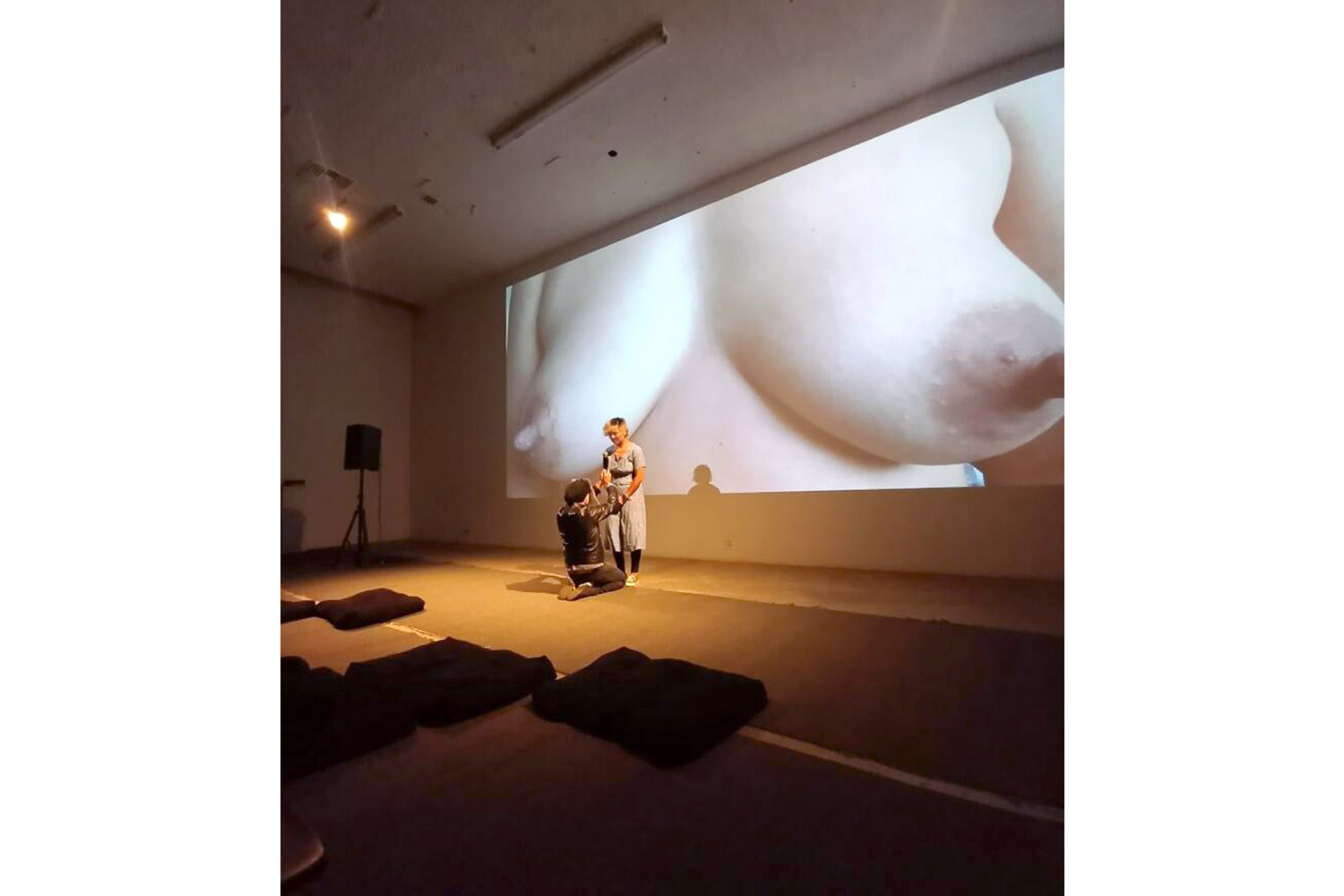
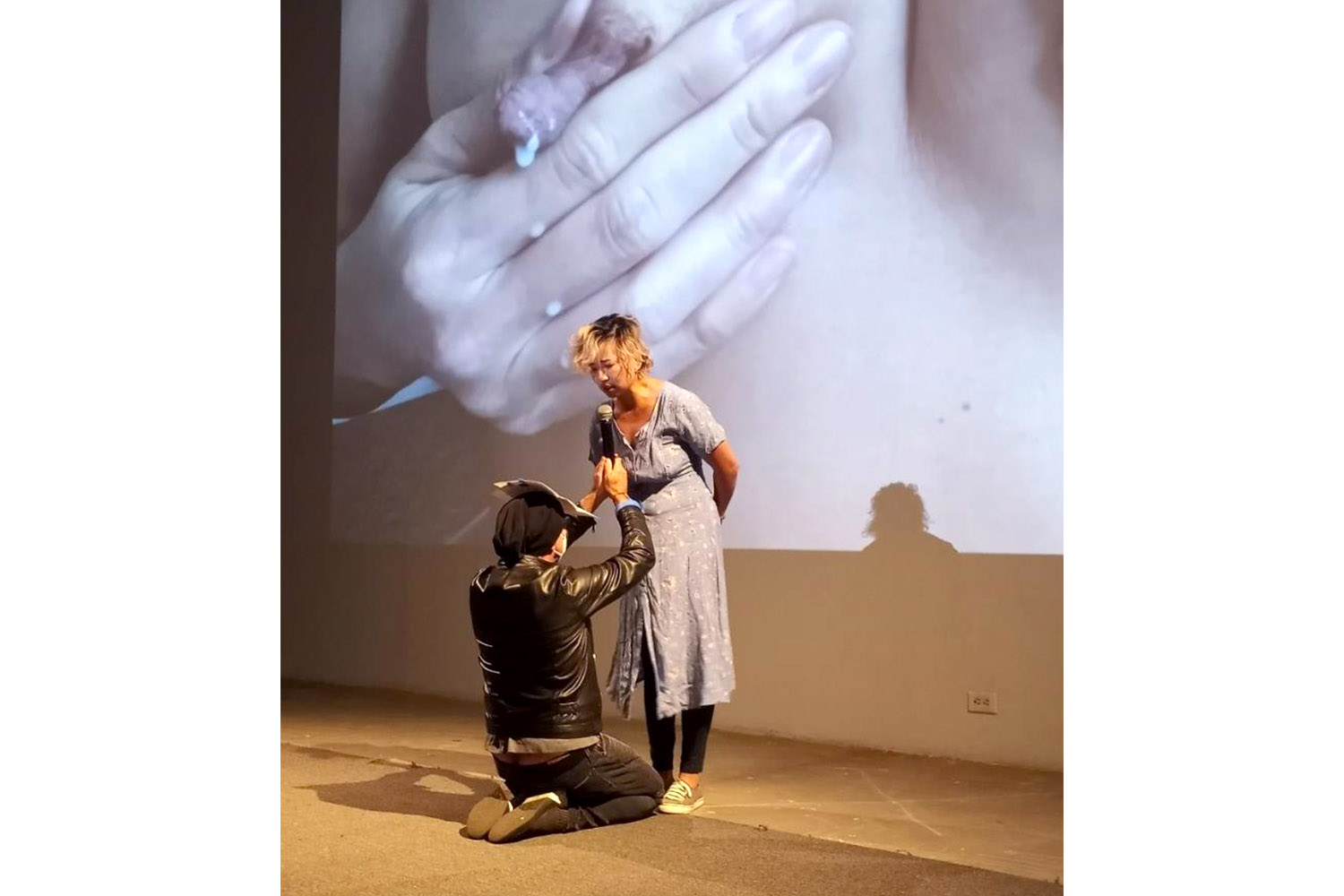
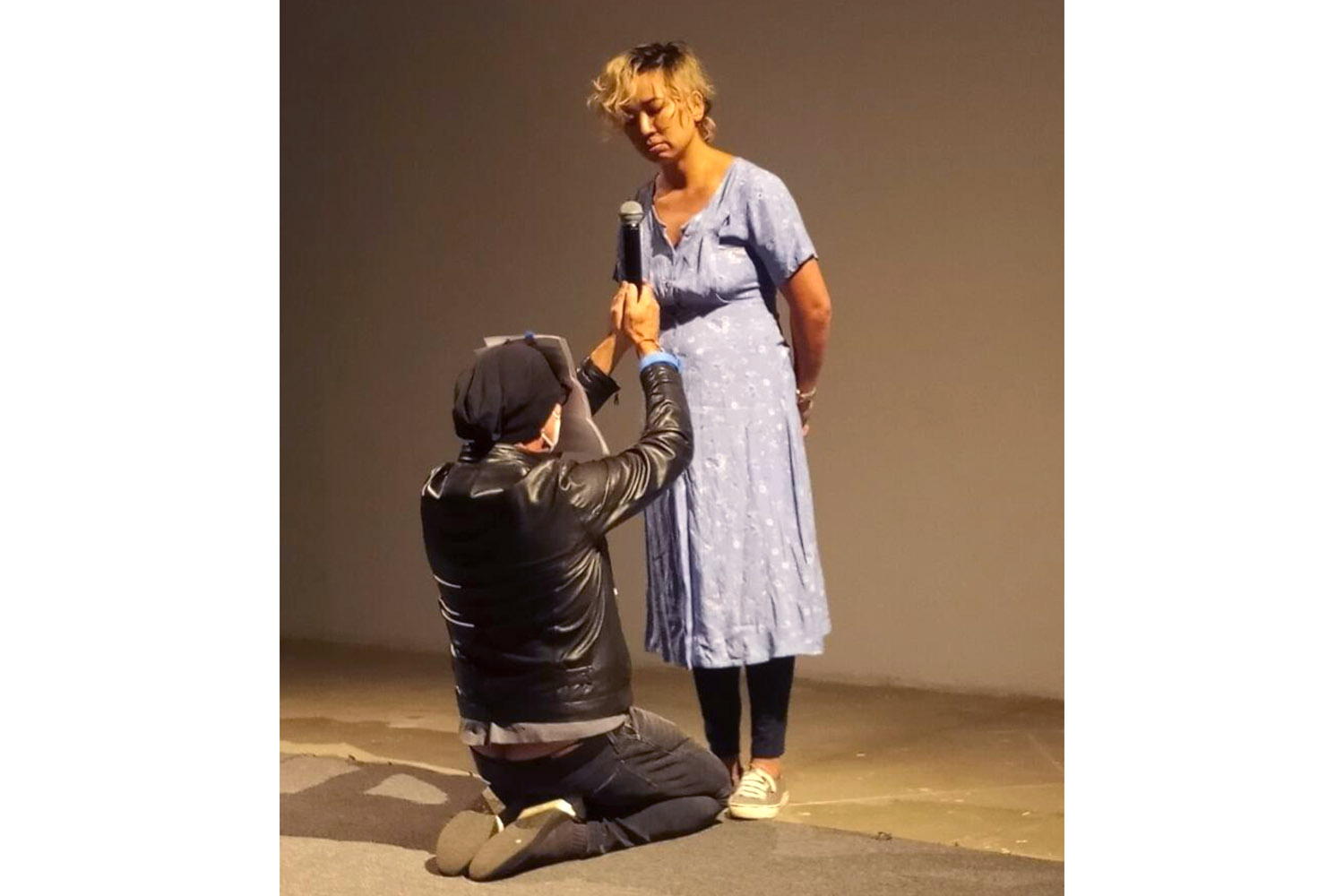
The teacher/the mistress, the Madonna/the whore: Carrie, Samantha, Charlotte, or Miranda. How does the divided feminine activate male lives, and where can we find representations of wholeness? In Good Verbal (the divided feminine talks back) the artist remixes excerpts from Joey Soloway’s 2016 TIFF keynote with lines from Cruel Intentions (1999), emails from academic administrators, and samples of verbal humiliation from her “motorboat porno mouth”. The artist performs the original text sandwiched between a human mic stand, and a closely cropped video of breasts expressing milk. View the performance documentation in its entirety below.


We are the Beginner (录音机)

The video blends two sets of voices:

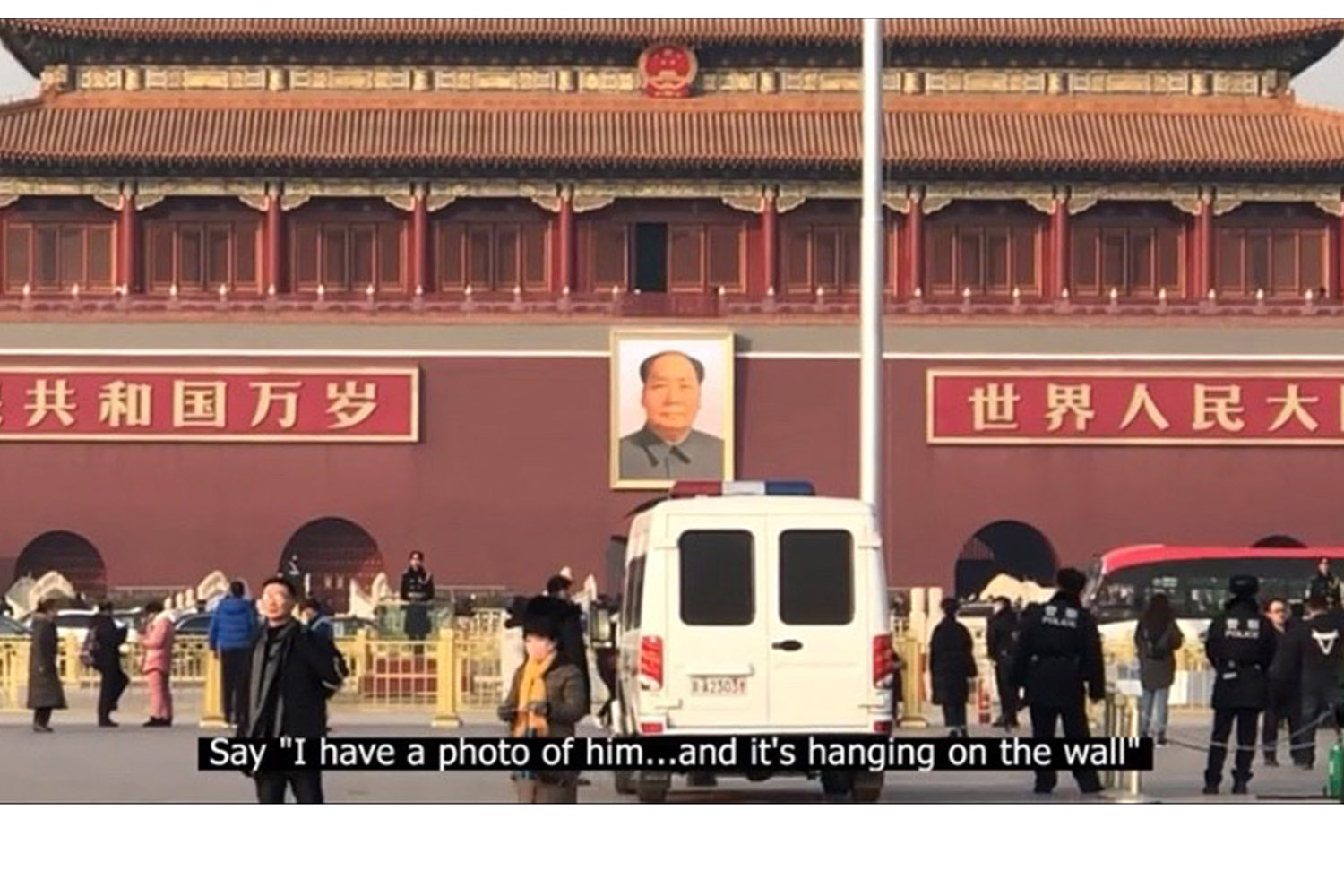
The first is that of a mother and baby recorded in Beijing in 1986 that is from a series of audio tapes made to be sent abroad to the recently immigrated father. The second set of voices is from a conversation between a father and his adult daughter recorded in 2019 recounting his early days in the US 34 years prior.

Both these sets of voices describe a single time period within a family’s history. Fragmented, Mommy and Baby reach forward in time, while Daddy reaches back. This video embodies the intertice of these two vectors, stitching together the facets of the family’s experiences into a precarious singularity.

We are the Beginner (录音机) [3 minute Excerpt]

We are the Beginner (录音机)
Single-channel video
13:30 minutes
2021

DOMestication


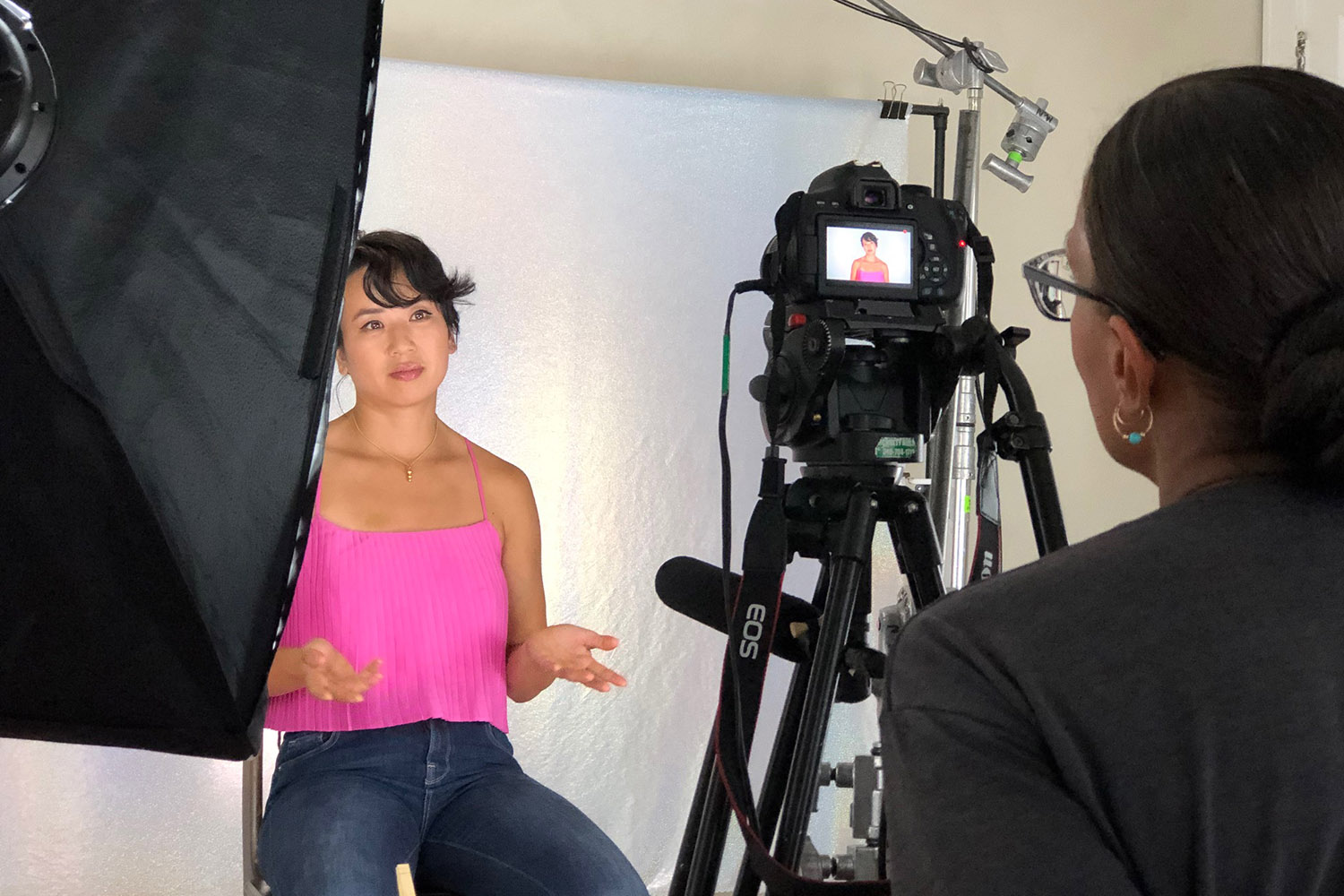
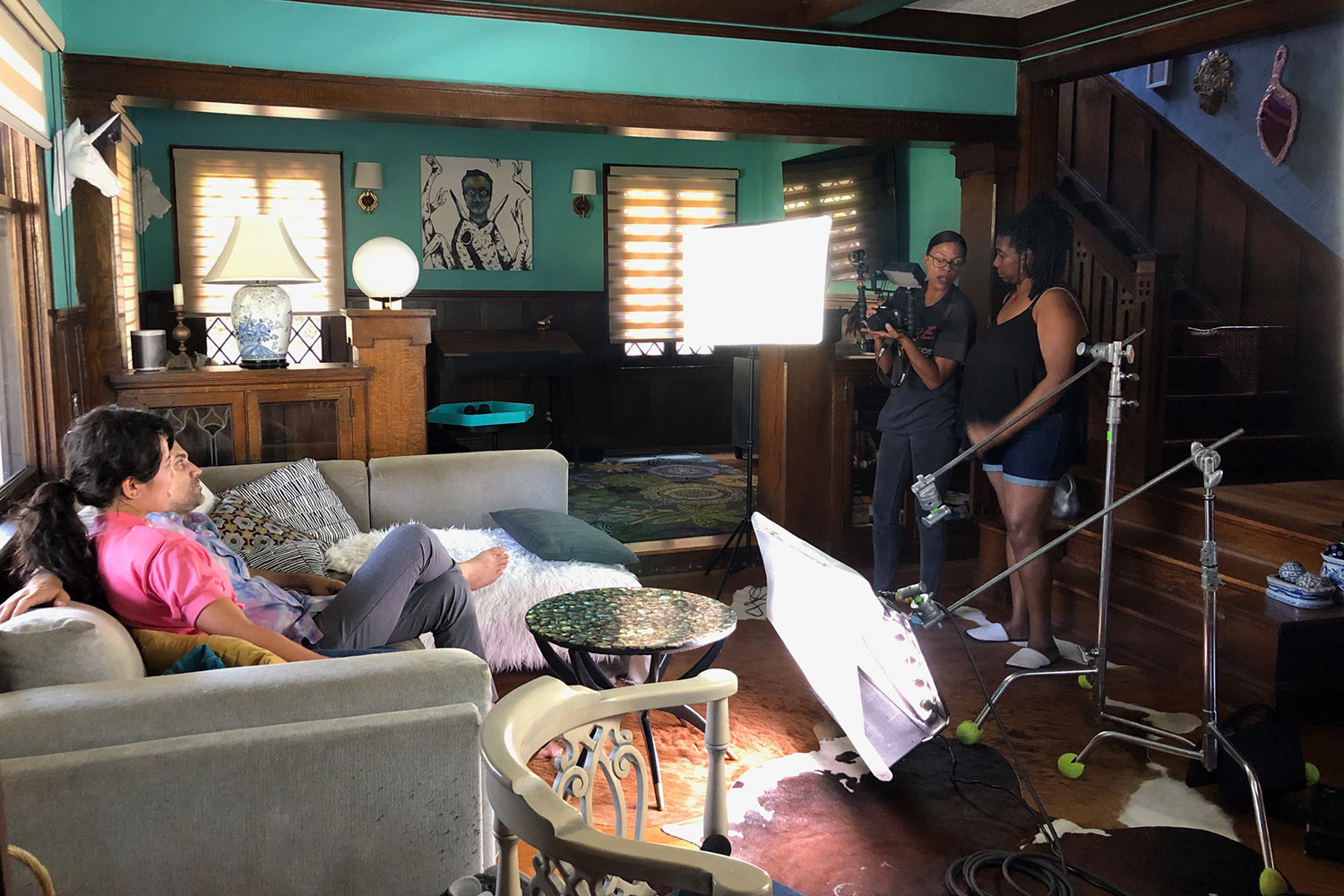
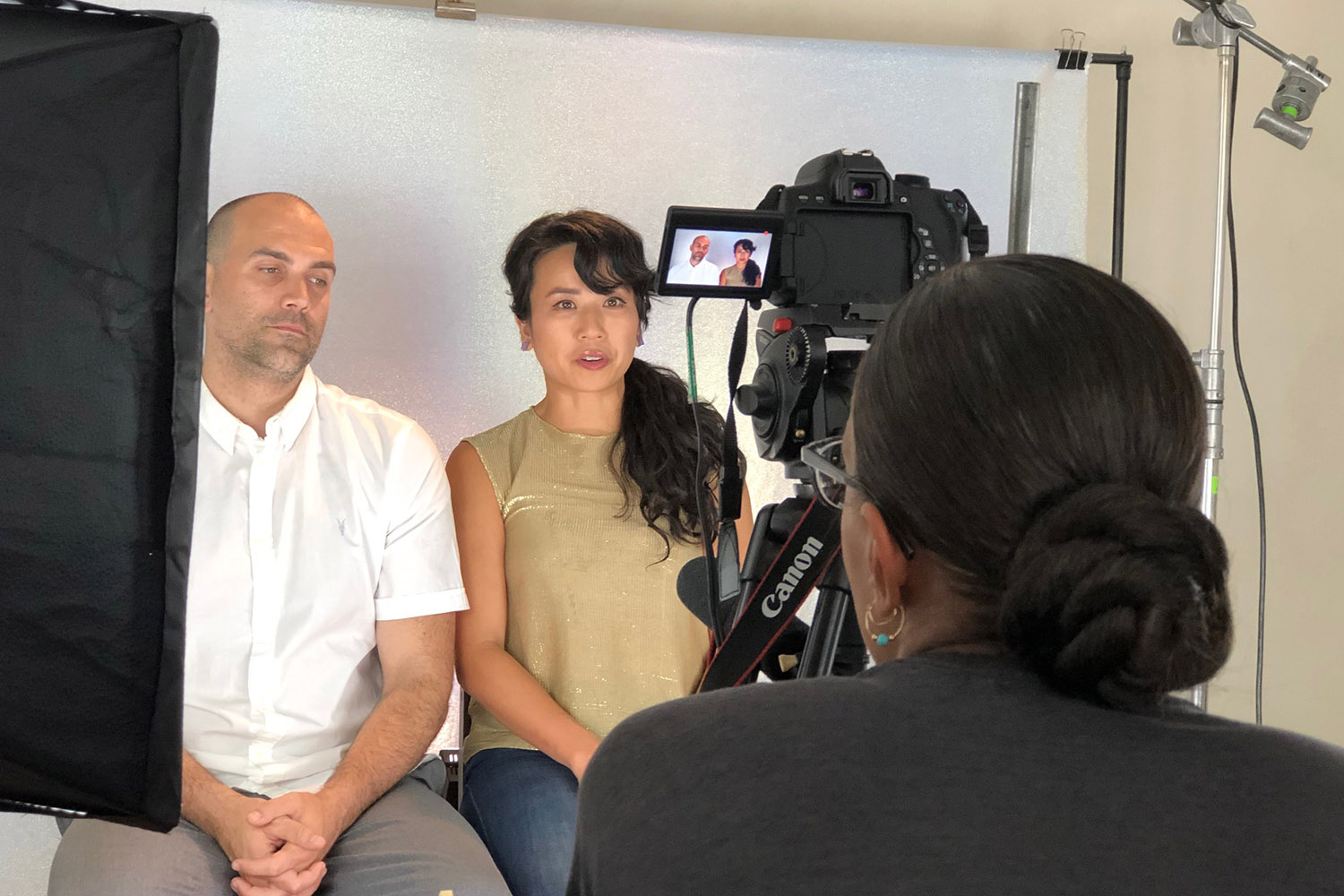
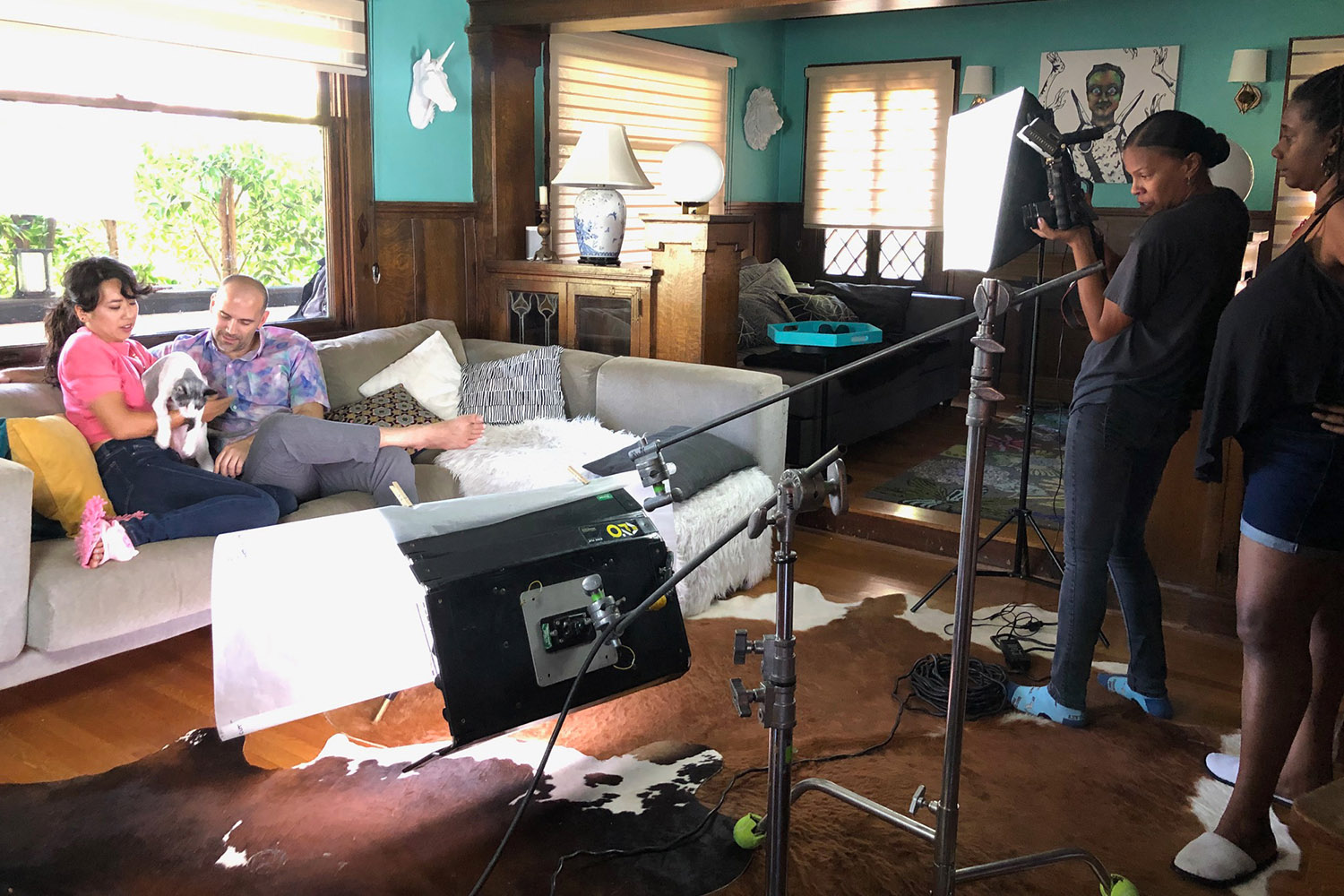
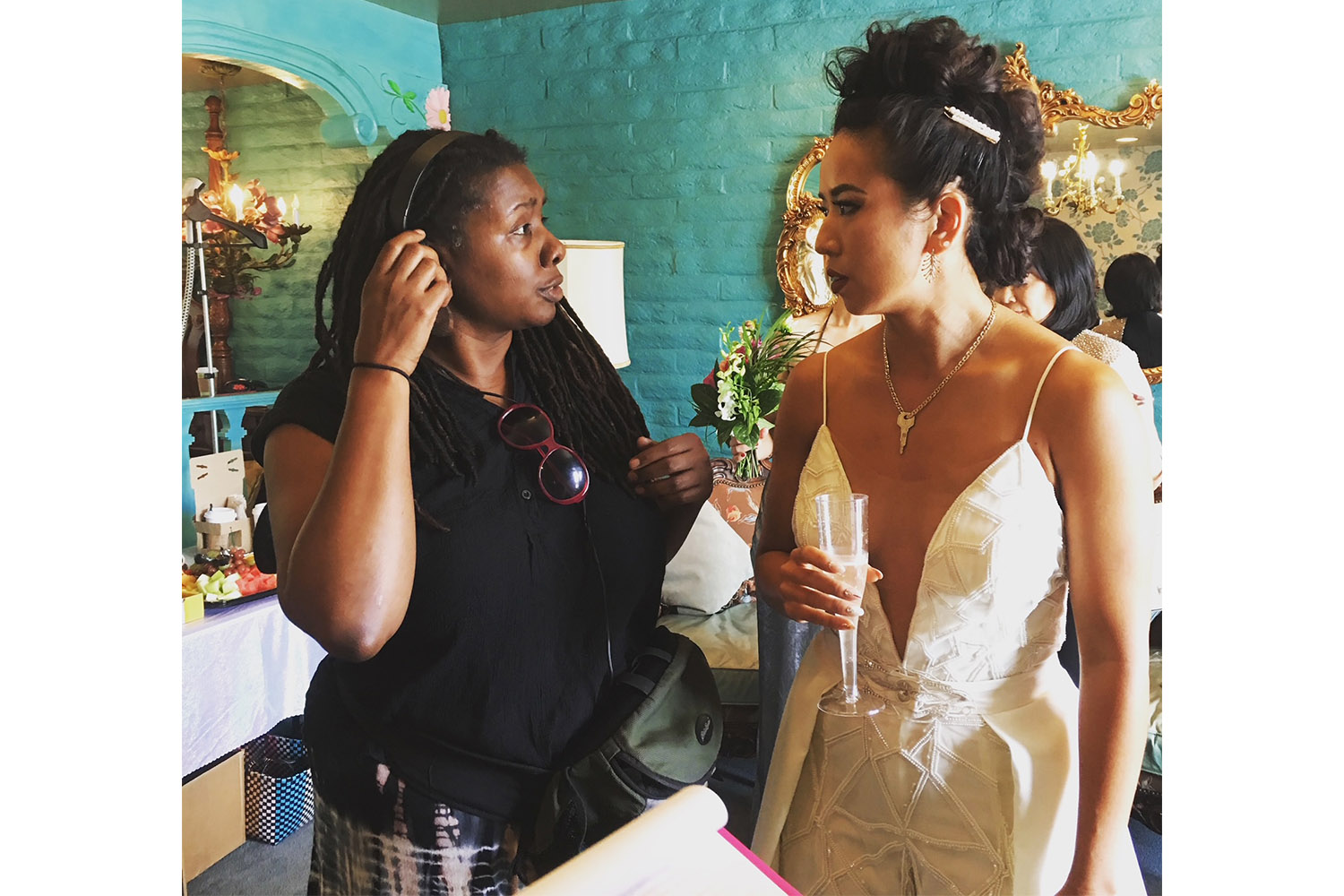
DOMestication is a film created by Kim Ye, directed by Maegan La Trese Philmore, and edited by Jessica Schilling. Inspired by the genre of bridal reality television, this piece chronicles Ye’s wedding to her partner through interviews with the artist, and her friends and family. In tracing the roots of Ye’s reluctance to wed, this film activates materials from her personal archives to traverse topics ranging from BDSM and ethical non-monogamy, to immigration and intergenerational trauma. This film has a total running time of 38 minutes and has recently screened at Film Girl Film Festival (2022) and Disorient Film Festival (2022). See the trailer below.


DOMestication [trailer], single-channel video, 2021. Duration: 1 minute 17 seconds

Tall, Dark, and Handsome

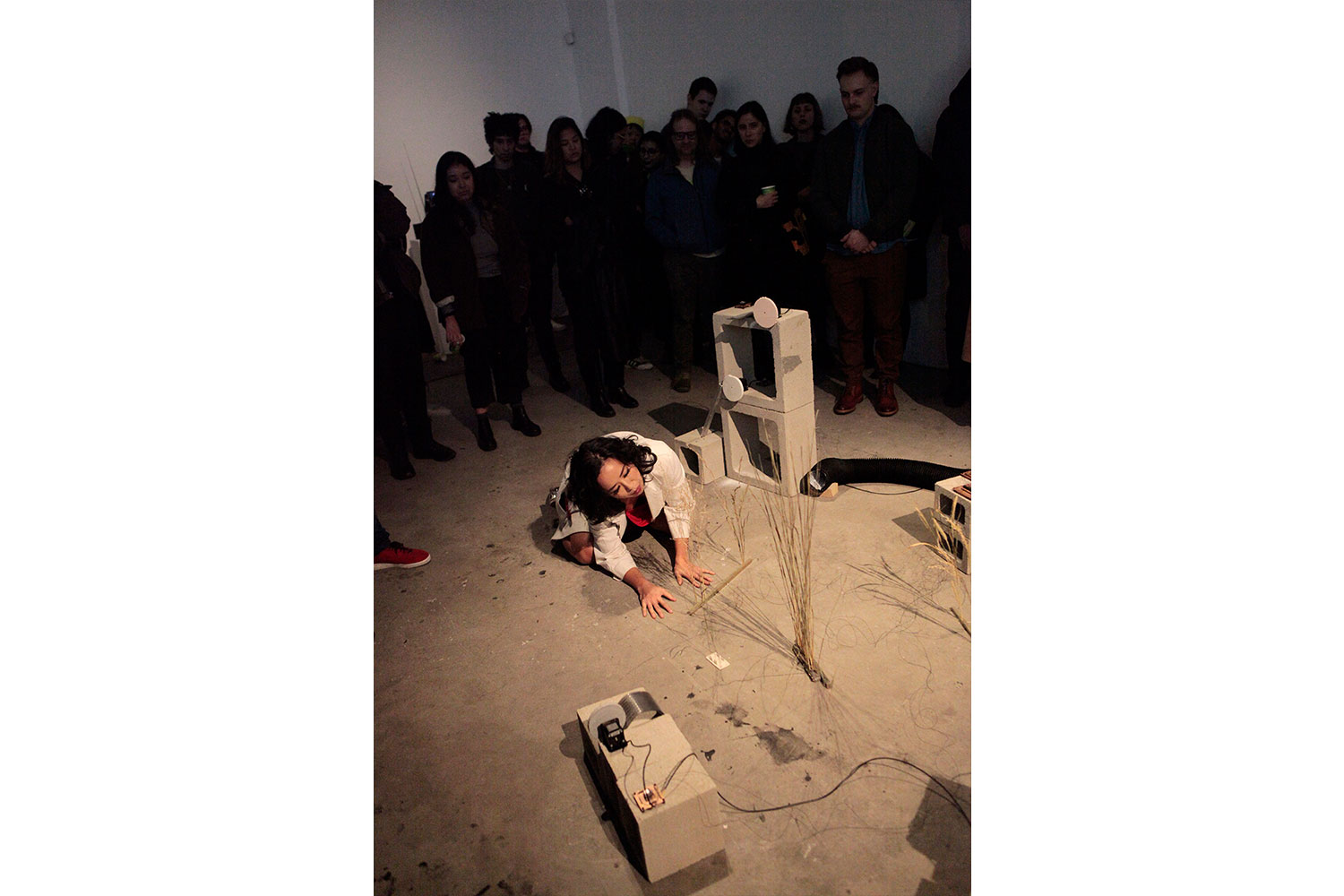
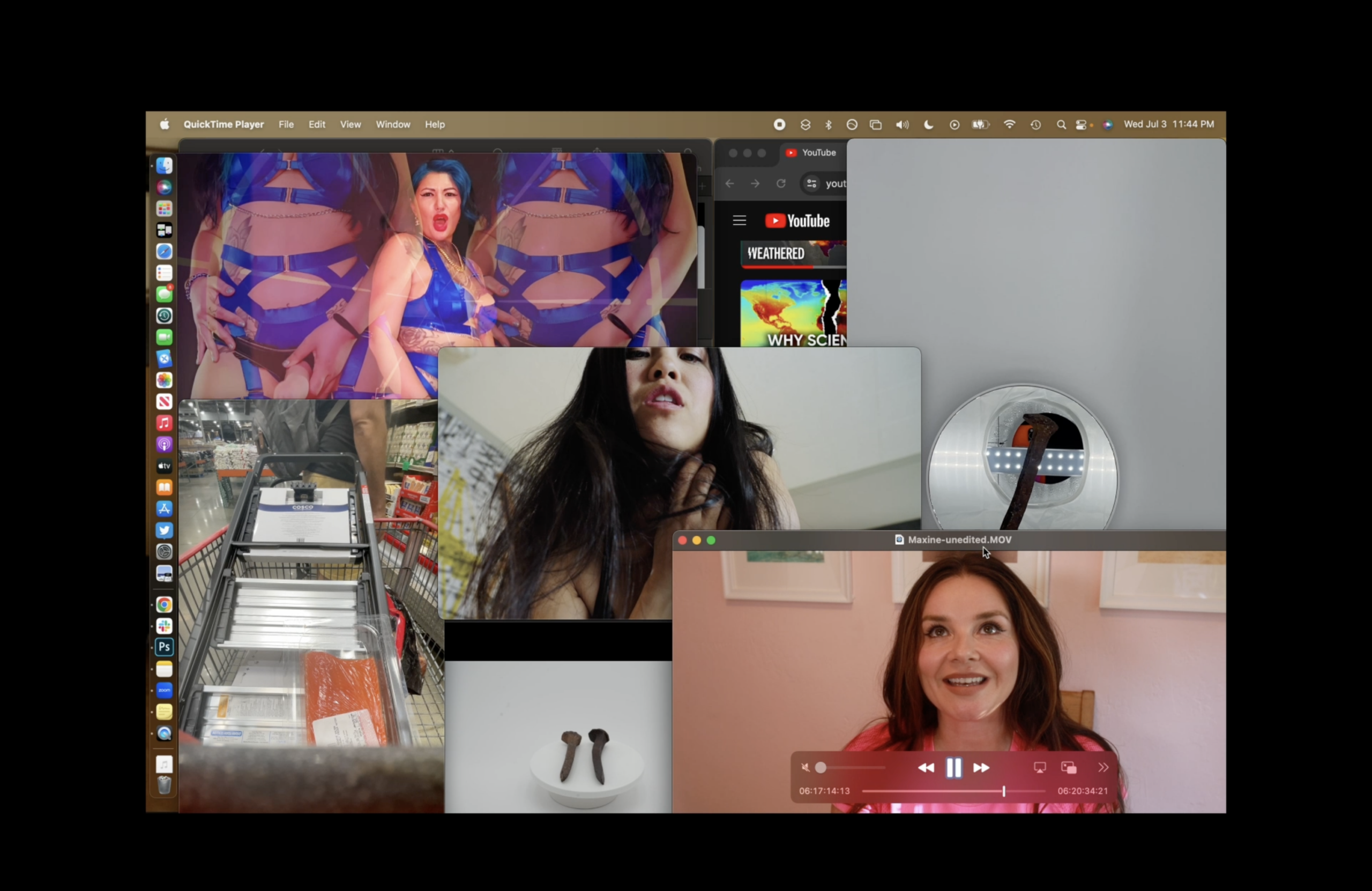
In a performance that resembles a stream of consciousness love letter monologue, Kim Ye splices together topics ranging from paraphilia, to climate change, and BDSM to animism in exploring the sensuality of the human/object relationship. Weaving together found and original text with quotes from Jane Bennett, Baruch Spinoza, Michel Foucault, and WJT Mitchell, the artist engages the concept of a “script” as a subconscious force that guides humans’ interaction with their inanimate surrounding. Inverting the hierarchical relationship between the human and nonhuman, this performance attempts to describe the physical and psychic codependence between ourselves and our synthetic neighbors, playmates, and lovers while exploring the sensual possibilities between thingness and the human body.

View 4 minute excerpt

Originally performed at Human Resources as part of the Ecology of the Edge exhibition, the performance script has been published in its entirety on Mustekala and the full 22 minute video documentation can be found on vimeo.

Church of Art

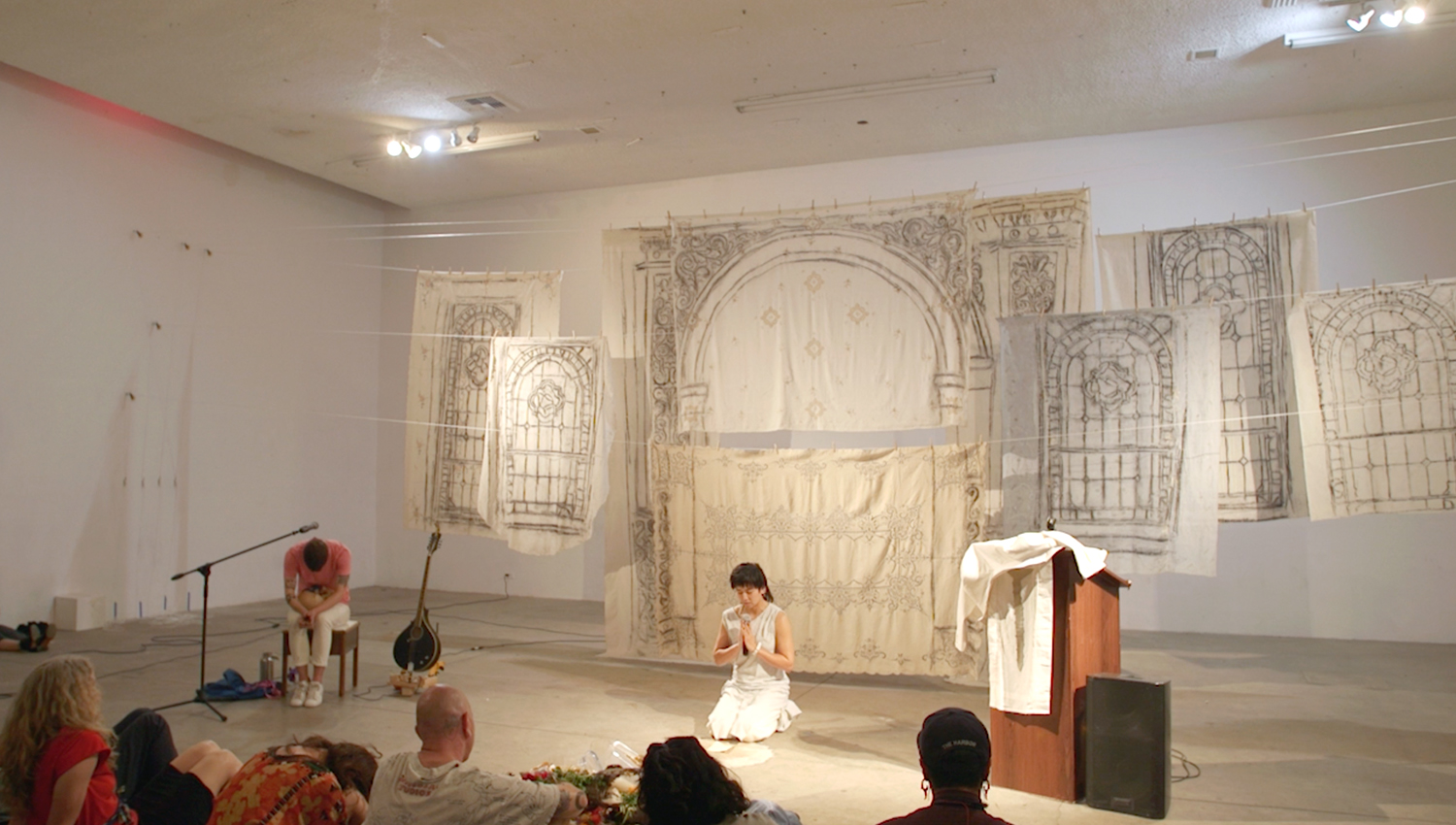
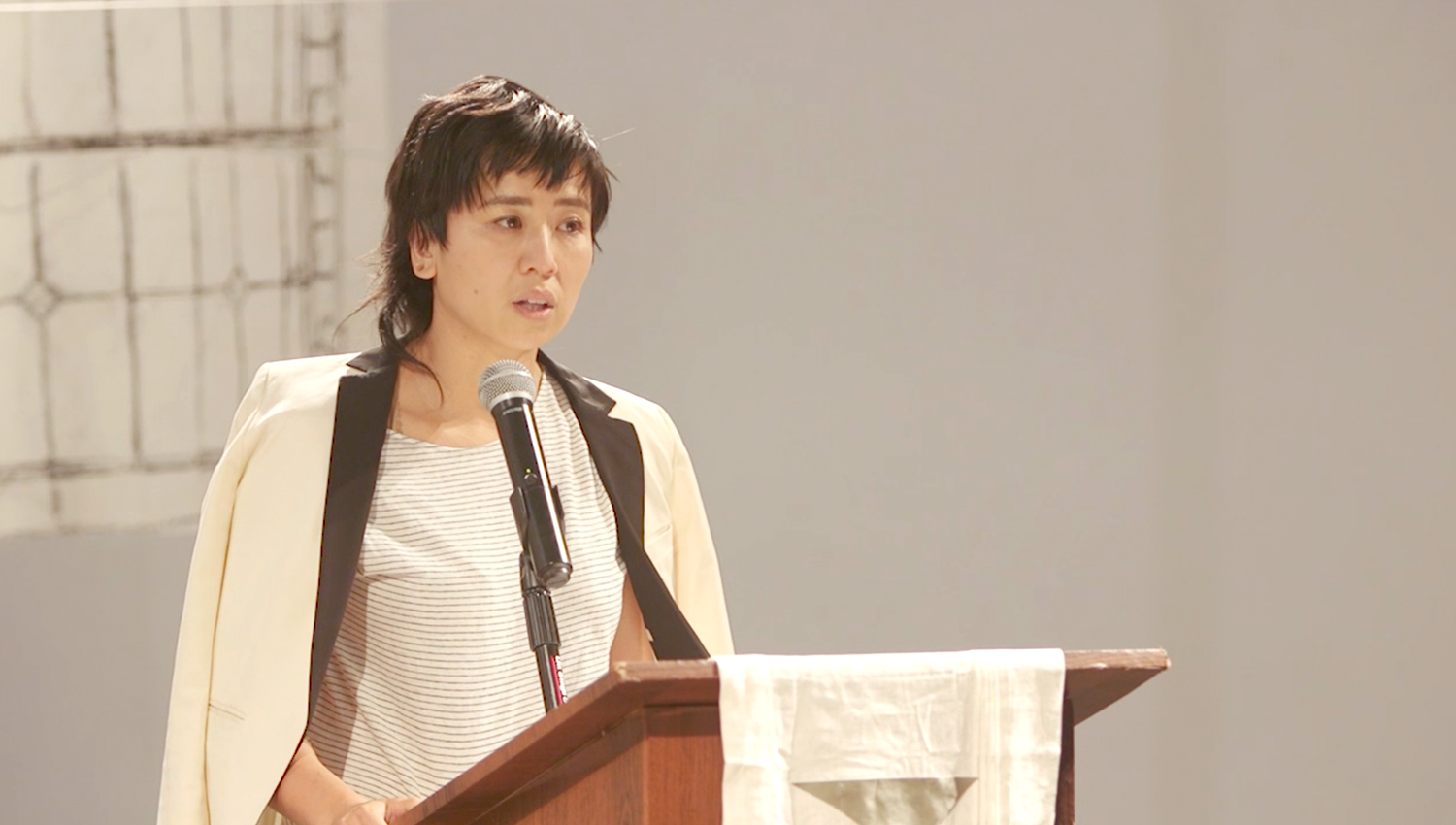
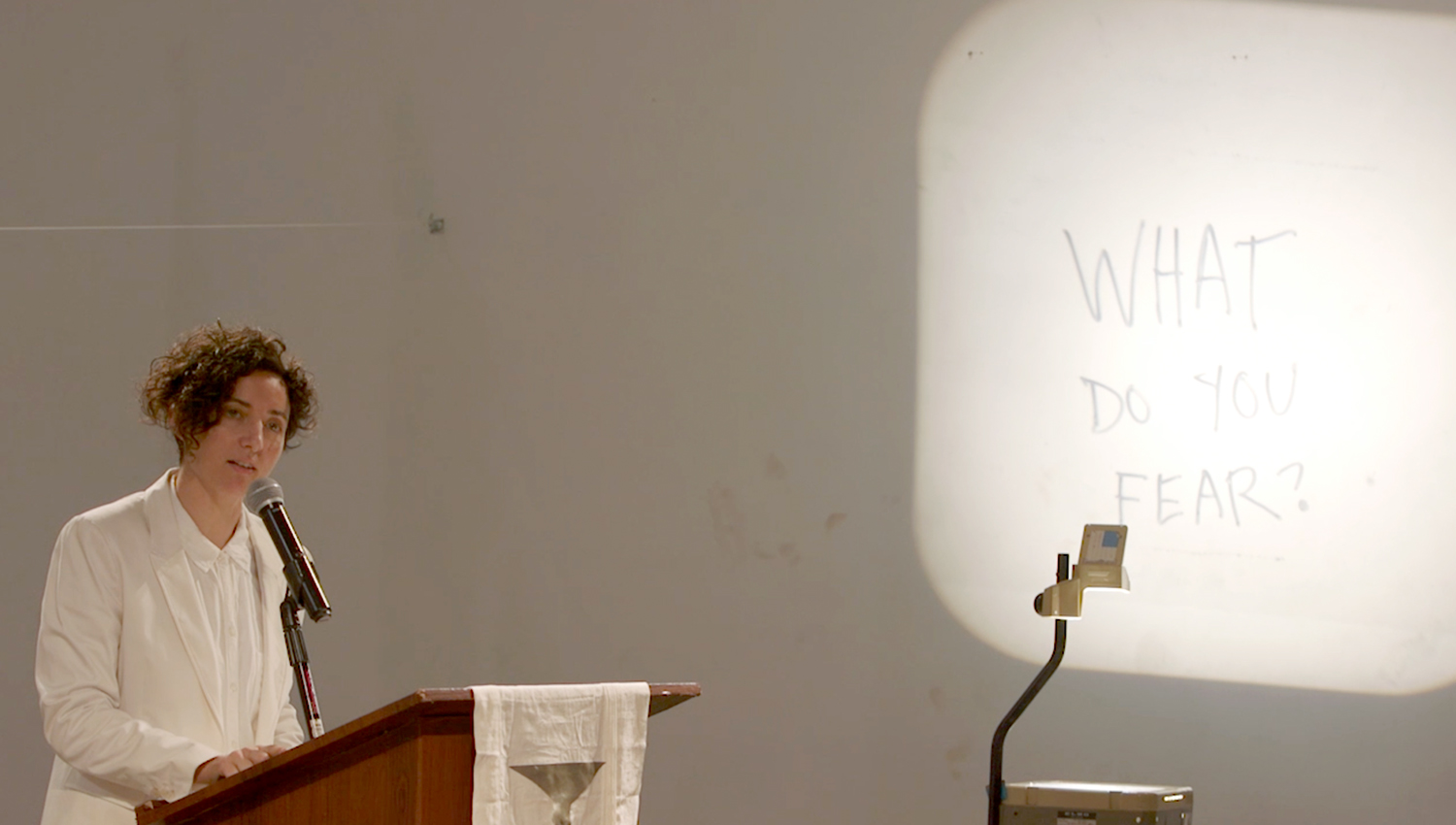
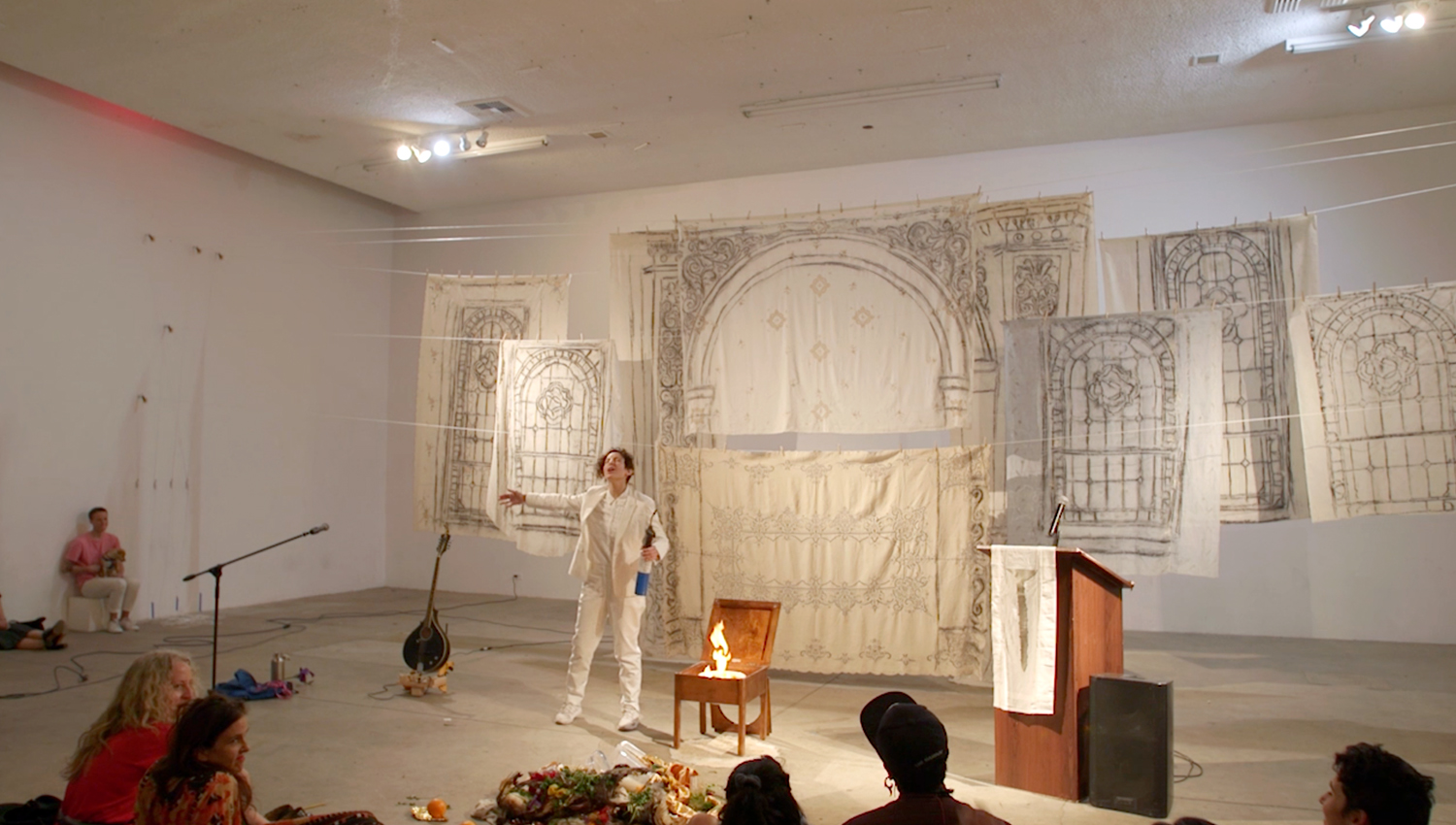
Using the framing of organized spiritual practice, Church of Art is a performance that falls somewhere between a self-help seminar and institutional critique.  Combining diagrams and references culled from Pierre Bourdieu and Oprah Winfrey with middle school classrooms pedagogical techniques, Veronique d’Entremont, Kim Ye, and Laub cultivate a space that engages diverse audiences in self-reflection and analysis of our relationship to institutions.  Through sermons, music performance and audience participation, Church of Art calls on us to transcend our ego-driven motivations, internal conflicts and external pressures as practicing artists and fellow humans.

Video Documentation Highlights

  • Opening hymn (04:30)
  • Veronique D’Entremont sermon (05:35)
  • Laub musical performance (35:45)
  • Kim Ye sermon (39:30)
  • Laub musical performance (52:00)
  • Veronique D’Entremont sermon (55:30)
  • Participatory exorcism (1:08:15)
  • Kim Ye prayer to Art (1:15:30)
  • Closing Ceremony (1:22:45)

Motherhood


Young Joon Kwak and Kim Ye promenade down a smalltown sidewalk in flowing pastel robes and lingerie. They feed each other ramen with seductive and messy fervor. They wrestle provocatively, thick makeup smearing down their faces. These vignettes weave in and out of each other, a fractured narrative filmed in 2018 in the idylls of BanffCanada. The dreamlike threechannel film serves as the backdrop for the artists performance

-The Wattis Institute

Beginning with a screening of Maternal River of No Return, a 3-channel film commissioned by the Walter Phillips Gallery, we embark on a psychodramatic journey into motherhood at The Wattis Institute. Traversing the installations of Diamond Stingily’s Doing the Best I Can and Rosha Yaghmai’s Miraclegrow, the performance takes the audience back through the womb, exploring both the ambivalent and expectant qualities of pregnancy and birth. Responding to Stingily’s and Yaghamai’s installations as part of their built environment, Mama and Baby continue their saga together through The Wattis Institute’s galleries. Via regression and projection, Motherhood moves through time both forwards and backwards, and explodes the oneness of prenatal space into a thousand sparkling splinters.